Get Full Government Meeting Transcripts, Videos, & Alerts Forever!
Get email alerts on the Height Restrictions Mandate topic
No spam. Unsubscribe anytime.
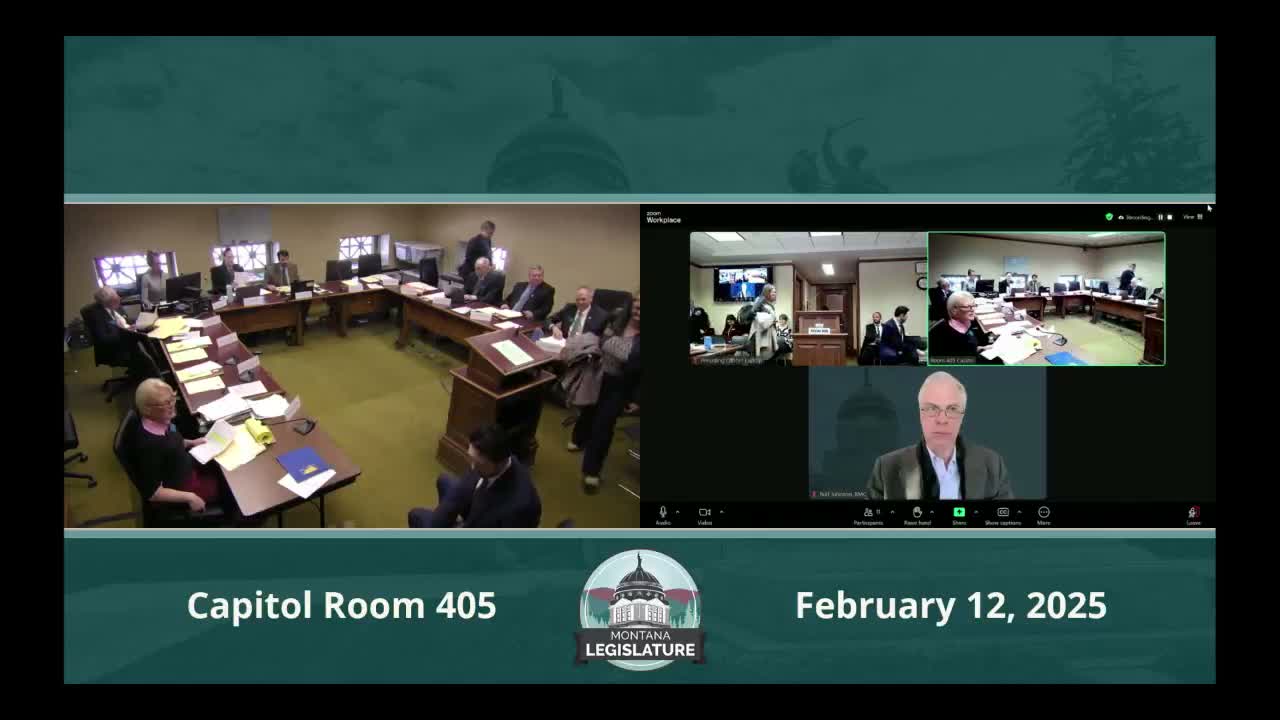
Committee debates bill to require six‑story allowance in commercial zones to spur infill housing
Summary
Senator Ellie Boldman presented SB 243 to require qualifying cities to allow up to six‑story mixed‑use buildings by right in commercial zones; proponents said it increases supply and reduces per‑unit land cost, while cities, planners and League of Cities warned it could disrupt Maloopa implementation, erode local control and create service/parking challenges.
Senator Ellie Boldman opened the hearing on Senate Bill 243, a proposal to build on last session’s zoning reforms by requiring municipalities that meet a population threshold to allow multifamily and mixed‑use buildings up to six stories in specified commercial zones. Boldman framed the bill as ‘smart growth’ that preserves open space by encouraging infill near jobs and services.
Proponents including Jake Brown (Shelter Whitefish), Samuel Hooper (Institute for Justice) and local housing and business representatives told the committee six‑story allowances would reduce the land cost per unit, unlock familiar mixed‑use building types (e.g., five‑over‑one), and help address statewide housing shortages without direct subsidy. Zuri Moreno (FOR Montana) said housing is “the singular top issue for young Montanans.”
Municipal and planning witnesses urged caution. Kelly Lynch of the Montana League of Cities and Towns said the Land Use and Planning Act (referred to as Maloopa) already provides a framework requiring local analysis, public participation and mitigations; she argued SB 243 would upend communities that are partway through Maloopa compliance and could force costly rework. Chris Saunders (city of Bozeman) and Anna Vickers (Montana Association of Planners) said many cities already have carefully placed six‑story options and that a one‑size‑fits‑all mandate overlooks local service capacity, historic districts and neighborhood impacts.
Committee members asked detailed questions about viability (whether projects truly need six stories to pencil), infrastructure (water/sewer will‑serve requirements), parking restrictions (the bill prevents local rules requiring more than one off‑street space per unit), and statutory mechanics including protest provisions in Title 76 (sections cited during testimony). Proponents said the bill aims for modest, targeted changes to create developer certainty and not to overturn the broader Maloopa framework; opponents warned of litigation risk and implementation delays.
Senator Boldman closed by emphasizing urgency to attract investment and housing in urban communities; the committee closed the hearing and scheduled opportunities to submit and draft potential amendments ahead of executive action.