Get Full Government Meeting Transcripts, Videos, & Alerts Forever!
Get email alerts on the Judicial Elections topic
No spam. Unsubscribe anytime.
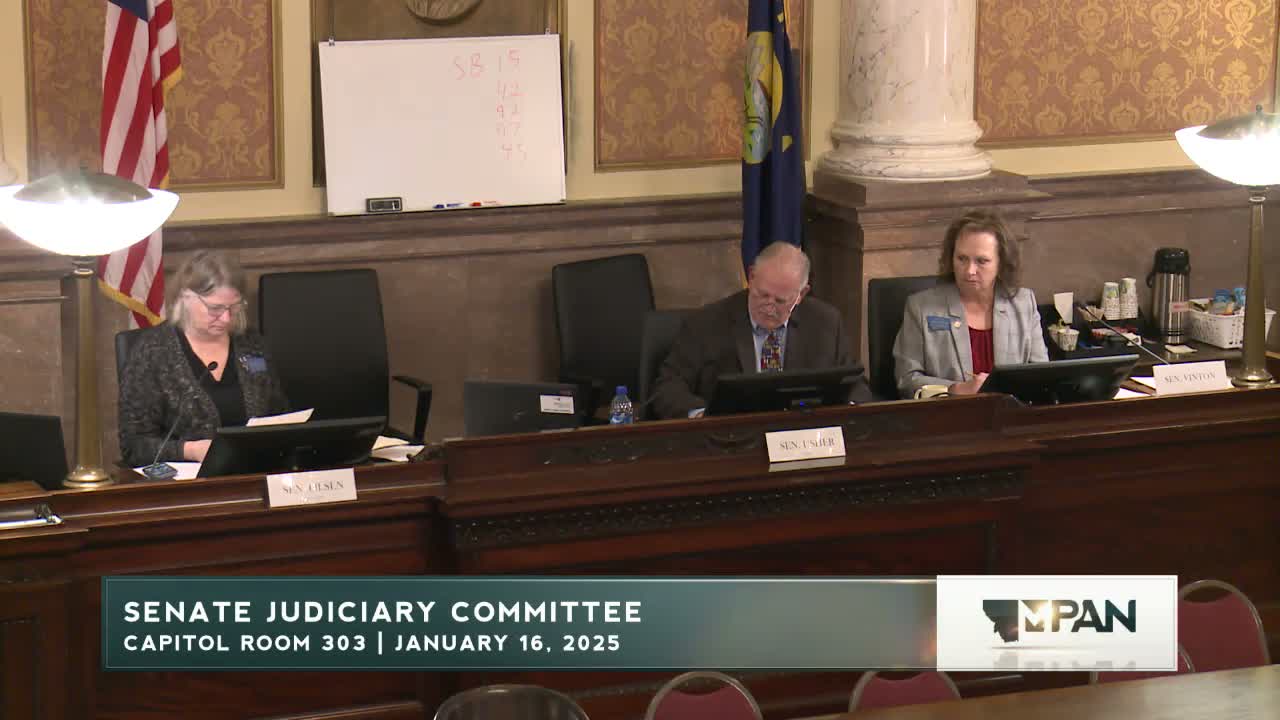
Montana committee hears contentious bill to allow partisan judicial races
Summary
SB42 would reintroduce party labels, partisan primaries and party contributions for judges; supporters said party affiliation gives voters clarity while opponents — including the State Bar and tribal groups — warned it would politicize courts and invite outside money.
Senator Daniel Amritsch told the Senate Judiciary Committee that Senate Bill 42 would permit partisan nominations and elections for Supreme Court justices, district court judges and other judicial offices, and would allow political parties to endorse judicial candidates and contribute to campaigns.
"Montanans deserve transparency in judicial elections," Lieutenant Governor Kristin Juris said in proponent testimony, arguing party designations give voters more information on candidates’ principles and values. Supporters — including faith and civic groups — said partisan labels reduce hidden partisanship and increase public engagement.
Opponents delivered extensive testimony against the measure. Bruce Spencer, speaking for the State Bar of Montana, said partisan labels risk the perception and reality of political influence and undermine the judiciary’s impartial role. ‘‘Montana has had nonpartisan judicial elections since 1935,’’ Spencer said, adding that partisan systems frequently rank poorly on court performance surveys. Tribal leaders and Native advocacy organizations warned the bill could worsen inequities and harm access for rural and tribal communities.
Committee members pursued questions about implementation, whether judges could opt out, and how partisanship would affect lower courts and everyday interactions with the justice system. Senator Newman asked whether partisan labels might dissuade judges who prefer nonpartisan service; proponents said candidates could run as independents but acknowledged the bill would require party affiliation in partisan primaries. Miss Burkhardt clarified that, absent a different effective date, statutes normally take effect October 1.
Supporters argued the existing nonpartisan system allows outside, wealthy interests to dominate judicial races and that party labels would provide transparency. Opponents pointed to polling and comparative studies, arguing partisan elections invite more money, more campaigning and create an appearance — and risk — of bias. Tribal witnesses emphasized historical concerns and warned of consequences for marginalized communities.
No committee vote occurred during the hearing. The committee recessed after testimony and moved on to other business.