Get Full Government Meeting Transcripts, Videos, & Alerts Forever!
Get email alerts on the Government Accountability topic
No spam. Unsubscribe anytime.
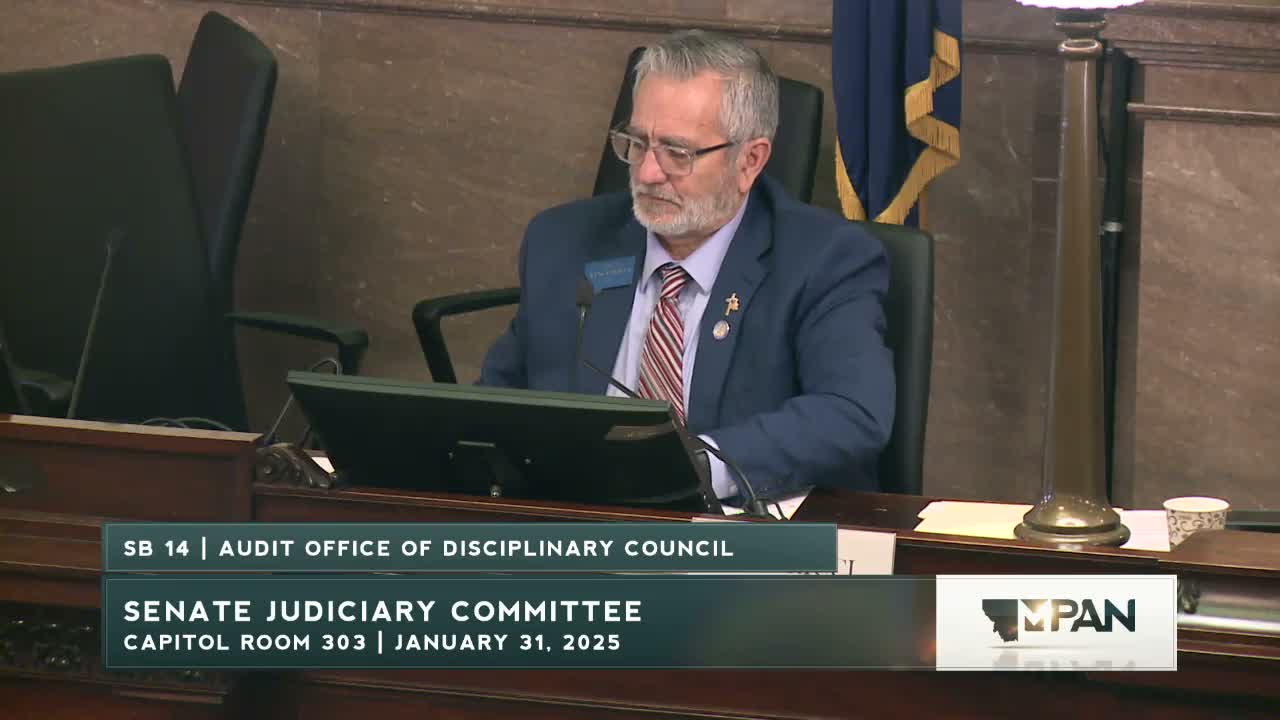
Committee Divided Over Proposal to Authorize Legislative Audit of Lawyer Disciplinary Office
Summary
A proposal (SB14) to require a legislative performance audit of the Office of Disciplinary Counsel prompted sharp debate: proponents framed the review as routine oversight, while the State Bar and others warned the bill intrudes on the Supreme Court's constitutional authority to regulate lawyers.
Senate Bill 14 would direct the Legislative Audit Division to perform a performance audit of the Office of Disciplinary Counsel (ODC), including a ten‑year review of revenues, expenditures and operations. Sponsor Sen. Barry Usher said the audit is a standard legislative oversight tool and stressed that audit findings are recommendations only, not enforcement actions.
The hearing produced a sharp division. Angus McIver, the legislative auditor, explained how performance audits are conducted and emphasized statutory confidentiality protections for records the audit team would review. McIver said the audit division issues non‑binding recommendations and lacks enforcement authority.
Opponents, led by Bruce Spencer representing the State Bar of Montana, argued the bill violates Article VII, section 2 of the Montana Constitution, which vests regulation of the practice of law in the Supreme Court. Spencer noted that the ODC is funded by lawyers, not state appropriations, and warned that subjecting a court‑supervised disciplinary office to legislative audit authority risks separation‑of‑powers conflicts and could chill independent legal regulation.
John Marshall, appearing as an opponent, framed the measure as a potential vehicle for political retribution and urged the committee to consider the bill’s constitutional risks. Supporters, including a judicial‑accountability group, said transparency and accountability for an agency that performs a public function warrant a performance audit.
Legislative counsel and the audit division answered committee questions about scope, confidentiality, and whether the audit would attempt to second‑guess disciplinary judgments; auditors said they would review procedures, controls and compliance rather than re‑adjudicate complaints. The ODC’s annual reports were entered for the record.
Committee debate reflected the tension between oversight and judicial independence. The legislative auditor and sponsor argued audits of other licensing and regulatory functions are routine; opponents pointed to the constitutional text and to the bar’s preference that the Supreme Court itself order any review. The hearing closed after questions and a set of written materials were distributed to committee members.