Get Full Government Meeting Transcripts, Videos, & Alerts Forever!
Get email alerts on the Public Safety Crime topic
No spam. Unsubscribe anytime.
Montana Committee Moves to Restore Harsher Penalties for Retail Theft; Debate Split Over Crime and Poverty
Summary
Senate Bill 19 would increase penalties and jail time for retail theft and related offenses; businesses and law‑enforcement urged the change citing rising losses, while civil‑liberties and reform groups warned it would criminalize poverty and expand jail populations.
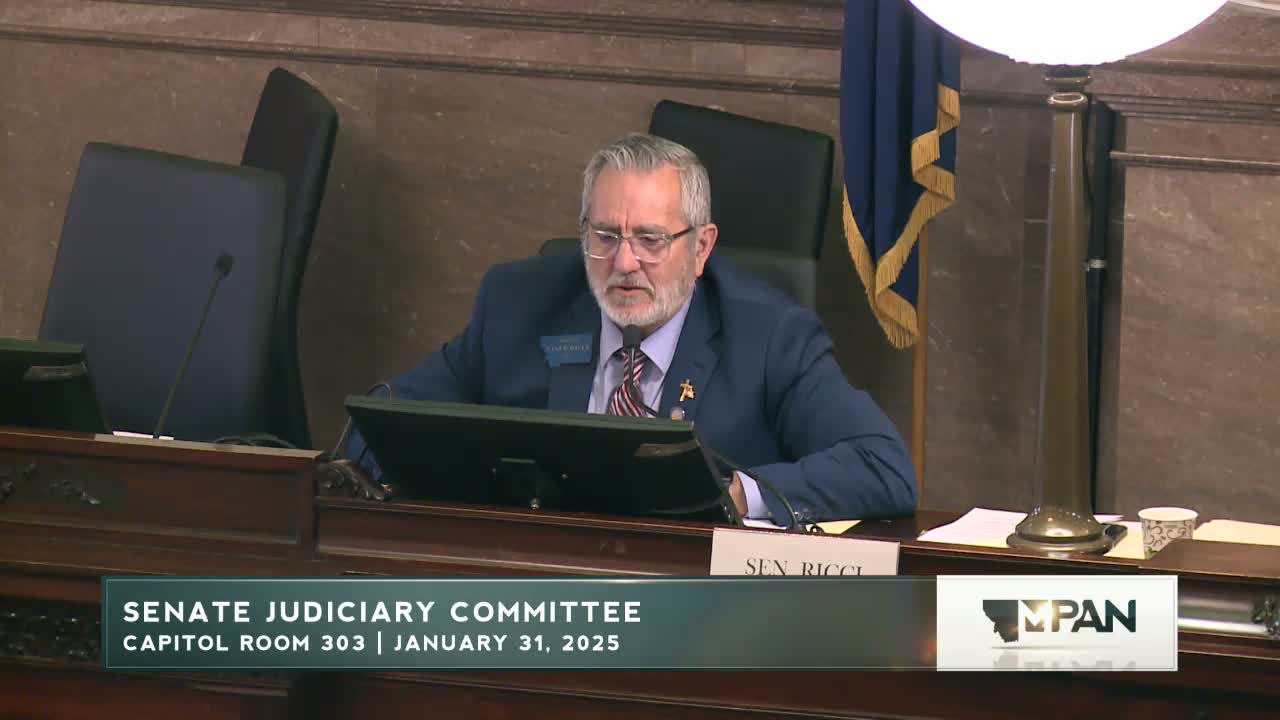
Senate Bill 19, presented to the Senate Judiciary Committee by Sen. Barry Usher, seeks to reverse aspects of earlier criminal justice reform and raise penalties for retail theft and related property offenses. Usher told the committee the bill “takes us back to…pre HB133” by adjusting thresholds, fines, and county jail ranges for repeat offenders.
Retailers, small‑business representatives and law‑enforcement witnesses testified in favor. Brad Griffin of the Montana Retail Association said Montana retailers face major losses and cited a statewide estimate of $145 million in retail theft. ‘‘We are simply overrun,’’ said Dan Connors, an Ace Hardware manager, who told the committee his stores filed dozens of shoplifting reports in 2024 and face repeat offenders.
Proponents argued the 2017 reforms created a perverse incentive—small fines for large thefts—and that restoring penalties would deter repeated criminal conduct and protect small businesses. Lewis and Clark County Attorney Kevin Downs and Sheriff Mike Linder emphasized prosecutorial discretion and public safety concerns, while noting judges retain sentencing options.
Opponents said harsher penalties would criminalize poverty and swell already‑crowded jails. Henry Seaton of the ACLU told senators that justice‑reinvestment changes were deliberate reforms meant to reduce incarceration and that reversing them would return low‑level offenders to the jail population without addressing root causes. Nicole Gomez of Catalyst Montana argued that evidence shows incarceration does not reduce recidivism and said diversion and treatment are cost‑effective alternatives.
Committee members questioned fiscal and practical impacts. The Department of Corrections and public defenders answered inquiries about bed capacity, likely custodial outcomes and prosecutorial discretion; witnesses acknowledged some fiscal risk but also emphasized that many theft cases do not result in lengthy incarceration.
After debate and a brief amendment to allow registered mail as an alternative to certified mail for written notices in the bill’s lease‑return provision, the committee advanced SB19 out of committee during executive action.
Supporters said the committee action restored tools for local prosecutors and businesses; opponents reiterated concerns about criminalizing need and urged increased investment in services instead.