Get Full Government Meeting Transcripts, Videos, & Alerts Forever!
Get email alerts on the Impeachment topic
No spam. Unsubscribe anytime.
Senator proposes narrower, modernized impeachment standards in Montana
Summary
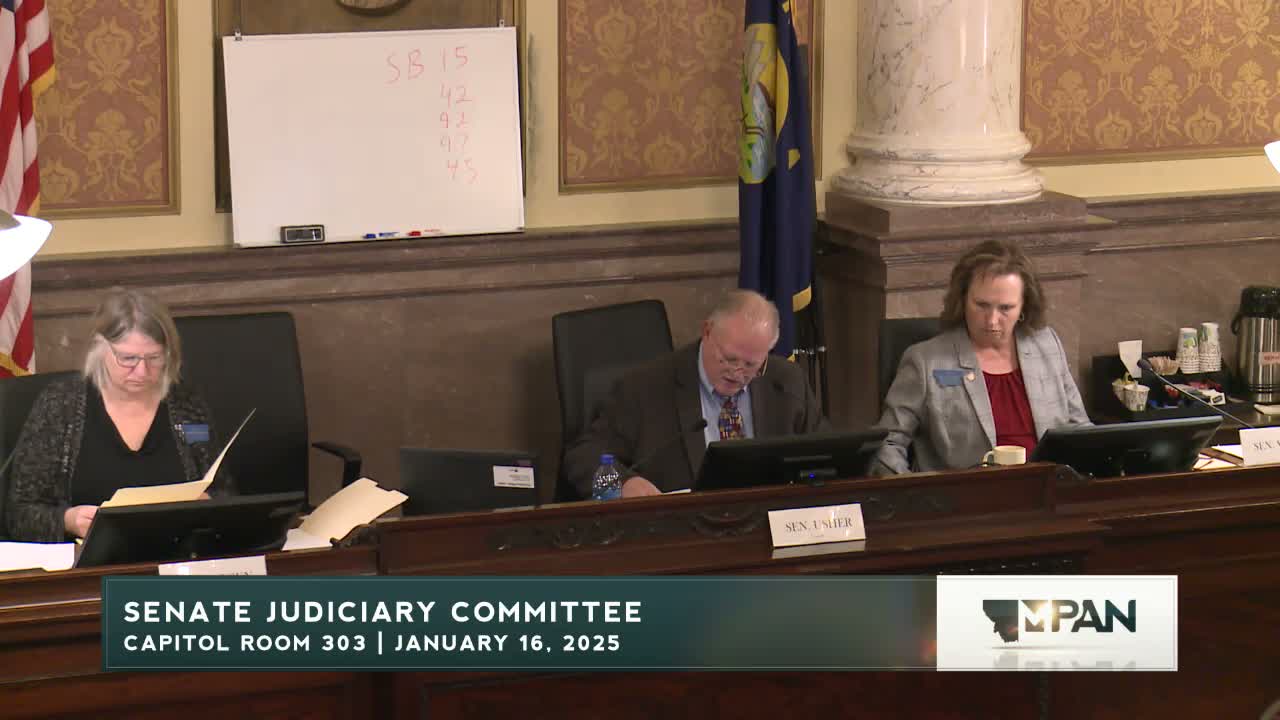
Sen. Tom McIlvery told the Senate Judiciary Committee SB15 would replace vague 19th‑century terms with enumerated grounds — corruption, incompetence, negligence, willful neglect, oppressive use of office and misconduct — while removing misdemeanors; committee members probed definitions and remedies.
Senator Tom McIlvery, sponsor of Senate Bill 15, told the Senate Judiciary Committee that the bill updates Montana's impeachment standards by removing vague, century‑old language and listing specific grounds for impeachment.
McIlvery, who represents Senate District 26 out of Billings, said SB 15 would keep felonies as a ground for impeachment and add clearer, modern terms including corruption, incompetence, negligence in the performance of duties, willful neglect of duty, oppressive use of office and misconduct in office. “SB 15 provides additional grounds for impeachments and updates the language to more contemporary terms,” he said during his opening remarks.
The bill is pitched as an effort to give clearer statutory guidance where the Montana Constitution (Article V, Section 13) requires the Legislature to set impeachment causes and procedures. McIlvery argued current statutory language — which includes “malfeasance” and misdemeanors — is both antiquated and too broad. He told the committee that misdemeanors can include conduct (for example, reckless driving or shoplifting) that should not by itself rise to impeachment, and that “malfeasance” is difficult to define with precision.
Supporters in the room cited accountability. Bart Crabtree of the Montana Citizens Council on Judicial Accountability told the panel he supports the bill and cited a recent local grand‑jury petition he said was summarily denied as an example of why clearer remedies are needed. “We come in full support of this bill — we think it's a good bill and it will hold certain members of our judiciary accountable,” Crabtree said.
Committee members asked detailed questions about how particular behaviors would be categorized under the new language. Senator Mansella asked how the bill would treat “legislating from the bench”; McIlvery said such conduct could fall under “oppressive use of one's office” or possibly “incompetence,” depending on the facts. Senator Smith expressed concern that terms such as “oppressive use of one's office” could be vague; McIlvery offered examples — a judge conditioning favorable treatment on dropping ethics complaints — to show how the standard might apply.
Some senators pushed back on the decision to remove misdemeanors from the statutory list. Mansella and others noted historical cases where judges were removed for conduct short of felonies (for example, repeated court drunkenness or lack of decorum). McIlvery said he understood the concerns and that the Constitution’s two‑thirds impeachment threshold for conviction remains a high bar for removal.
The sponsor also told the committee the statute currently lacks a remedy when an officer neglects a mandatory duty, and said the bill is designed to provide a modern, understandable statutory framework that gives the Legislature tools to address both acts and failures to act.
The hearing closed without a committee vote; McIlvery asked members to give the bill “your capable hands” and said he recommended a do‑pass. The committee moved on to later agenda items.