Get Full Government Meeting Transcripts, Videos, & Alerts Forever!
Get email alerts on the Religion In Schools topic
No spam. Unsubscribe anytime.
Montana Judiciary Committee Hears Heated Debate Over Bill Requiring Ten Commandments in Classrooms
Summary
Supporters told the Senate Judiciary Committee that recent Supreme Court decisions and historical precedent allow Ten Commandments displays in classrooms; opponents — including tribal leaders, the ACLU and educators — said the bill would impose a sectarian text on public schools and invite costly litigation.
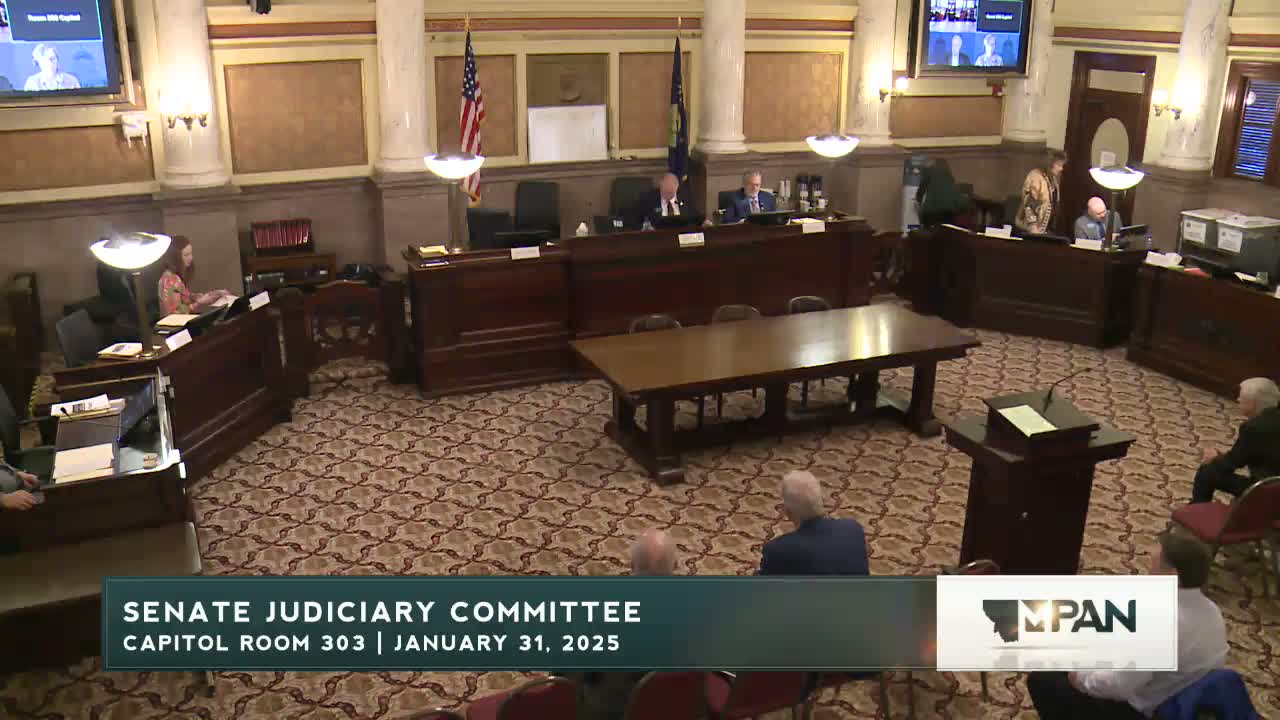
Senate Judiciary Chair Barry Usher opened the committee hearing on Senate Bill 114, a proposal from Sen. Bob Phelan to require a plaque of the Ten Commandments ‘‘in every classroom in the state of Montana.’’ Phelan told the committee the display would be a historical reminder rather than a religious imposition and asked members to set aside the bill’s legal review.
Proponents framed the bill as both history and constitutional law. ‘‘The 10 Commandments have profoundly influenced and shaped America,’’ sponsor Sen. Bob Phelan said, asking the committee to consider monuments and displays nationwide. Legal‑policy witnesses including Matt Krause and representatives of First Liberty Institute argued that the Supreme Court’s recent pivot away from the Lemon test toward a ‘‘history and tradition’’ inquiry makes classroom displays defensible under current doctrine.
Opponents said the bill crosses the line separating religion and state. Patrick Yawake, who testified for several tribal communities, urged the committee to ‘‘please table Senate Bill 114,’’ arguing that a mandatory posting of a religious text on walls where federally funded public schools educate children would violate the Establishment Clause and re‑traumatize Indigenous students. Henry Seaton of the ACLU said the measure ‘‘effectively imposes a Christian—specifically Protestant—religious doctrine on public school children’’ and warned the state would face predictable, expensive litigation.
Committee members pressed witnesses on precedent. Proponents repeatedly cited the Supreme Court’s 2022 decision in Kennedy v. Bremerton as changing the constitutional standard, while opponents pointed to Stone v. Graham (1980) and the recent federal injunctions against comparable laws in other states. Matt Krause said the Lemon test ‘‘was discarded in 2022 in the Kennedy versus Bremerton case’’ and that the history‑and‑tradition approach supports the bill; ACLU and school‑system witnesses countered that Stone remains controlling authority for compelled classroom postings and that litigation costs would fall to taxpayers.
Speakers representing teachers, students and Native communities described emotional, pedagogical, and equitable harms if the bill were enacted. A high‑school student who had studied the legal note said the bill ‘‘will undermine religious freedom for Christian and non‑Christian students alike.’’ Several educators and school trustees urged the committee that religious materials should be taught in historical or comparative context, not mandated as posted doctrine in every classroom.
The hearing closed after questions and sponsor closing remarks; Chair Usher thanked witnesses and moved the committee along. The Judiciary Committee later took executive action and advanced SB114 out of committee, with a roll‑call tally recorded in the committee minutes.
The committee did not take final action on the underlying constitutional questions; witnesses on both sides predicted litigation if the measure becomes law. The next procedural step would be consideration by the full Senate if the bill is placed on general file.