Get Full Government Meeting Transcripts, Videos, & Alerts Forever!
Get email alerts on the Board Procedure topic
No spam. Unsubscribe anytime.
Board approves agendas and moves toward executive session on drills, personnel and expulsion binder
Summary
The Chippewa Falls Area Unified School District board approved the day’s agenda and an executive-session agenda, then voted to move into executive session under Wisconsin open-meetings law to review prior closed-session minutes, safety drill evaluations, personnel matters and an expulsion informational binder; roll call began before the public record ends.
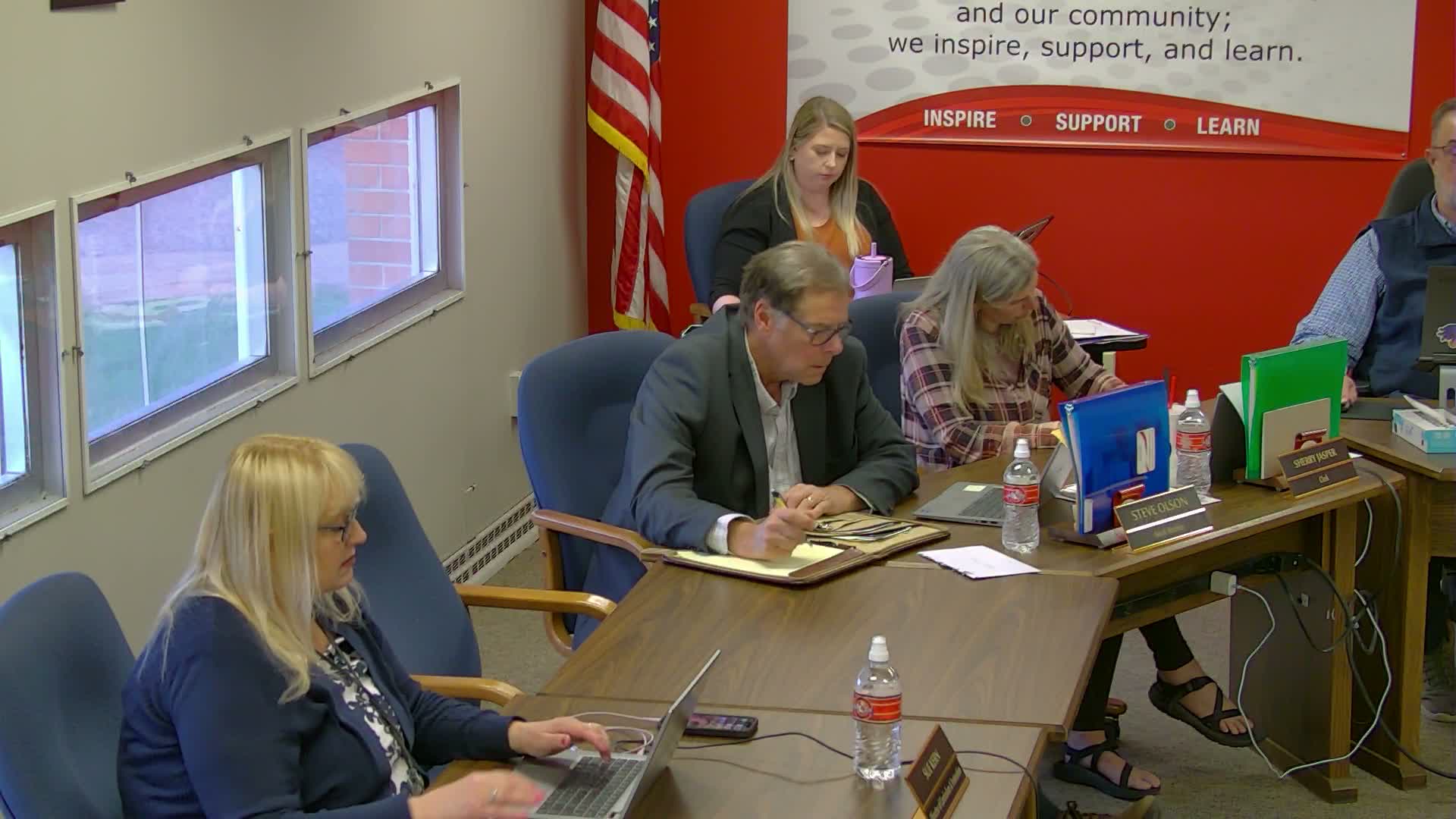
At a meeting of the Chippewa Falls Area Unified School District board, members approved the meeting agenda and an executive-session agenda and then moved to enter executive session to discuss prior closed-session minutes, safety drill evaluations, specific employment action regarding individual employees and an expulsion informational binder.
The meeting opened with roll call; board members answered in the affirmative and the chair announced a quorum. Martina moved to approve the agenda, and Steve Olsen seconded. The chair called for a voice vote; members responded "Aye," and the chair said, "Motion carries." The agenda was approved as presented.
Later, the board approved the executive-session agenda after a motion from Gaston, seconded by Bartle, again decided by voice vote when the chair called for the ayes. Following that approval, the chair asked for a motion to move into executive session "pursuant to section 19.851C, D, and F, the Wisconsin State Statutes" as stated on the record, to consider prior closed-session minutes, review safety drill evaluations, consider specific employment action concerning individual employees, and review an expulsion informational binder. David Martineau moved to enter executive session; McKillop seconded, and a roll call was initiated. The public minutes record ends with Martineau recorded as "Aye," and the roll call process was not completed in the available transcript.
The meeting record provided no vote tallies by name for the prior voice votes and did not include further discussion of the merits of the items listed for executive session. The motions and the stated reasons for the closed session were taken as formal procedural steps under Wisconsin open-meetings law; the roll call to complete the executive-session vote had begun when the transcript ends.