Get Full Government Meeting Transcripts, Videos, & Alerts Forever!
Get email alerts on the Municipal Budget topic
No spam. Unsubscribe anytime.
La Crosse council weighs $406,000 in cuts to retain $1.7 million state aid
Summary
City leaders debated whether to cut about $406,000 from department budgets to qualify for the state Expenditure Restraint Program and its roughly $1.7 million payment for 2026; department heads outlined specific service and staffing reductions, and council did not take a formal vote.
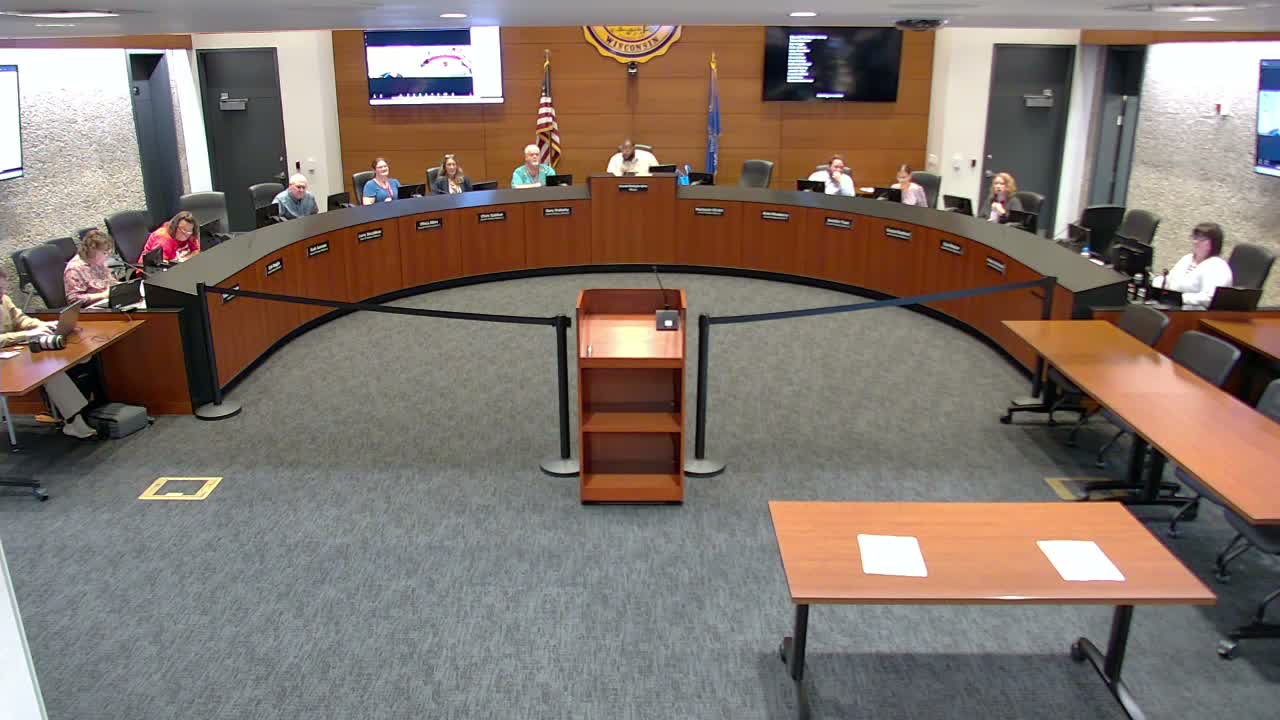
La Crosse city officials spent a special Sept. 23 meeting debating whether to make roughly $406,000 in budget reductions so the city can qualify for the state Expenditure Restraint Program (ERP) — a choice that preserves an expected $1.7 million payment in 2026.
Mayor opened the meeting at 4:01 p.m. and asked Director Hawkins to review an updated budget that, he said, had been reduced substantially since an earlier shortfall. "We are actually down to about 406,000," Director Hawkins said, and presented department-level scenarios designed to meet ERP while limiting service impacts.
The question of whether to pursue ERP shaped the session. Director Hawkins explained the trade-off: the state program rewards restrained year-to-year spending and the city has qualified for an ERP payment estimated at $1,700,000 for 2026. "If we don't maintain that payment, next year we'll certainly be in another deficit," Hawkins said, urging the council to consider preserving the aid.
Attorney Maddie, chair of the Employee Benefits Trust Fund Committee, urged a parallel approach to stabilize employee health costs. She recounted the trust fund's decline — "at one time we had $19,000,000; this time last year we were at $4,200,000" — and said the committee recommended lowering a proposed 15% health premium increase to 9% while contributing $2,000,000 into the trust to buy time for a new consultant to recommend longer-term fixes.
Council members probed the details and consequences of cuts. Councilmember Calo asked for a line-by-line explanation of the $2.3 million listed as "general expense" in nondepartmental spending; Director Hawkins said it aggregates some 20–35 categories, including debt-service transfers, retiree health insurance, contingency and insurance, and offered to provide a detailed breakdown. Councilmember Schleichenko pressed for transparency so residents can see which services would be affected.
Department heads described proposed reductions if the council directs implementation. Parks and Recreation would reduce youth programming and maintenance, cut a forestry limited-term employee and could close the Northside Community Pool; the library presented options that could eliminate two full-time positions and reduce service hours; planning and inspections identified roughly $63,000 in cuts largely from training and memberships; the police department said holding three sworn officer positions and a crime analyst position vacant would save about $471,152; public works described removing one full-time position and trimming contracted services; and the fire department outlined unfilling firefighter and chief positions and cutting some equipment and community-education staff.
Several council members questioned the long-term strategy of relying on ERP and reserves. "Are we just simply trying to achieve ERP qualification?" Councilmember Trost asked, adding concern that pursuit of the aid might erode service quality. Director Hawkins warned that foregoing ERP payments would shift recurring shortfalls onto reserves or require new revenue sources, and that repeated use of reserves could rapidly deplete the city's savings.
Council members also discussed the city's unrestricted general fund balance, which Hawkins said was about $24 million in the 2024 audited financials and that council policy targets roughly 20% (about $15 million) as a minimum cushion. Hawkins and other staff cautioned that while reserves could balance a single-year shortfall, relying on them repeatedly would be unsustainable.
The mayor proposed ongoing work: monthly budget meetings with department heads and the next budget-parameter meeting on Oct. 2. No formal motion or final vote on ERP qualification or the specific $406,000 reductions was taken at the Sept. 23 session. Council members asked staff to circulate departmental line-item explanations and to return with updated figures and options at future meetings.
What happens next: the council will review the department-supplied details, meet in the scheduled budget-parameter session Oct. 2 and continue monthly budget discussions; staff will supply the requested line-item breakdowns and the Trust Fund Committee recommendation paperwork for further review.