Get Full Government Meeting Transcripts, Videos, & Alerts Forever!
Get email alerts on the Data And Transparency topic
No spam. Unsubscribe anytime.
Miami Lakes advisory board approves posting complaint charts after committee review and schedules data-focused subcommittee
Summary
The advisory board approved a process to upload complaint charts to the town website after committee review, heard that the pilot program recorded 3,258 complaints tied to 713 blasts in 2025, and voted to hold a focused subcommittee meeting to refine data presentation and timing.
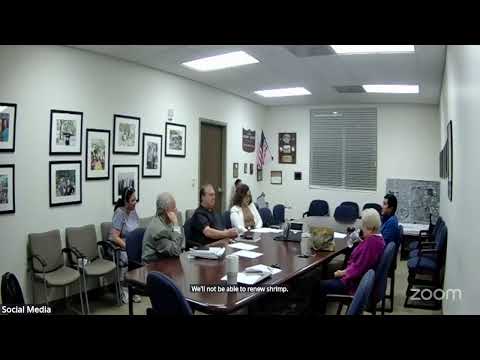
The Miami Lakes Advisory Board on Sept. 22 approved a plan to post the committee’s complaint charts on the town website once the advisory committee reviews and approves the materials.
Board members said the decision follows an updated data presentation comparing state complaint records to a local pilot program. A presenter reported that, for 2025 to date, the dashboard shows 3,258 complaints tied to 713 blasts across pilot jurisdictions, with Homestead listed separately at 32 complaints. Members pressed for clearer city-level breakdowns and cautioned that ZIP-code overlaps (for example, Hialeah ZIPs that cross Miami Lakes) can make municipal counts misleading.
“Now I when when this is uploaded into the website … we are now approved to upload it up once we discuss it and we approve it as a committee,” Francesca said, describing the new approval requirement. The board member presenting the statistics summarized the dashboard structure and the difference between the statewide archive and the local pilot program’s incoming complaints.
Members also criticized a single “average complaint time” metric as misleading and urged either a time range or removal of the averaged field so residents would not incorrectly assume a single peak hour. One member recommended presenting an explicit range (for example, 10 a.m.–2 p.m.) instead of a single-hour average.
The board then moved, seconded and approved a motion to hold a focused subcommittee meeting devoted to refining the charts, data filters and presentation format before posting. The subcommittee will produce a suggested agenda and circulate it to members; the meeting time was left for members to confirm by email.
What’s next: the subcommittee will meet in the coming week to finalize presentation edits and approve the materials for upload. The advisory board’s next regular meeting is Oct. 27.