Get Full Government Meeting Transcripts, Videos, & Alerts Forever!
Get email alerts on the Workers Compensation topic
No spam. Unsubscribe anytime.
Montana State Fund describes reserves, rate history and safety work as market improves
Summary
Montana State Fund told the Senate Business, Labor and Economic Affairs Committee it covers about 25,000 policyholders, has not raised rates in nearly 20 years and reduced rates by 10% on July 1; the fund reported reserves of roughly $902 million, policyholder equity of $629 million and an actuarial estimate of $38 million for the 'old fund.'
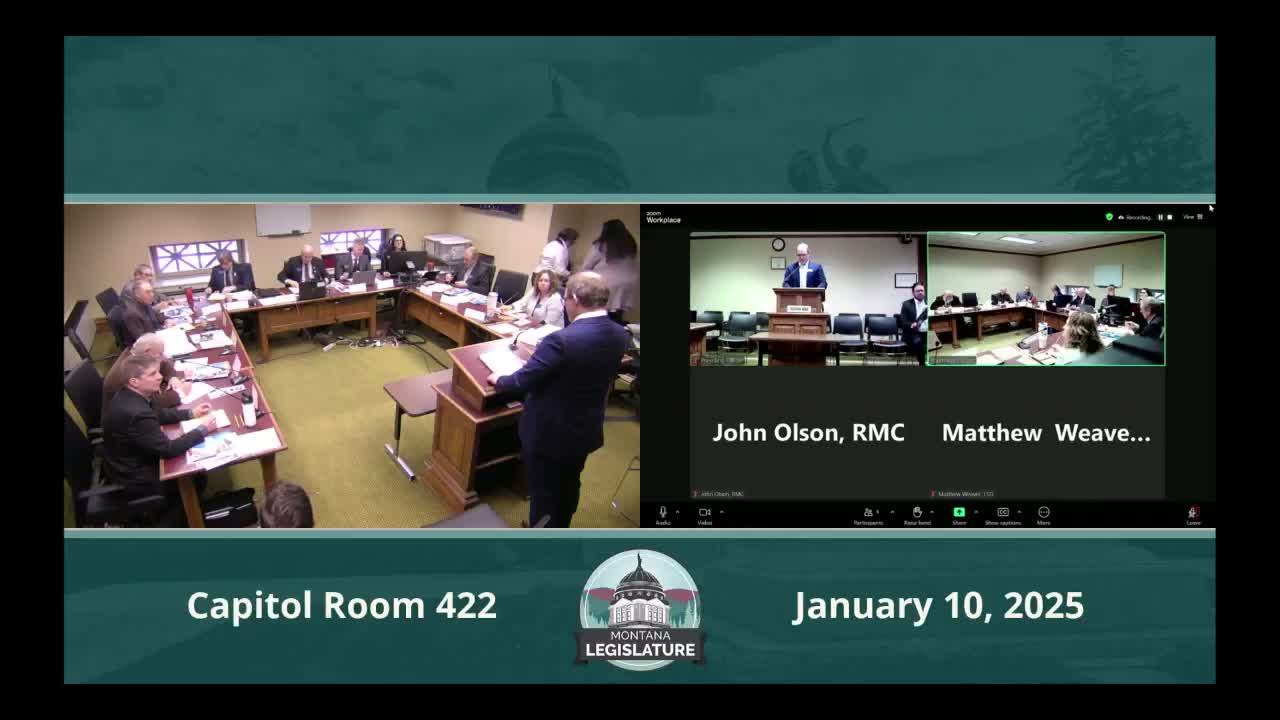
Nick Mazanec, general counsel for Montana State Fund, told the Senate Business, Labor and Economic Affairs Committee that Montana State Fund is a not‑for‑profit workers' compensation insurer established by the legislature in 1990 and that it currently serves roughly 25,000 policyholders across every Montana county.
Mazanec said Montana State Fund employs 280 people, provides claims examiners and nurse case managers to help injured workers, and deploys a statewide safety program—13 safety management consultants performed more than 1,700 safety consultations in 2024. He described workers' compensation as a "long tail" line of coverage, noting active claims can date back many decades.
On financials, Mazanec reported that the new fund reserves were about $902,000,000 and policyholder equity (surplus) was about $629,000,000 based on the 2024 financial statements; he said additional assets relating to reinsurance and other items were roughly $150,000,000, putting total assets and reserves near $1.7 billion. He also reported the central actuarial estimate for the old fund liability is $38,000,000 and that 324 old‑fund claimants remain on the books.
Mazanec described market conditions that allowed Montana State Fund to reduce rates: claim frequency is down, better claim management returns injured workers to work more quickly, and medical inflation has been lower than earlier projections. He said the fund had not had a rate increase in nearly 20 years and implemented an average 10% rate decrease effective July 1; cumulatively, rates are substantially lower than in prior decades.
Senators pressed for details about plan types, tribal entities and timing of benefit payments; Mazanec said insurers must make a compensability determination within 30 days under statute but that Montana State Fund's average time from compensability decision to first payment for compensable claims is about 6.3 days. He also explained that self‑insured employers and interlocal pools operate under distinct statutory regimes and that NCCI (advisory organization) sets experience modification calculations used in rate setting.
Mazanec closed by offering to follow up on specific constituent cases and by emphasizing State Fund's role in safety, claim management and market stability.