Get Full Government Meeting Transcripts, Videos, & Alerts Forever!
Get email alerts on the Medicaid Reimbursement topic
No spam. Unsubscribe anytime.
Therapists press Legislature for higher Medicaid rates; state agency warns of fiscal risks
Summary
House Bill 585 would raise Medicaid reimbursement for physical therapists, occupational therapists and speech‑language pathologists, using conversion factors and RVU methodology. Providers testified about operating losses; the Department of Public Health & Human Services opposed the bill as drafted over inflationary methodology and fiscal exposure.
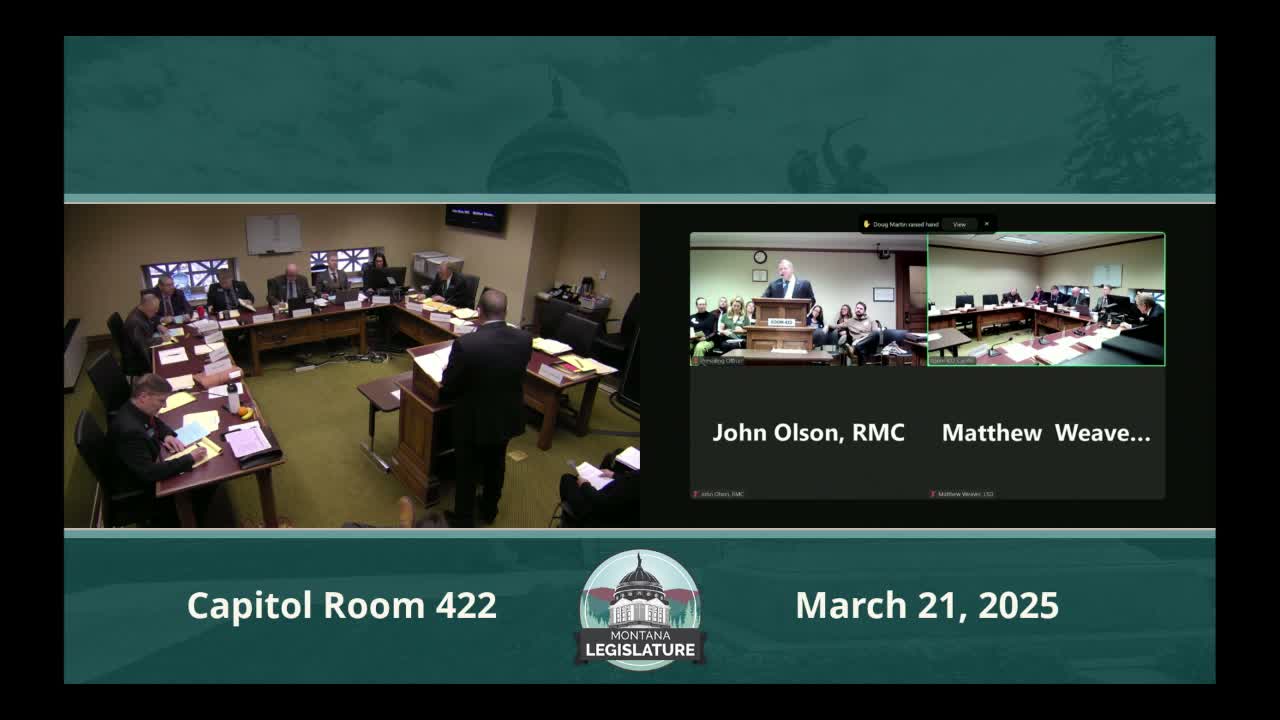
Representative Ed Buttry, the bill sponsor, told the Senate Business and Labor committee HB585 seeks to change Medicaid payment for physical therapists (PTs), occupational therapists (OTs) and speech‑language pathologists (SLPs) by applying a conversion factor multiplied by relative value units (RVUs). He said the conversion factor proposed for fiscal year 2026 is 39.56 and acknowledged stakeholders asked about an inflation adjustment; he said he would be willing to remove that inflationary CPI provision if the committee prefers.
Therapists, clinic owners and associations provided detailed testimony about unsustainable losses under current Medicaid rates. Emily Herndon, a doctor of physical therapy and APTA Montana chapter president, said statewide research shows PTs lose roughly "$44 an hour" on Medicaid visits and described business decisions to limit or stop accepting Medicaid patients to remain solvent. Multiple witnesses described wait lists, staff turnover and rural access problems if reimbursement is not increased.
The Department of Public Health and Human Services (Mary Lemieux) opposed the bill as drafted, focusing on methodology and budgetary risk. Lemieux said applying statutory inflation directly to the conversion factor risks compounding increases when RVUs also change, citing prior instances where combined increases produced double‑digit expenditure growth and arguing the department needs flexibility to contain costs.
Committee members pressed for alternatives. Suggestions included: (1) moving providers to a new base rate and allowing the department to use existing RVU methodology thereafter; (2) removing the bill’s CPI‑based automatic inflation provision (the sponsor said he would support this); or (3) applying inflationary adjustments to the aggregate physician fee schedule rather than to the conversion factor alone. DPHHS committed to work with the sponsor on language and to produce fiscal estimates; the committee asked for a short turnaround (two business days) for follow‑up analysis and potential amendment.
Next steps: Sponsor and DPHHS agreed to negotiate technical language and return fiscal numbers to the committee in short order; no formal vote took place at this hearing.