Get Full Government Meeting Transcripts, Videos, & Alerts Forever!
Get email alerts on the Workforce Development topic
No spam. Unsubscribe anytime.
Labor commissioner outlines workforce goals, technology upgrades and plan to eliminate general fund reliance
Summary
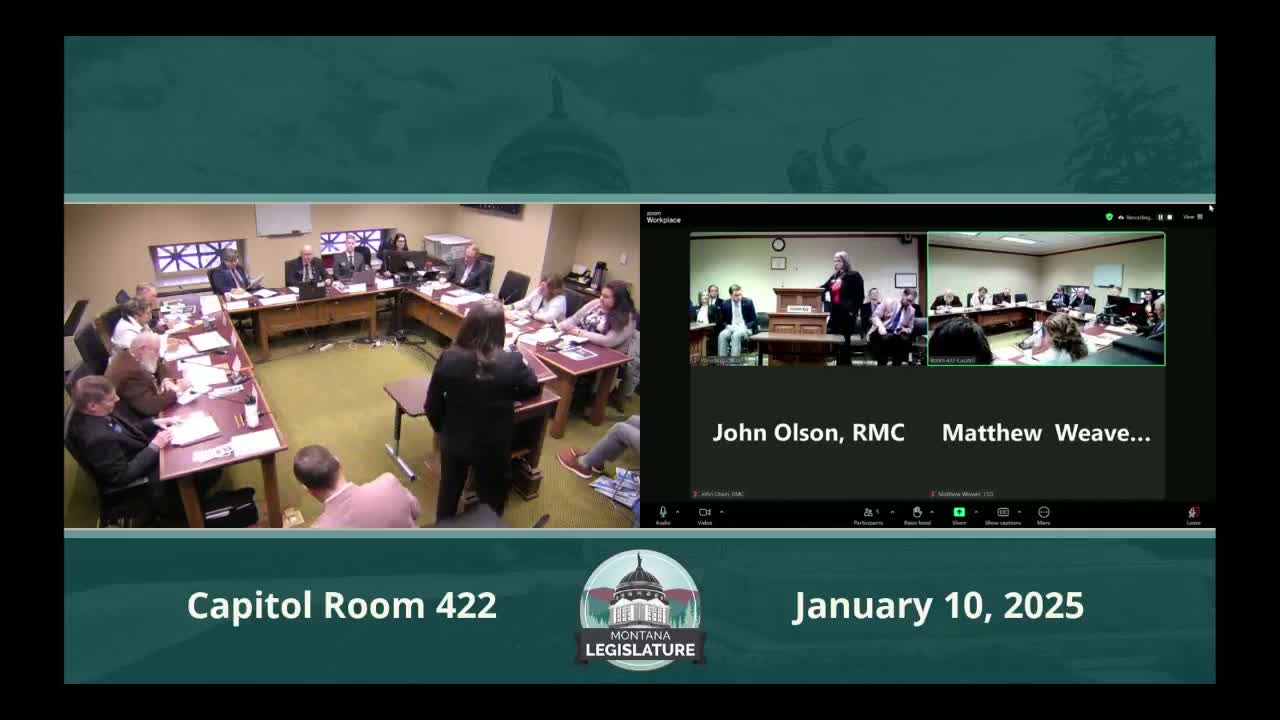
Commissioner Sarah Swanson briefed the Senate Business, Labor and Economic Affairs Committee on the Department of Labor and Industry's priorities: workforce growth, operational efficiencies, technology modernizations and a proposal to stop using general fund dollars; she detailed unemployment, apprenticeship and WIOA statistics and answered questions about contractor registration enforcement and tribal outreach.
Department of Labor and Industry Commissioner Sarah Swanson told the Senate Business, Labor and Economic Affairs Committee the department will focus this session on growing Montana's labor force, sustaining real wage growth and realizing operational efficiencies.
Swanson said the agency is authorized for 747 FTE and currently employs 656 people. She described a proposed biennial budget that would reduce one‑time requests and, if adopted, "completely eliminate the agency's use of general fund dollars." She described accomplishing that shift through operational efficiencies, technology modernization and reallocation of existing special revenue streams.
Commissioner Swanson highlighted recent technology projects that the department says have reduced citizen wait times and modernized services: the new MUSE unemployment system, which replaced two legacy systems and cut the average time to file a weekly claim from more than 30 minutes to roughly 3.5 minutes, and Acela, an occupational licensing platform which the department migrated to the cloud.
On workforce programs, Swanson said Montana has about 7,448 claimants currently collecting unemployment benefits (totaling about $4,305,000 in the referenced period) and that wages and employment have been growing. She described the state's registered apprenticeship program—"we've trained over 13,700 apprentices in more than 110 occupations"—and said apprenticeship completion yields higher earnings for participants, and that in 2024 apprenticeship programs were active in 46 of 56 counties.
Swanson also addressed federal funding concerns: WIOA (Workforce Innovation and Opportunity Act) grants from the US Department of Labor account for roughly $6.2 million for Montana and are subject to congressional reauthorization. She said the department rewrote its state WIOA plan —the first update in roughly 18 years—through a statewide stakeholder outreach process.
On enforcement, Senator Curti asked about contractors arriving after windstorms; Swanson said contractors must register in Montana but the state currently lacks enforcement authority to discipline unregistered or bad‑acting contractors and noted a potential bill to provide enforcement tools. She introduced a new tribal liaison position and said the department will work by consultation with tribal leaders to expand workforce access on reservations.
Swanson closed by offering to provide committee members copies of the presentation and the Labor Day report she had brought for distribution and said the agency looks forward to collaborating on legislative proposals during the session.