Get Full Government Meeting Transcripts, Videos, & Alerts Forever!
Get email alerts on the Commercial Law topic
No spam. Unsubscribe anytime.
Committee hears technical case to update Montana’s UCC for digital records and crypto
Summary
SB 426 would amend Montana’s Uniform Commercial Code to accommodate electronic records, broader definitions of signatures and a category for 'controllable electronic records' used to govern digital assets and secured transactions. Banking and legal witnesses urged a due pass; sponsors said the changes align Montana with other states and explicitly ban central bank digital currency without legislative approval.
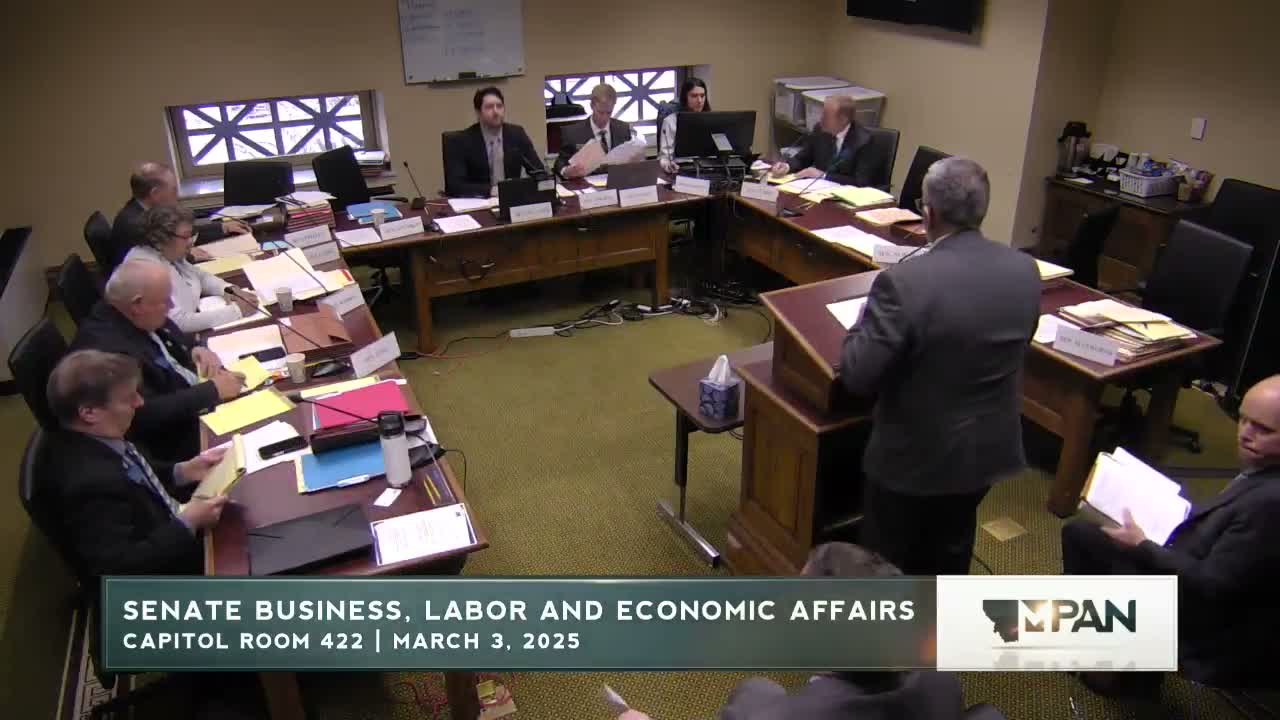
Senator Vince Rickey introduced Senate Bill 426 as an update to Montana’s Uniform Commercial Code to reflect digital transactions and new asset types.
Jonathan Byington, a law professor and uniform law commissioner, outlined three main features: replacing the word "writing" with "record" to enable electronic transactions, defining a new category of "controllable electronic record" (a UCC vehicle for assets such as cryptocurrency) and new secured‑lending rules when such records are used as collateral. He said the proposed changes are in use in many other states and include provisions explicitly excluding central bank digital currency from the UCC unless the legislature approves.
Banking and business groups — including the Montana Bankers Association and Chamber of Commerce — supported the update as maintaining Montana's commercial competitiveness. Supporters emphasized the bill does not address taxation, money‑transmission or anti‑money‑laundering laws. No opponents were on record at the hearing and the committee moved to questions about definitions and interplays with other statutes.
The sponsor closed by urging a due pass to keep Montana aligned with other states and to provide commercial certainty for digital commerce.