Get Full Government Meeting Transcripts, Videos, & Alerts Forever!
Get email alerts on the Meat Processing topic
No spam. Unsubscribe anytime.
Helena’s Old Salt Co‑op seeks federal inspection and markets for a $7M processing project
Summary
Cole Mannix described plans for a federally inspected meat processing facility north of Helena, estimated at about $7 million, cited local zoning limits and uncertainty about inspector availability, and asked lawmakers to consider institutional procurement and other supports to improve market access for small processors.
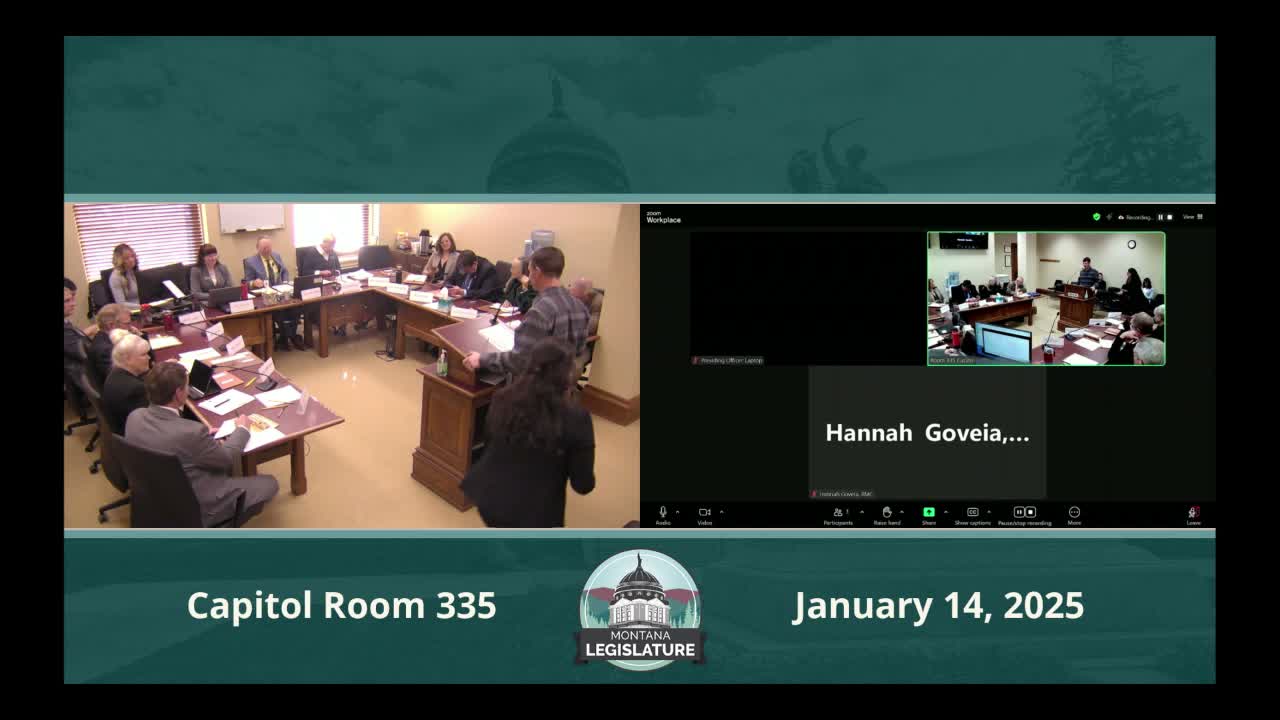
Cole Mannix, president and founder of Old Salt Co‑op, told the Agriculture, Livestock and Irrigation committee his cooperative is building a federally inspected meat processing facility north of Helena and hopes to begin slaughter‑to‑fulfillment operations by October if federal inspection capacity and financing align.
Mannix described the project’s scale and constraints: "this project is about 7,000,000 by the time you pay for the land and all the improvements," he said, and noted the plant’s raw top‑line capacity could be about 150 head per week while the practical "sweet spot" is closer to 60 head. He said the co‑op currently uses custom federal facilities for slaughter and operates its small plant under custom-exempt and retail-exempt rules while awaiting a federal plant number.
Mannix told lawmakers that local zoning was a practical barrier when searching for sites that allow slaughter: he said he had to pass on more than 30 properties that did not contemplate food processing. He also flagged uncertainty about inspector availability as a key operational risk: if the co‑op cannot secure a federal inspector in a timely way, state inspection would be a fallback but is not the preferred path.
On financing, Mannix said Old Salt has accessed two federal loan programs, one federal grant remaining from COVID-era funds, and has used a state ARPA grant; he noted a $50,000 Department of Agriculture grant helped buy a smoker. He described market access as another major hurdle: "the Sysco's and the US Foods...the kind of the big box...is just very hard to break into," and suggested the state could help by expanding institutional procurement from Montana producers.
Mannix also discussed workforce limits and the need for more butchers and inspectors; he referenced engagement with local vocational programs (Missoula County Public Schools) as a recruitment path. He offered to provide contact information for follow-up and told the committee he welcomed partnership on procurement and inspection questions.
Next steps: Mannix said Old Salt will continue the permitting and inspection process and seek federal inspection clearance; the co‑op asked the committee to consider policies or procurement changes that would make institutional markets more accessible to small and mid‑size processors.