Get Full Government Meeting Transcripts, Videos, & Alerts Forever!
Get email alerts on the Broadband topic
No spam. Unsubscribe anytime.
Bill to keep small broadband and telecom providers on lower property‑tax class advances to protect rural investment
Summary
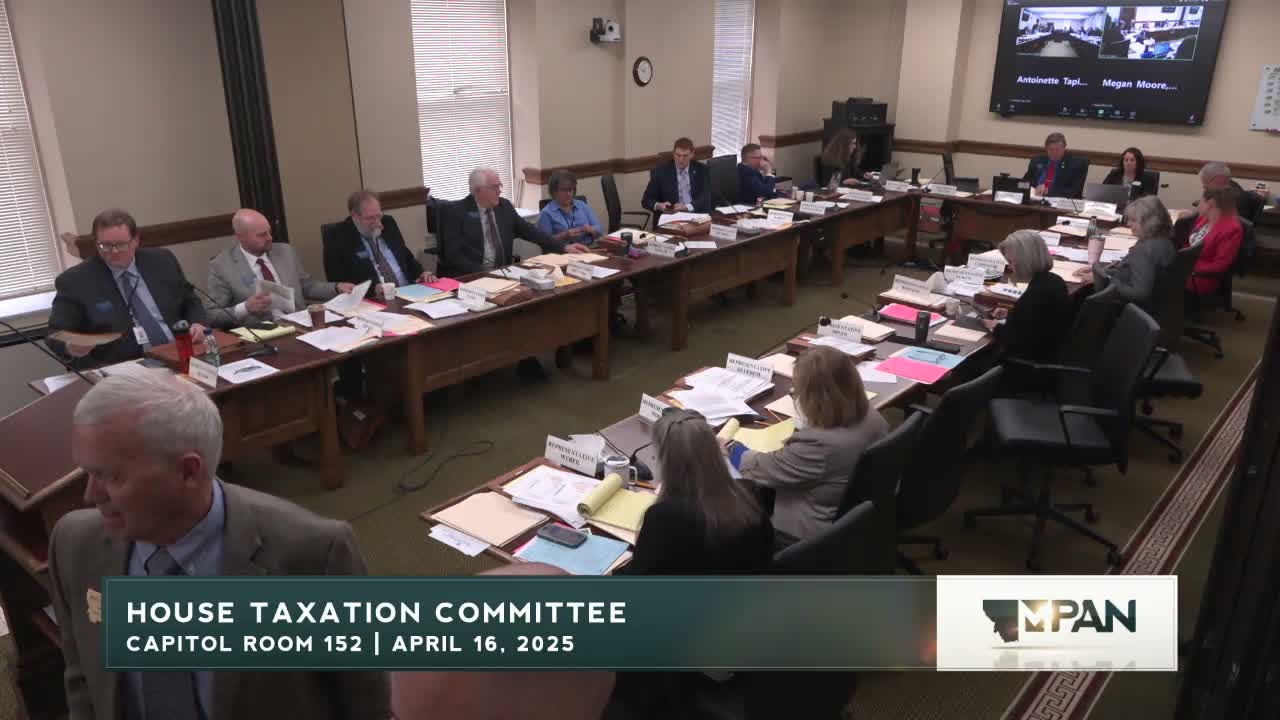
Sen. Dave Fern’s SB550 would allow small multi‑county broadband providers to remain taxed under lower classified property rates when operating in three or fewer counties; proponents said the change encourages rural investment and competition while DOR staff explained fiscal and classification mechanics.
Sen. Dave Fern introduced Senate Bill 550 to adjust centrally assessed property classification so small broadband and telecommunications providers operating in a few counties would remain eligible for the lower class 5 tax rate (3 percent) rather than being moved to central assessment and taxed at higher class 13 rates (6 percent).
Proponents — including Broadband Montana and Montana Sky Networks — argued small, locally owned providers that expand into neighboring counties have been subjected to central assessment that dramatically increased their property-tax bills and discouraged investment in underserved areas. Ryan Bowman, CEO of Montana Sky Networks, said his company’s tax bill “quadrupled permanently” after expanding into a second county and that the change would have dissuaded the firm from investing in broadband in Lincoln County.
Department of Revenue economists and centrally assessed-property staff (Jared Isom, Doug Roehm) answered technical questions. DOR noted that reclassification of some property currently in class A to class 5 would increase the effective rate on the first $6 million of Class A property (1.5% vs 3%), creating technical impacts that warrant careful drafting. Committee members asked technical questions but heard no organized opposition; the committee took the bill forward.
Ending: SB550 passed out of committee and sponsorship in the House was anticipated for floor consideration.