Get Full Government Meeting Transcripts, Videos, & Alerts Forever!
Get email alerts on the Ev Taxation topic
No spam. Unsubscribe anytime.
Montana committee hears calls for focused study of EV fees as road‑fund gap grows
Summary
Supporters and opponents told the House Transportation Committee that Montana needs a focused interim study of electric‑vehicle fees, citing low EV registrations, uncertainty about revenue from charging taxes, and concerns about equity and diesel/gas tax differences.
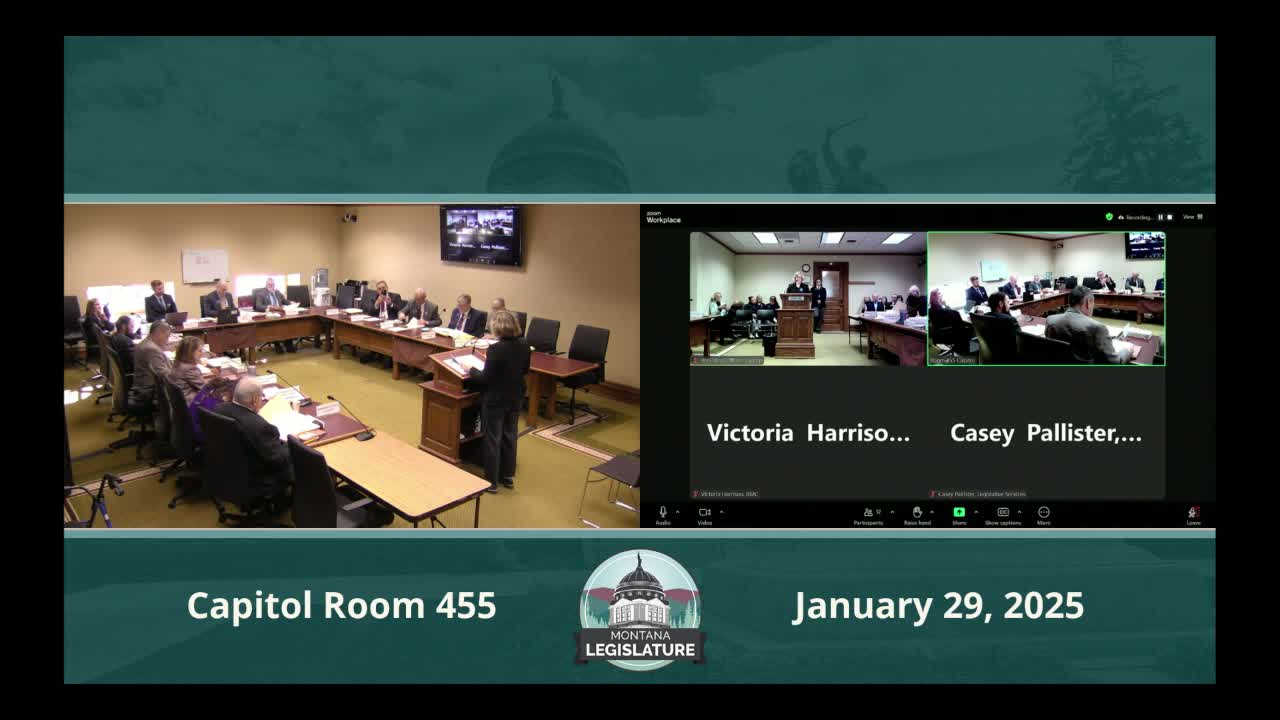
Becky Edwards, a Bozeman representative who sponsored House Joint Resolution 8, told the House Transportation Committee the study would examine electric vehicle registration fees and taxation amid a widening shortfall in roadway funding. "We have a growing gap between motor fuel revenues and the actual expenditures necessary to maintain transportation infrastructure," Edwards said, urging lawmakers to learn more before changing policy.
Proponents described the current EV fee structure as provisional. Mark Judeman of Helena, who said he pays an additional $130 per year to register a Chevrolet Bolt, contrasted that with an estimated $75 in gas taxes he would have paid for his prior Prius and said the higher EV fee "doesn't seem fair." Nick Fitzmaurice, energy transition engineer at the Montana Environmental Information Center, and Makena Sellers of the Montana Renewable Energy Association both told the committee EVs remain a small share of registrations and recommended a neutral, evidence‑based study. Fitzmaurice said EVs account for only about 0.5–1% of registrations and asked the committee to "look hard at these vehicles and all vehicle types to understand the impact that driving them has on the roadways." Sellers said the $150 premium adopted previously was a "best guess" lacking detailed mileage data.
Witnesses highlighted technical points policymakers will need to address. Jesse Therrien of Yellowstone Teton Clean Cities testified that axle load — not energy source — is a central driver of pavement wear and cited the long‑used "fourth power" rule that relates axle weight to road damage. Therrien also questioned a fiscal estimate that converted gallons to kilowatt hours and said it overstated expected revenues from charging taxes by roughly threefold.
The Montana AFL‑CIO, represented by Amanda Bridal, described itself as a "soft opponent," saying unions want everyone to contribute to roadway costs but urging a broader review of post‑2023 taxation rather than a study framed to presume a problem with EVs. Bridal said labor groups would support a broader study and offered to work with the sponsor to widen the scope.
Committee members asked whether the Montana Department of Transportation had been consulted. Fitzmaurice said MDT has been "tracking this resolution" and would not take a position but would follow the committee's decision. Edwards said bringing MDT and other nonlegislative experts into a focused interim study was the bill's intent.
Edwards concluded the hearing by asking the committee for a "due pass" so the study can proceed; the chair closed the HJ 8 hearing without recording a committee vote.