Get Full Government Meeting Transcripts, Videos, & Alerts Forever!
Get email alerts on the Taxation topic
No spam. Unsubscribe anytime.
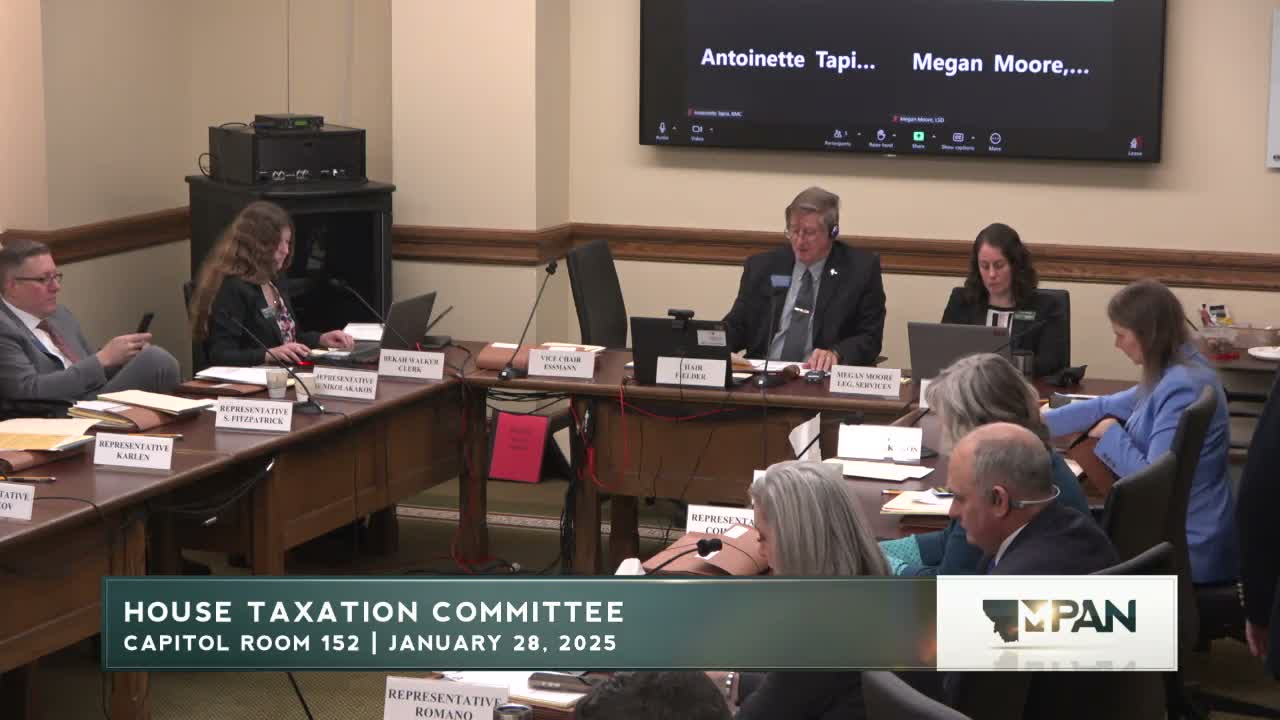
House panel hears bill to give volunteers a $15-an-hour refundable tax credit
Summary
A House Taxation Committee hearing reviewed House Bill 243, which would create a refundable $15-per-hour income tax credit for volunteer emergency responders (up to 100 hours/$1,500). Supporters said it would help retain and recruit volunteers; the Montana Society of CPAs opposed using the tax code to deliver the benefit. No vote was taken.
Representative Steve Gist, sponsor of House Bill 243, told the House Taxation Committee the bill would create a refundable income tax credit for volunteer emergency first responders equal to $15 for each logged hour of service, auditable through dispatch or service logs and capped at 100 hours per taxpayer (a $1,500 maximum). "The credit is equal to $15 an hour for every hour that's logged," Gist said while describing EMS, volunteer fire, search-and-rescue and auxiliary officers as the bill's intended beneficiaries.
Gist said the measure is intended to retain existing volunteers and recruit new ones in Montana's largely rural emergency-response system. He cited fiscal-note estimates presented to the committee, telling members the note projects roughly $4,000,000 in fiscal impact in 2027 and that "if everybody of those 8,000 people took and were capped out at a thousand dollars, that'd be $8,000,000," language he used to illustrate how cost could scale with uptake. The bill text as read to the committee references an amendment to "section 15 32 3 0 3" and an applicability for "income tax years beginning on or after 01/01/2026".
Allen Lloyd, executive director of the Montana Society of CPAs, announced his group's reluctant opposition. "We're not opposed to supporting our first responders," Lloyd said, "our opposition comes solely to using the tax credit as the methodology to do this." Lloyd urged lawmakers to consider alternatives — for example, increasing direct stipends to volunteers — to avoid reintroducing the complex web of credits that prior tax reform removed.
Department of Revenue staff and the state EMS system manager offered implementation and program-context details. Shaelyn Daigle, a unit manager at the Department of Revenue, said the department expects to add staff to validate claims and described planned reporting: a new line on the tax form with a supporting schedule and a request for information to validate hours. "Roughly, I would say from start to finish about 10 minutes per credit," Daigle said, estimating administrative time per claimed credit and noting the department would work with issuing agencies to confirm logged hours.
Committee members asked whether retirement or nominal pensions would disqualify volunteers; Gist said retirement benefits paid through a separate retirement program would not be treated as compensation for the purposes of the credit, and that the credit targets actual, uncompensated hours. Members also asked for a side-by-side comparison of similar credits and whether agencies could submit training or service logs to reduce verification burden; staff agreed to explore those options.
The hearing closed with no vote. Chair Fielder reminded the committee of upcoming executive actions and hearings later in the week. The bill will return to the committee for future consideration if members schedule executive action.