Get Full Government Meeting Transcripts, Videos, & Alerts Forever!
Get email alerts on the School Safety topic
No spam. Unsubscribe anytime.
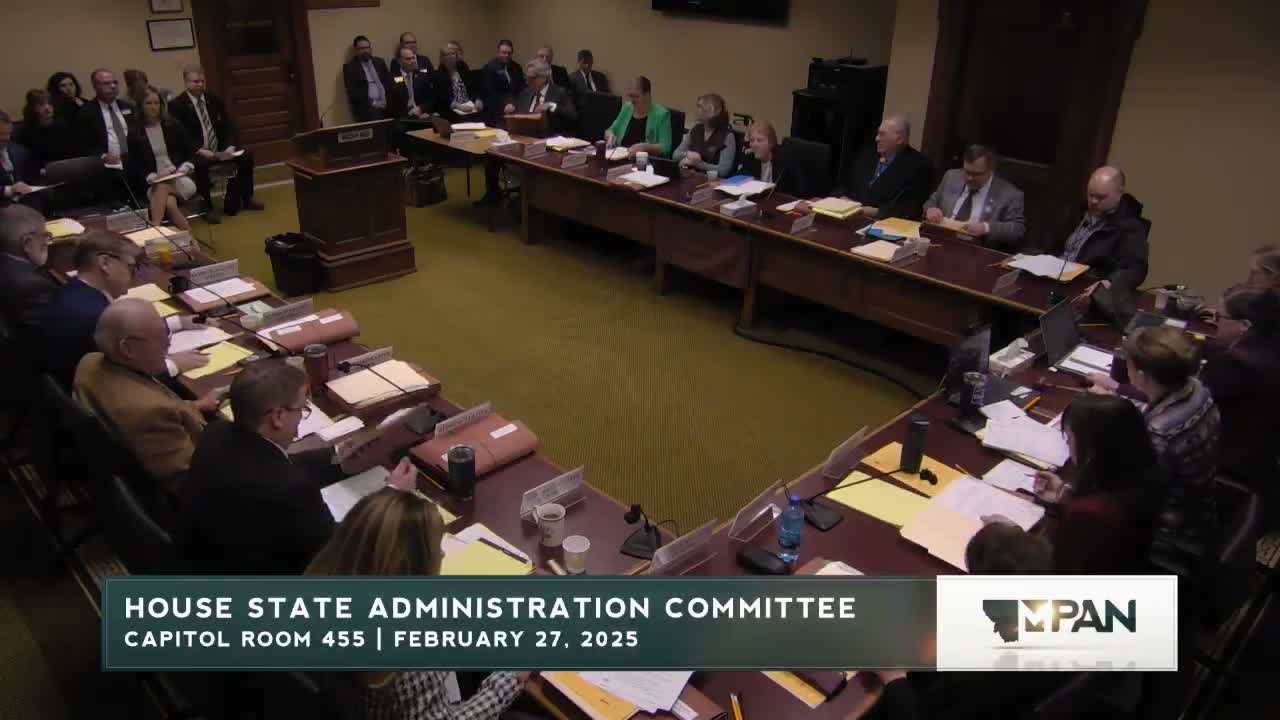
House panel advances bill allowing temporary supplemental door locks in emergencies
Summary
The House State Administration committee heard proponents for House Bill 651, which would add a narrow fire‑code exception to let schools and other public buildings use certain supplemental door‑lock devices during active‑shooter or other shelter‑in‑place emergencies, while preserving ways for first responders to gain entry.
Representative Amy Regier (R‑House District 6) introduced House Bill 651, saying the measure would create a limited exemption to Montana’s fire code to let schools and other public buildings use specified emergency supplemental door‑lock devices during shelter‑in‑place emergencies such as active‑shooter incidents.
Sponsor and proponents emphasized safety and local control. Shelby DeMars of Nightlock, the manufacturer that drafted the bill’s criteria, walked the committee through the bill’s requirements, noting the text requires local fire‑department, law‑enforcement or code‑official approval before a device can be used and that the device “can be engaged or removed without the door having to be open” and be removable from the inside without a key. “That is important because in an active shooter situation, you don't want to create a delay or have to open that door to secure it,” DeMars said.
Supporters who described school and rural emergency‑response realities included Dan Smith, executive director of the Montana Police Protective Association, who said the devices can buy precious seconds for responders, and Doug Reisig of the Montana Quality Education Coalition, who drew on decades as a superintendent to say supplemental locks would complement training. Jack Taylor of Nightlock LockDown supplied product details and pricing, telling the committee per‑lock prices range “between $75 and $85 each,” falling to about $65 at larger quantities.
Informational witnesses—Steve Biamonte (General Services Division) and Carter Marsh (Montana Professional Firefighters)—said the key operational questions are training, policy and how responders obtain the release tool. Biamonte and Marsh said responder access must be built into any local deployment policy; Taylor said the releasing tool is inexpensive and typically provided to local fire and police at no charge.
Committee members asked about whether the statute would create an exclusive endorsement of a single product and about who would certify or test devices once installed. DeMars said the bill language is product‑neutral: if a product meets the statutory criteria it would qualify. Sponsor Regier said local policy would govern functional testing and maintenance. Representative Regier closed by asking for a due‑pass recommendation.
The committee gave the bill a do‑pass recommendation in executive action later in the hearing.
What’s next: The bill will go to the House floor schedule after committee reports and any amendments.
Sources: committee hearing on HB 651 (testimony of Representative Amy Regier; Shelby DeMars, Jack Taylor; Steve Biamonte; Carter Marsh).