Get Full Government Meeting Transcripts, Videos, & Alerts Forever!
Get email alerts on the Ballot Initiatives topic
No spam. Unsubscribe anytime.
Bill would put full legislative poll on voter pamphlet; opponents warn of partisanship
Summary
Rep. Lucas Schubertsponsored HB 375 to add a full legislative poll (broken down by partisan caucus) to the voter information pamphlet after county signature verification; proponents call it transparency, opponents call it partisan interference and warn of legal and practical problems.
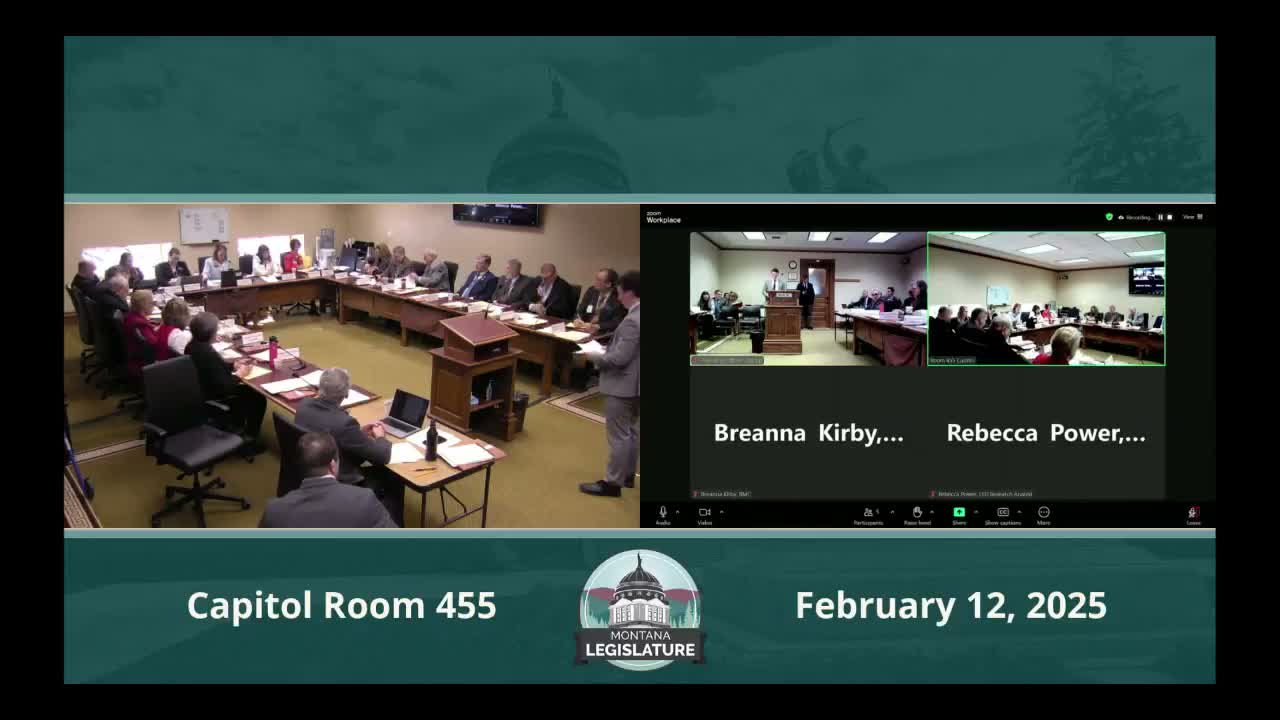
Representative Lucas Schubert opened testimony on House Bill 375, saying the bill would require the secretary of state to include the results of a legislative pollbroken down by partisan affiliationon the voter information pamphlet and ballot once counties verify signatures. "This bill will revise ballot initiative laws to increase transparency," Schubert said, adding that the poll would allow voters to see "most Republicans support or oppose" and "most Democrats support or oppose" a given initiative.
A spokesman for Secretary of State Christy Jacobson, Austin James, told the committee the office supports the measure and said providing that information to voters is valuable. "When voters would call in and say, who supports this ballot issue, voters liked knowing those results," James said, describing earlier practice of placing committee poll results on petitions and in pamphlets.
Opponents urged the committee to reject the bill. Heather OLoughlin of the Montana Budget and Policy Center said a careful 2023 statutory overhaul already balanced transparency and access and that adding a legislative poll could add little substantive information to the voter pamphlet. "We would urge a do not pass on House Bill 375," she said. Patrick Yawake, representing Blackfeet, Chippewa Cree of Rocky Boy and Fort Belknap communities, argued the bill "inject[s] partisan politics into our election system" and said ballot material should remain nonpartisan. Online commenter John Marshall warned the committee not to let the legislature intrude on direct democracy.
Schubert described two pending amendments: one (375.1.3) that would eliminate an option for electronic delivery at the Secretary of State's request and lengthen the response window from 20 to 25 days, and another (375.1.1) removing a legislator's option to state "no position" and adding language to resolve tie votes by caucus. He argued courts have previously allowed the legislature to provide opinion statements in the voter information pamphlet so long as the legislature does not interfere with signature gathering.
Committee members asked technical and practical questions: how often legislators return votes in interim polls, whether the polling would slow the signature‑verification process, and the likely fiscal cost. James said return rates vary by issue and that polling would be conducted while counties verify signatures; he estimated the cost as "a couple of thousand dollars" but agreed to provide more precise figures. Several members expressed concern that the change could politicize citizen initiatives; Schubert countered that publishing legislators' opinions increases information for voters.
The hearing closed with the sponsor urging a do pass. No committee vote was taken during the hearing record.
Next steps: HB 375 will advance through the committee process where members may offer the described amendments and the committee may schedule further consideration.