Get Full Government Meeting Transcripts, Videos, & Alerts Forever!
Get email alerts on the Procurement Modernization topic
No spam. Unsubscribe anytime.
Panel hears procurement bill to modernize resident-preference claims and extend contract lengths
Summary
House Bill 113 would move resident-preference administration to the Department of Administration, allow a sworn declaration instead of a notarized affidavit to claim preferences, and align maximum state contract lengths at 10 years; Department officials and higher-education representatives supported the changes as efficiency and modernization measures.
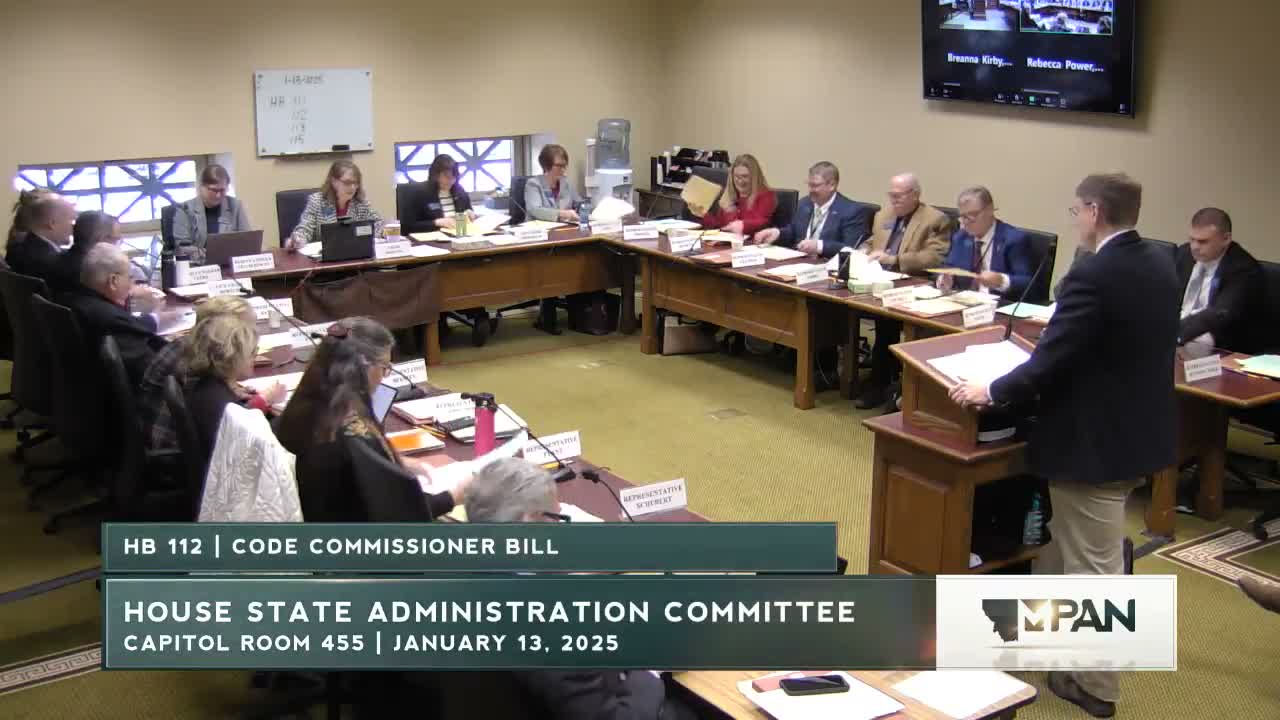
The House State Administration Committee heard House Bill 113, sponsored by Representative Steve Fitzpatrick, which would revise Montana’s procurement law to modernize how vendors claim a Montana resident preference and to align maximum state contract lengths at 10 years for most contract types.
Don Harris, chief legal counsel for the Department of Administration, said the department administers central procurement and supports the bill’s two main changes: letting vendors claim a resident preference by checking a declaration in the procurement system rather than submitting a notarized affidavit, and consolidating maximum contract lengths so contracts may run up to 10 years when appropriate. Harris said the change to a declaration — signed under penalty of perjury and usable via the state’s procurement portal — should reduce paperwork and increase vendor participation.
John Thomas, chief procurement officer at State Procurement Services, told the committee the bill removes references to outdated registration systems and is part of broader procurement modernization to improve fairness, transparency and efficiency.
Galen Hollenbaugh, deputy commissioner at the Office of the Commissioner of Higher Education, said the extension from seven to ten years will help higher-education institutions track and negotiate contracts and may improve vendor participation.
Representative Perry asked how the preference operates; Harris confirmed that the preference applies when two bidders are tied after the scoring process, giving the benefit to the Montana resident. Committee members also asked about enforcement and verification of false claims; Harris said the department checks a business’s status through the Secretary of State’s filing system and that the old affidavit option would remain available alongside the new declaration form.
Supporters requested a do-pass recommendation. The committee closed the hearing without immediate action.