Get Full Government Meeting Transcripts, Videos, & Alerts Forever!
Get email alerts on the Local Government topic
No spam. Unsubscribe anytime.
Lawmakers hear bill to standardize public-notice timelines across Montana local governments
Summary
HB 394 would align public-hearing notice requirements across multiple sections of Montana law by specifying business-day timelines, mailing instructions, and short/long notice options; clerks said it simplifies work and helps the public, while questions focused on newspaper publication schedules and practical mechanics.
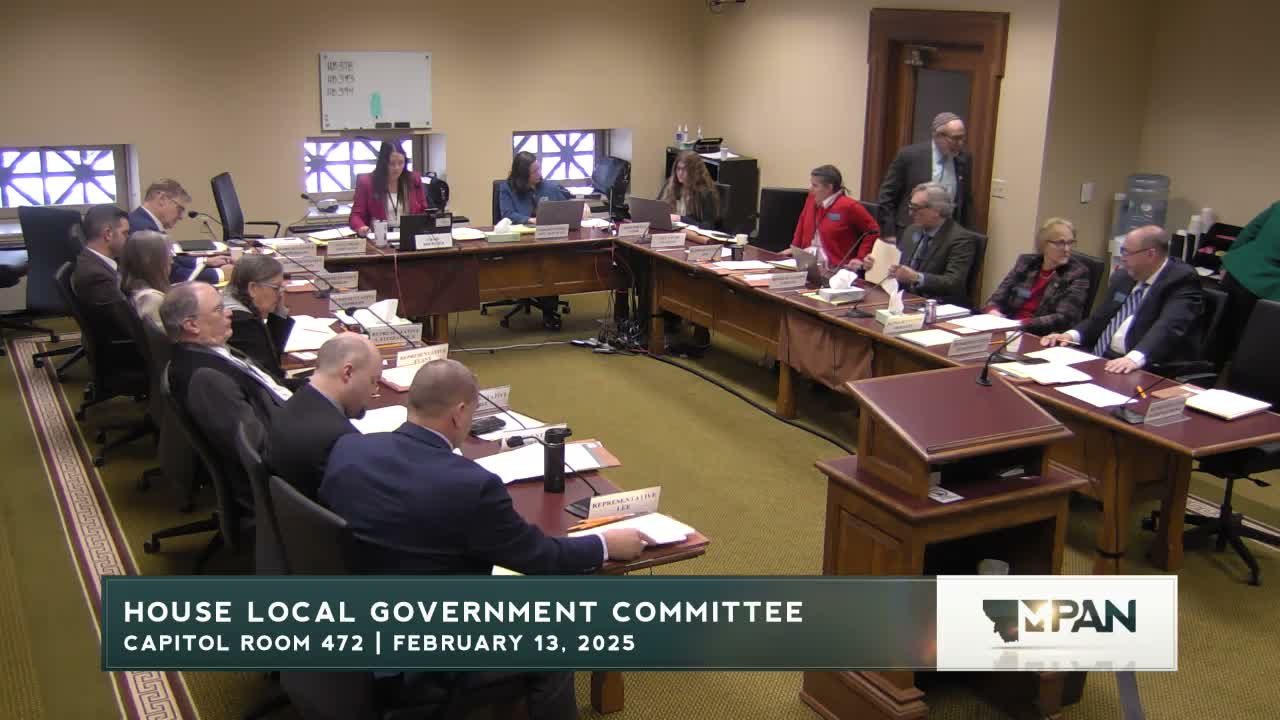
Representative Larry Brewster opened the hearing on House Bill 394, describing it as a clerks-and-recorders-led effort to simplify and standardize public-notice rules across 16 sections of Montana code. The bill would define business days, clarify mailing instructions, and create short and long notice categories to make requirements consistent across topics such as land use, budgets and assessments.
Jennifer Robley, speaking for the Montana Municipal Clerks, Treasurers and Finance Officers Association, told the committee the measure will not change practices in most places but will create clarity and efficiency for small clerks who currently maintain disparate timelines. Mike Moss, Bozeman city clerk, said standardization reduces staff work and makes notices easier for taxpayers to follow. Thomas Jodin of the Montana League of Cities and Towns also voiced support, saying clerks and attorneys would no longer need separate “cheat sheets” for different statutes.
Representatives questioned how the business-day approach would work with newspapers that publish weekly or monthly. Clerks explained the language is intended to provide flexibility so that a first notice published five business days before a hearing (or 15 business days for longer notices) will accommodate different publication schedules and on-site posting in communities without regular print newspapers. Clerks noted officials can work with local publishers to time legal ads and that posting on social media or a municipal site remains an option where no website exists.
Representative Brewster closed by praising the clerks' cooperative work on the draft. The committee closed the hearing on HB 394 without taking a vote.