Get Full Government Meeting Transcripts, Videos, & Alerts Forever!
Get email alerts on the Size And Weight Enforcement topic
No spam. Unsubscribe anytime.
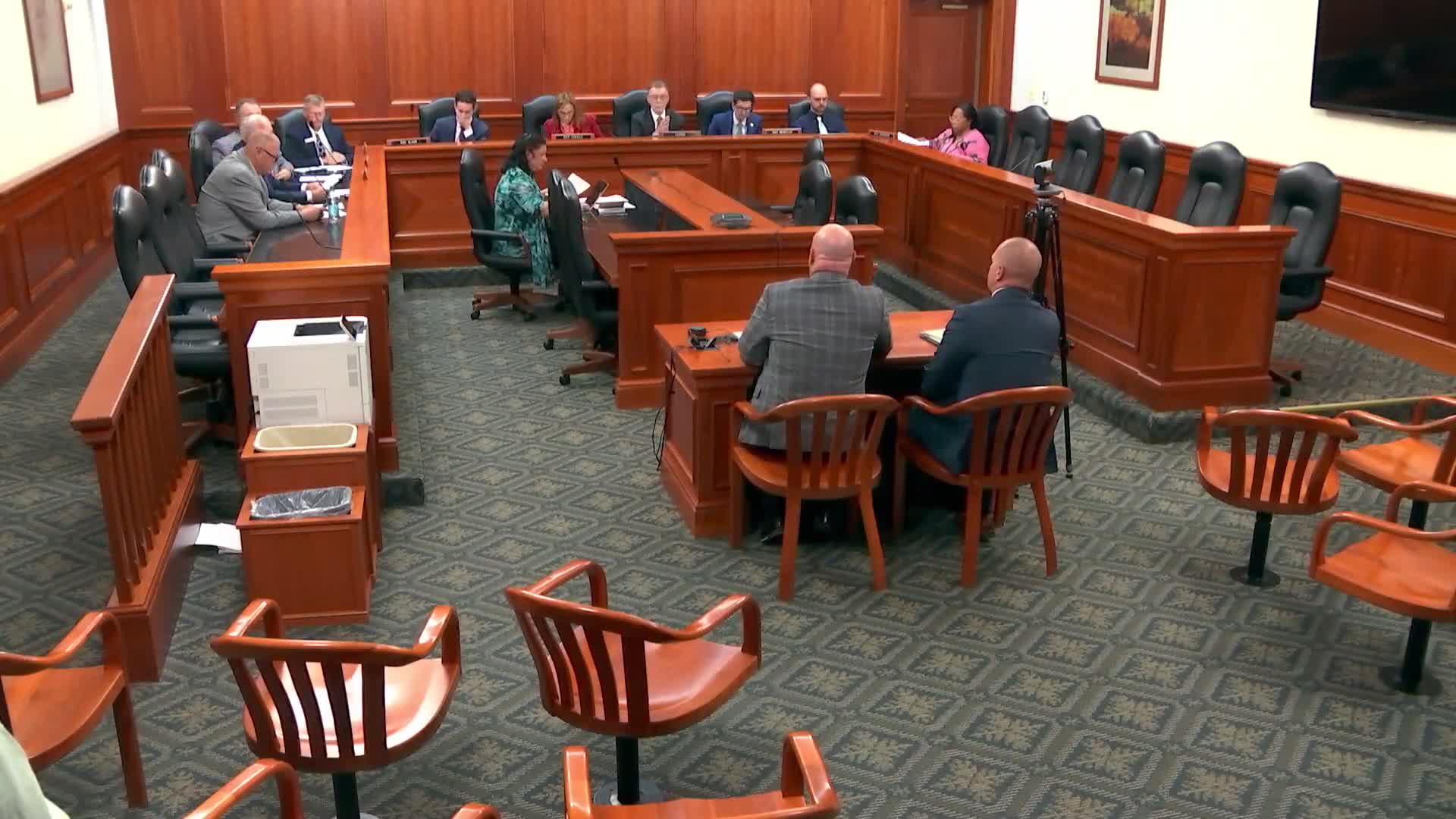
Subcommittee hears Michigan State Police on size-and-weight enforcement, technology and staffing
Summary
Michigan State Police commercial-vehicle officials told the Appropriation Subcommittee on State and Local Transportation that MDOT-funded programs and new weigh-in-motion and mobile tools screen millions of vehicles annually, but staffing and seasonal restrictions limit physical weighings and citations.
The Appropriation Subcommittee on State and Local Transportation heard testimony from Michigan State Police Commercial Vehicle Enforcement Division Inspector Patrick Morris about the state’s size-and-weight enforcement program, funding and staffing.
Inspector Morris told the panel that CVED submits an annual size-and-weight plan to the Federal Highway Administration and that MDOT certifies the plan, which helps secure funding. “We receive approximately $12,800,000 for size and weight enforcement in support of those activities,” Morris said. He described that money as flowing from MDOT to MSP through an MOU and covering weigh-station operations, overtime and facility improvements.
Morris outlined CVED’s infrastructure and operations: MDOT owns the physical weigh-station properties (15 stations listed in the report appendix) while MSP staffs and maintains facilities; CVED also uses about 43 wireless weigh-in-motion (WIM) sites statewide and portable scales carried in patrol cars. “We utilize 43 of those sites now statewide web based from our patrol unit to screen commercial vehicles,” he said, and described the WIM system as producing an axle-configuration diagram that lets officers narrow which vehicles to stop.
On enforcement activity, Morris said CVED screens roughly 5 to 6 million vehicle passages per year via fixed and WIM systems, conducts about 11,000 physical weighs annually and issues about 6,000 overweight citations (plus-or-minus roughly 500). “We weigh about 10,000 vehicles. Of those, on average, about 6,000 roughly are cited per year,” he said. He emphasized manpower limits and temporary scale closures as factors that constrain how many screened vehicles are physically weighed and cited.
The committee pressed CVED on budget and staffing. Morris gave CVED’s overall budget as about $37,000,000, funded principally by an MDOT interdepartmental grant (approximately $12,800,000), federal Motor Carrier Safety Assistance Program (about $14,800,000), and other sources. He said CVED’s current officer strength is 97, down from an average of about 108 over the past decade; MSP plans recruit classes in January and June to restore staffing toward previous levels.
Morris described recent and planned capital work: carry-forward funds from lapsed appropriations were directed to weigh-station renovations starting about 2020, leaving two southwest weigh stations still to be upgraded and a proposed new northbound I-75 weigh station near Birch Run to fill a coverage gap. He said some weigh stations were closed for multi-year highway projects and renovations but described a long-term improvement in facility condition because of the investments.
On penalties, Morris cited the Michigan weight schedule and said fines are assessed on a cents-per-pound basis that increases with the size of the violation; courts add administrative fees and determine the final assessed amount. He told the committee the CVED would share the fine schedule, which appears in the report appendix.
Committee members asked for further technical briefings. Morris offered to bring training staff to brief members on how axle loads, per-axle allowances and frost-season restrictions are applied in Michigan.
Votes at a glance: • Motion to adopt minutes of Aug. 13 (moved by Representative Slaw) — adopted by unanimous consent.
What happens next: CVED said it plans recruit classes in January and June and will provide the committee with the fine schedule and offered a training briefing on weight laws and axle calculations.