Get Full Government Meeting Transcripts, Videos, & Alerts Forever!
Get email alerts on the Jury Compensation topic
No spam. Unsubscribe anytime.
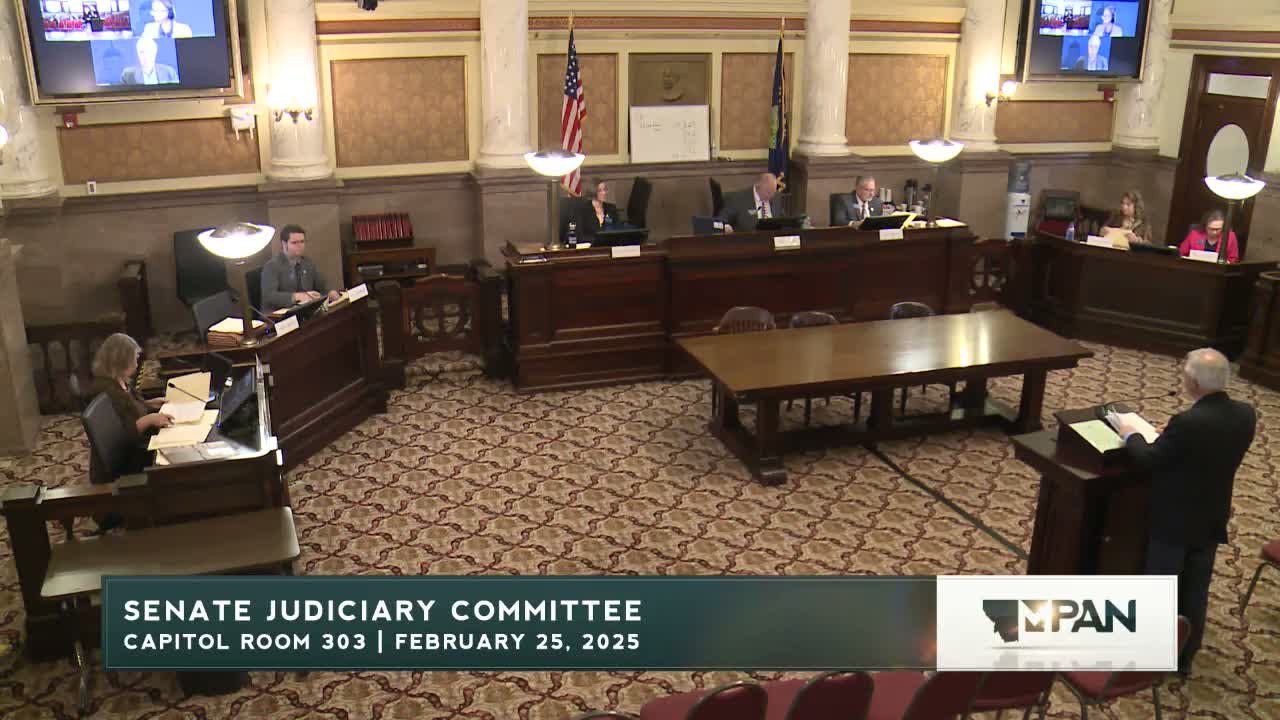
Committee Weighs Raising Juror Pay; Supporters Cite Representation, Cities Ask About Reimbursement
Summary
Senate Bill 370 would raise juror pay (sponsor suggested doubling current $12 rate), with supporters arguing higher pay improves jury representativeness and relieves hardship; League of Cities and Towns urged clarifying reimbursement language so municipal courts receive funds for juries.
Senator Mike Yakovich introduced Senate Bill 370, which proposes to increase juror pay in Montana. Yakovich said the current $12 daily jury fee is outdated and compared Montana’s rate to neighboring states, suggesting that a modest increase (he floated a $20–$27 figure in discussion) would help lower the financial barrier to jury service.
Proponents included representatives of tribal communities and retired legislators who argued increased compensation would reduce the financial hardship of jury service, broaden participation by younger and lower‑income residents, and improve the representativeness of juries. Alyssa Snow, representing the Blackfeet Tribe and others, testified that higher pay could avoid forcing low‑income people to choose between jury duty and critical expenses.
The Montana League of Cities and Towns (Thomas Joden) raised technical objections: city and municipal courts of record currently bear jury costs under statute, and the bill’s draft language directed reimbursement to counties rather than to the court of record that held the trial. Joden asked the committee to amend section language so reimbursement follows the structure in current statute and goes to the court that conducted the trial, and to align reimbursements with existing administrative structures.
Committee members pressed sponsors on the fiscal note and implementation, whether the increase should apply to criminal trials only, and the distribution of costs among counties, cities and municipal courts. The sponsor welcomed technical amendments to clarify allocation and urged collaborative fixes. No final committee vote was recorded during this hearing.
What happens next: Committee will consider technical fixes to the reimbursement language and the amount, and may request fiscal clarifications before taking executive action.