Get Full Government Meeting Transcripts, Videos, & Alerts Forever!
Get email alerts on the Committee Votes topic
No spam. Unsubscribe anytime.
Judiciary committee advances seven bills in executive session; several drew constitutional and fiscal questions
Summary
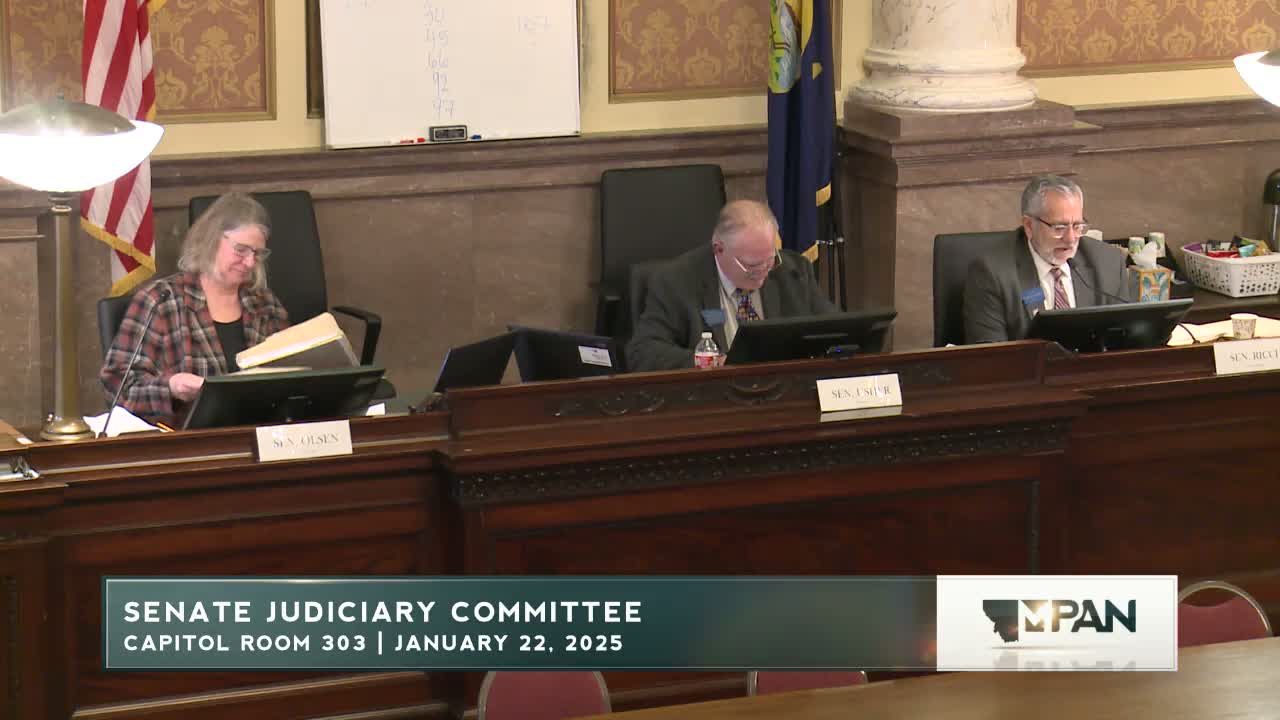
After hearings the Senate Judiciary Committee advanced seven bills in executive (SB 13, SB 30, SB 66, SB 92, SB 97, SB 101, SB 107), typically by 6–3 roll-call votes. Several measures prompted constitutional or fiscal concerns (state bar authority, judicial-rulemaking, PSI funding, and public-records issues) and at least one motion was withdrawn pending amendments (SB 45).
Following hearings the Senate Judiciary Committee moved to executive session and considered a slate of bills. Committee members advanced seven bills by roll-call vote; most passed by 6–3 margins. The bills and committee outcomes (motions were typically "do pass") were:
- SB 13 (motion carried 6–3): Committee discussion referenced the 2007 change that had granted the Supreme Court original jurisdiction over certain measures; opponents said the bill would restore pre-2007 uncertainty.
- SB 30 (motion carried 6–3): Supporters said the bill clarifies recusal and the rule of necessity; opponents said it may delay justice and strain judicial resources without additional funding.
- SB 66 (motion carried 6–3): The bill sets standards related to judicial conduct; debate focused on subjective elements (facial expressions, prior conduct) and whether the court should set such standards.
- SB 92 (motion carried 6–3): A repeal or modification to make the state bar voluntary drew constitutional argument about the Supreme Court’s rulemaking authority and potential First Amendment questions.
- SB 97 (motion carried 6–3): Venue and related procedural adjustments were debated for potential implementation complexity.
- SB 101 (motion carried 6–3): A bill creating a new criminal offense labeled 'unlawful squatting' prompted concerns about vagueness, overlap with trespass and landlord-tenant law, and potential law-enforcement impacts; testimony indicated no fiscal note was required.
- SB 107 (motion carried 8–1): An education-related bill addressing trafficking prevention passed with one dissent and prompt discussion about whether schools should be required or encouraged to implement the statute (members debated making the requirement mandatory vs. discretionary).
One motion (SB 45) was withdrawn when members and staff identified a pending amendment that had not been circulated; the committee paused to allow the sponsor and staff to finalize the draft.
Several bills advanced despite divided committee debate about constitutional authority (especially for SB 92 and several judiciary-rule items) and unresolved fiscal questions. The chair announced the committee had advanced seven bills in executive and adjourned to reconvene the following day.