Get Full Government Meeting Transcripts, Videos, & Alerts Forever!
Get email alerts on the State Bar Testimony topic
No spam. Unsubscribe anytime.
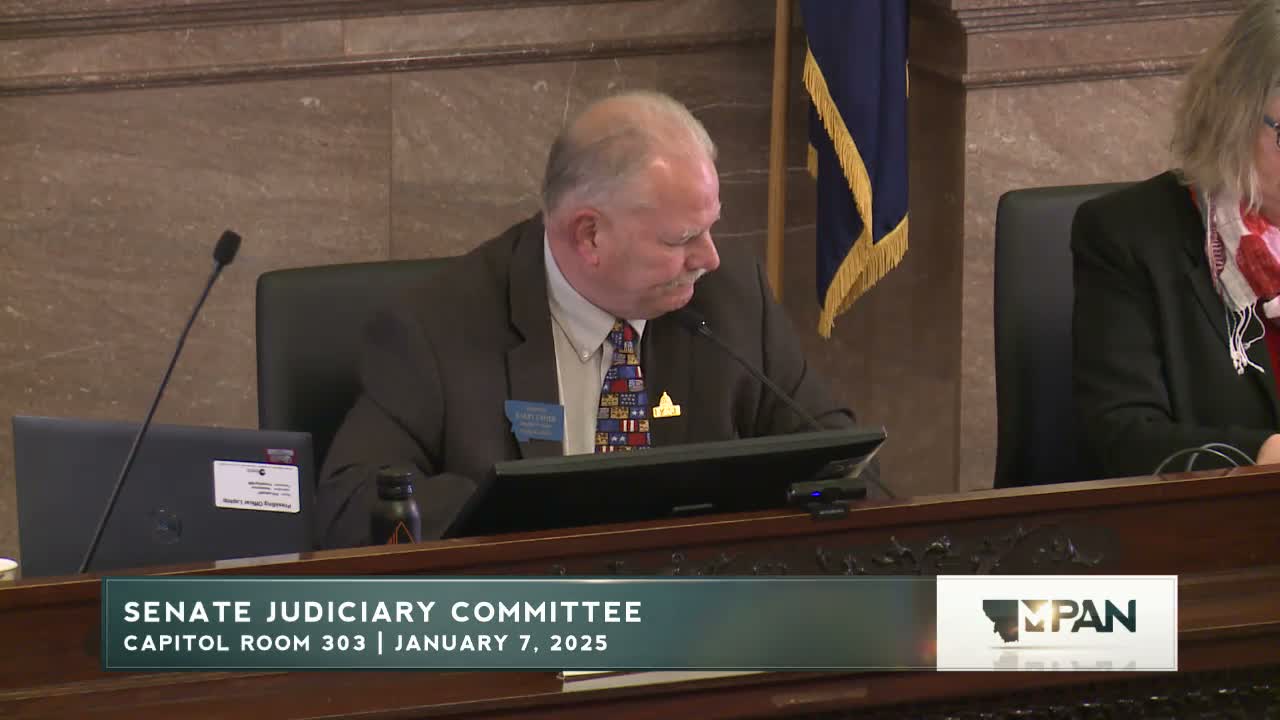
Montana State Bar president defends association's role, cites Keller and confidentiality during Judiciary Committee hearing
Summary
Tony Tease, president of the Montana State Bar, told the Senate Judiciary Committee the bar is independently funded, operates under Keller precedent when taking legislative positions, and cannot comment on pending disciplinary proceedings; senators pressed for clarification and discussed a December 23 letter and related response.
Tony Tease, president of the Montana State Bar, appeared before the Senate Judiciary Committee (by Zoom) in response to a December 23 letter from senators and explained the bar's governance, funding and limits on commenting about disciplinary matters.
The exchange matters because senators have raised questions about comments made at a state bar CLE program last April and whether the bar should apologize or otherwise respond; the committee also discussed possible legislative implications, including LC 44 (now referenced as Senate Bill 92). Tease repeatedly declined to discuss specifics of any pending disciplinary matter, saying those matters are confidential and handled by the Office of Disciplinary Counsel.
Tease said the State Bar is "entirely self funded" and that its operations are supported by member dues; she said the bar's bylaws and fee breakdowns are publicly posted on the Montana State Bar website. On how the bar takes positions, Tease said the organization follows Keller v. State Bar of Montana and related legal limits for mandatory bars: the bar speaks on matters germane to regulating the legal profession and improving the quality of legal services.
Senator John Fuller, who wrote the original December 23 letter, told the committee he had information about comments at the April CLE program and requested a response from the State Bar; Fuller also said he had received threatening letters related to that panel and said he had been advised not to expand on that publicly. Senator Andrea Olsen objected earlier in the meeting to the idea of requiring an apology from an association for comments by individual members, calling such a request a free-speech concern.
Committee members asked about the bar's relationship with the Montana Supreme Court, whether the bar's executive committee meetings are public, and whether the bar provides refunds to members who disagree with positions taken in a session. Tease said the Supreme Court unified the bar in 1974, that the bar nominates members to certain court commissions but does not control disciplinary proceedings, and that the bar publishes a pro rata refund process for members who object to lobbying expenditures.
On professional conduct, Tease cited the rules of professional conduct (including Rule 8.2) and said lawyers are not forbidden from criticizing court decisions but must not make statements that they know are false or made with reckless disregard for truth about a judge's integrity. When senators asked whether the bar had offered apologies to the governor's office for comments made at the CLE, Tease said a prior president had "regretted" the comments to the lieutenant governor and that the lieutenant governor considered no formal apology necessary; she declined to comment further on disciplinary matters because of confidentiality.
The committee concluded its questioning after extended discussion; the chair asked members to stay focused on the letter and the bar's response and not to inquire about matters referred to the Office of Disciplinary Counsel. Tease thanked the committee for the opportunity and the session moved on.