Get Full Government Meeting Transcripts, Videos, & Alerts Forever!
Get email alerts on the Executive Session topic
No spam. Unsubscribe anytime.
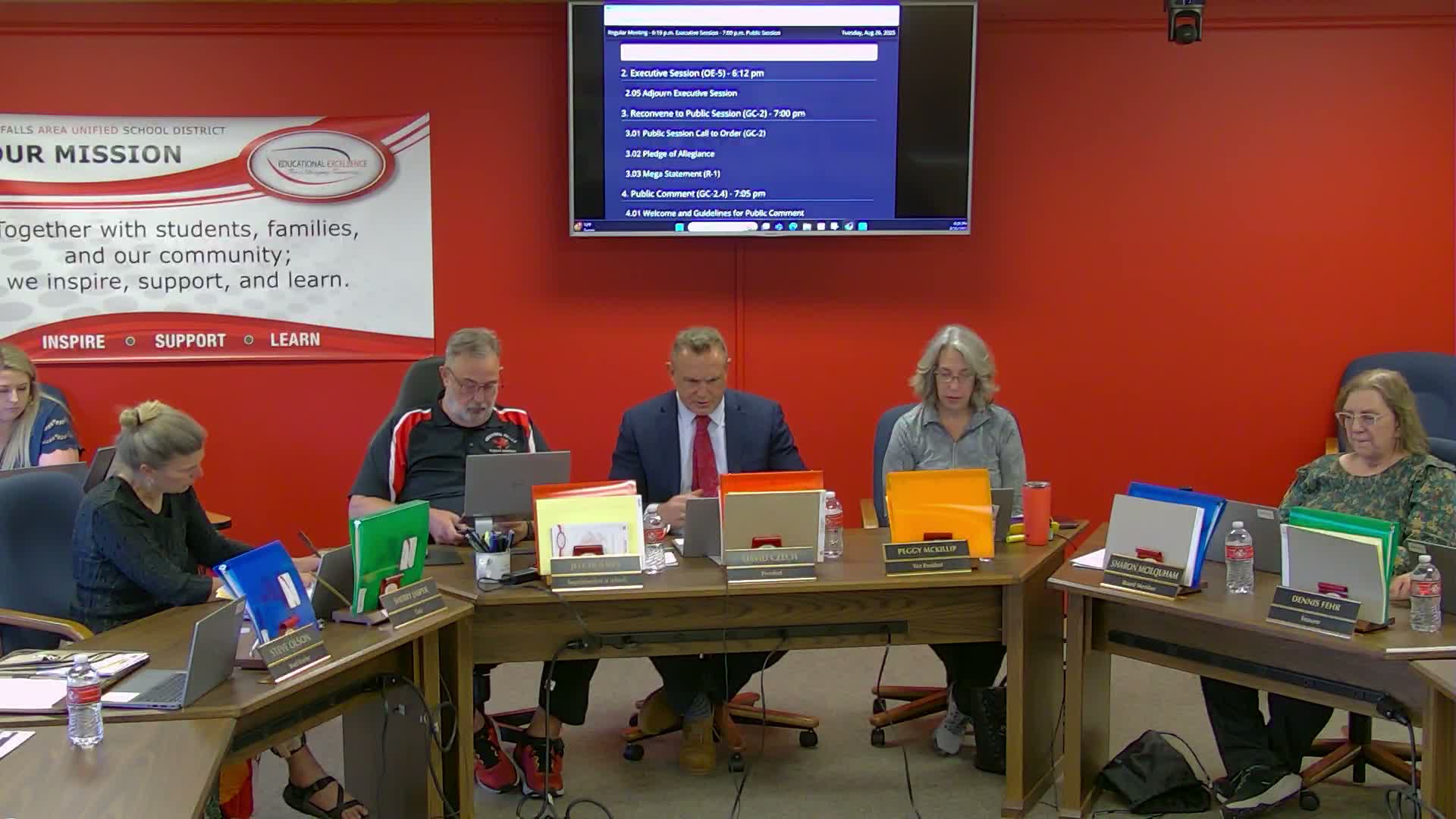
Chippewa Falls school board votes to enter executive session to discuss personnel, expulsions and potential pupil-transportation litigation
Summary
The Chippewa Falls Area Unified School District board approved a motion to adjourn into executive session under Wisconsin open-meetings law to discuss personnel matters, student expulsions and possible litigation related to pupil transportation insurance. The motion passed on a clerk-conducted roll call.
The Chippewa Falls Area Unified School District Board voted to adjourn into executive session to discuss personnel matters, student expulsions and potential litigation over pupil transportation insurance.
An unidentified speaker read the recommended motion to move to closed session “pursuant to Wisconsin statute 19.85(1)(c) and (g)” to review prior closed-session minutes, consider specific employment actions concerning individual employees, discuss employee matters and student expulsion status, and receive legal advice about a pupil-transportation insurance matter that may involve identifiable students and confidentiality of pupil records. Peggy McKillop moved to adjourn into executive session; the motion was seconded and the board proceeded to a clerk-conducted roll call vote.
The clerk recorded affirmative votes from Peggy McKillop, Dean Martineau, Dan Spear, Sherry Jasper, Sharon McElwam and Lee Wilson. The chair announced the motion carries and the board prepared to move into executive session. Earlier in the meeting the board had approved the regular agenda and the executive session agenda without amendment.
Board members and staff did not discuss the substantive personnel or student matters in public; the motion invoked the statutory exceptions that allow closed deliberations for the listed topics. The district cited the need to protect individual privacy and attorney–client privileged communications in pursuing the executive-session discussion.
No further public actions or final decisions about personnel, expulsions or litigation were reported in the public record before the board moved into closed session. Any formal outcomes from that executive session would be recorded in later public minutes if and when the board takes action in open session.