Get Full Government Meeting Transcripts, Videos, & Alerts Forever!
Get email alerts on the Employment Verification topic
No spam. Unsubscribe anytime.
Montana Senate Judiciary Hears E-Verify Mandate; Sponsor Open to Small‑employer Exemption
Summary
Senate Bill 329 would require employers to use E‑Verify for new hires; sponsor proposed an implementation delay and said he would consider an amendment exempting very small employers. Business groups and NFIB urged caution, citing burdens for small businesses and concerns about federal intrusion and enforcement mechanisms.
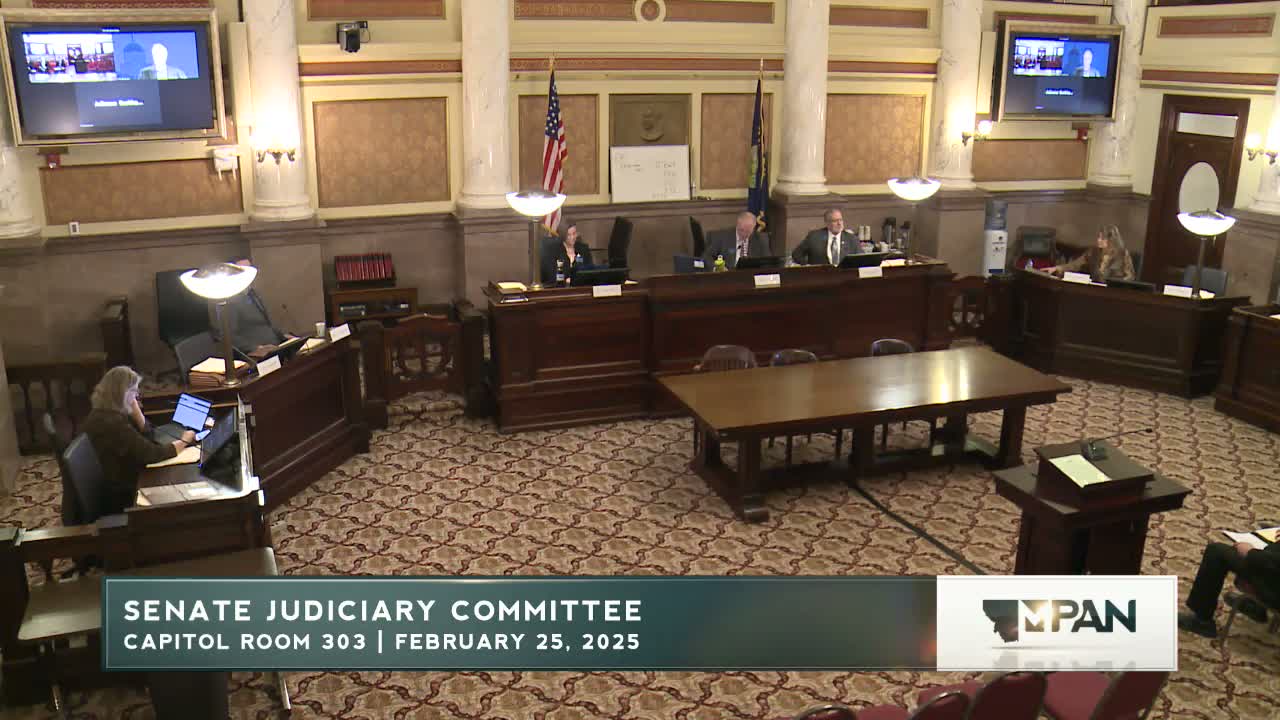
Senator Forrest Mandeville introduced Senate Bill 329 to the Senate Judiciary Committee, saying the measure would require employers to run E‑Verify for new employees and include an implementation delay with an effective date the sponsor described as an October 1 start. Mandeville said the bill’s goals are to reduce illegal hiring in Montana and ensure workers receive the protections of state law; he signaled openness to an amendment exempting smaller employers, suggesting a threshold somewhere in the 50–100 employee range.
Proponent Andrew Goode told the committee that the federal I‑9 system has failed to stop unauthorized hiring and that E‑Verify is a more robust verification tool used successfully by the federal government and in other states. He cited a study by the Federal Reserve Bank of Dallas — as presented — that found state E‑Verify mandates can sharply reduce unauthorized populations.
Several business organizations testified in opposition. Jesse Luther, representing Montana’s credit unions and speaking also for the Montana Chamber of Commerce, said SB329 would impose administrative burdens and uncertainty on smaller credit unions, raise difficulties with provisional employment while authorization is verified, and leave ambiguous language about which employers are covered. Rhonda Wiggers of the National Federation of Independent Business added that only a small number of states require E‑Verify for all employers; most require it only for large employers, public contractors, or for eligibility for certain state economic programs. Wiggers also warned that signing up for E‑Verify can carry audit and federal‑access obligations that small employers may find intrusive.
Committee members pressed the sponsor and witnesses on specifics: whether federal I‑9 requirements already apply; how the proposed statute interacts with a separate bill to permit state review of I‑9s; the administrative costs and training obligations for small employers; risks that employers would misclassify employees as independent contractors to evade coverage; and the complaint‑based enforcement mechanism that would give the attorney general discretion to investigate alleged violations.
Mandeville closed by reiterating the bill’s purpose and by endorsing work on a carve‑out for smaller employers to reduce the burden on very small businesses. The committee closed the hearing without taking immediate action on the bill. The sponsor said he would work with stakeholders on threshold language and other clarifications.
What happens next: The sponsor indicated he will consider amendments to carve out small employers and to clarify enforcement and exemptions, but no formal amendment or vote was recorded during this hearing.