Get Full Government Meeting Transcripts, Videos, & Alerts Forever!
Get email alerts on the Attorney Fees topic
No spam. Unsubscribe anytime.
Bill to define 'reasonable' attorney fees draws questions about scope and state cases
Summary
SB 39 would set detailed documentation standards for 'reasonable' attorney-fee awards—including task descriptions, tenth-hour billing increments, and limits on multiple attorneys at depositions—but opponents cautioned the measure may overreach and should explicitly state whether it applies only to fees against the state.
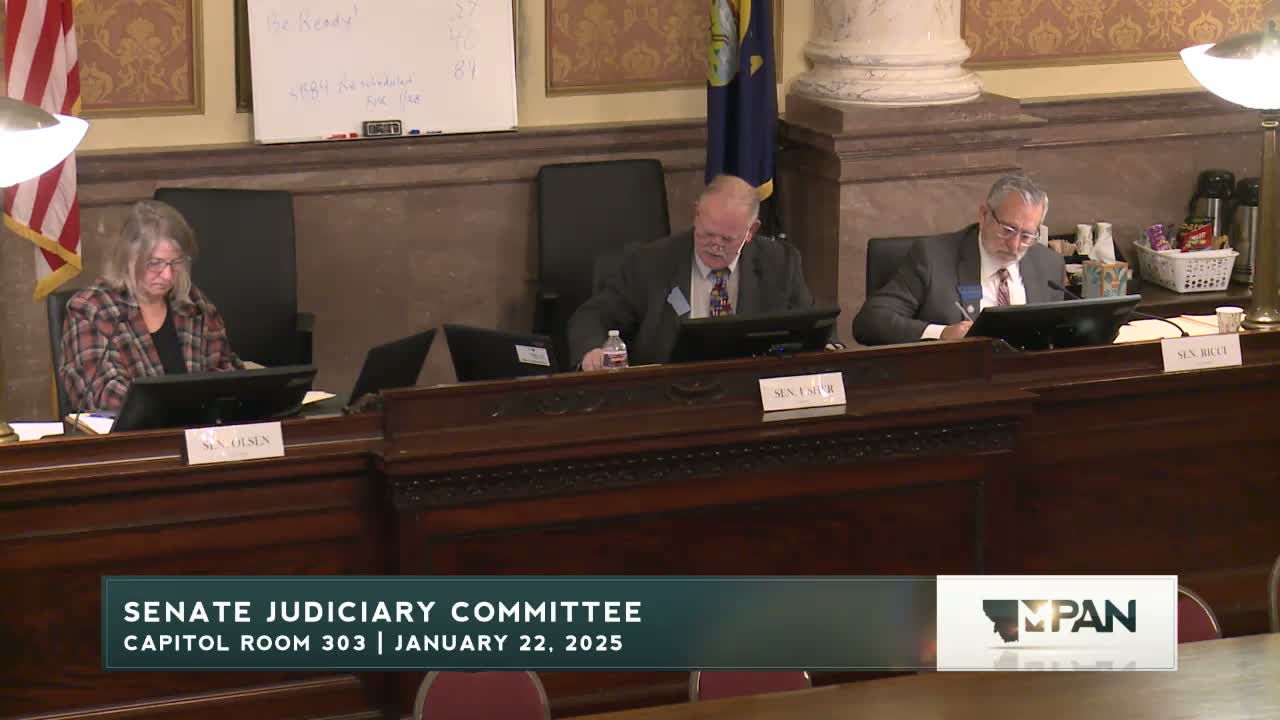
Senator Greg Hertz presented Senate Bill 39 to the Senate Judiciary Committee as a companion measure from the Senate Select Committee on Judicial Oversight. The sponsor said the bill defines what courts should consider reasonable when awarding attorney fees: itemized descriptions of tasks performed, billing increments (tenths of an hour), documentation that an attorney has received the stated hourly rate from a client, and an itemized list of expenses. The bill lists examples of unreasonable charges such as sending multiple attorneys to a single deposition or billing for trivial items.
Al Smith, testifying as an opponent, told the committee attorney-fee awards against the state are rare and generally arise under a private-attorney-general theory (citizen suits to stop constitutional violations). He urged the committee to make explicit in the bill that the rules apply to awards against the state, because many attorney-fee arrangements between private parties (contractual fee-shifting) operate differently. Smith also raised concerns about a rebuttable-presumption structure in the draft and about access to fee agreements for attorneys representing the state.
Committee members asked whether section language limits relief to statutory challenges or only to awards against the state; witnesses and staff said the text currently leaves ambiguity and that a court could interpret it more broadly. Several senators urged drafting clarifying amendments to limit unintended consequences.
The hearing concluded without a committee vote; the sponsor said he would work with members on amendments.
No formal action was taken at the hearing.