Get Full Government Meeting Transcripts, Videos, & Alerts Forever!
Get email alerts on the Attorney Fees topic
No spam. Unsubscribe anytime.
Committee hears bill to narrow attorney-fee awards in writs seeking veto-override polls
Summary
Sen. Greg Hertz told the Senate Judiciary Committee SB 38 would limit attorney-fee awards in actions seeking writs of mandamus to compel a veto-override poll by defining when a party "prevails." Opponents argued the bill may improperly legislate judicial determinations and could create jurisdictional problems; sponsors offered to work on clarifying amendments.
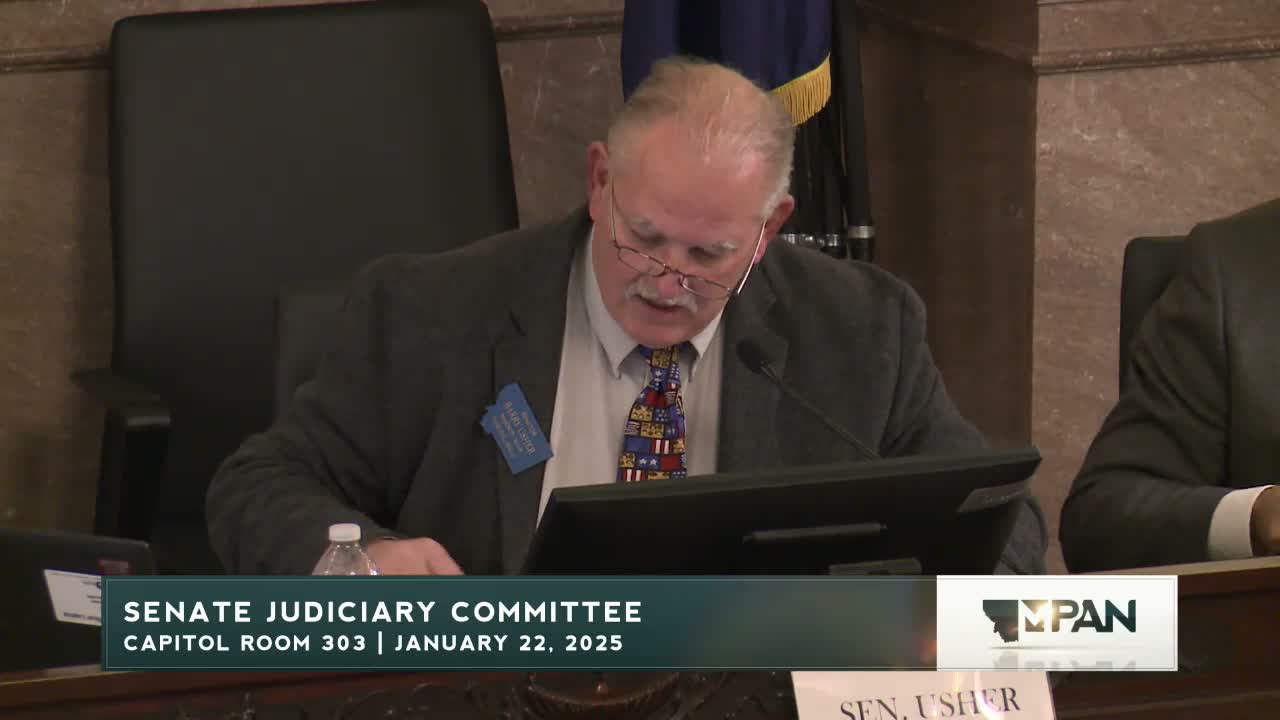
Senator Greg Hertz, sponsor, told the Senate Judiciary Committee that Senate Bill 38, requested by the Senate Select Committee on Judicial Oversight and Reform, narrows when courts may award attorney fees in actions that seek a writ of mandamus to compel a veto-override poll. Under the bill’s language as presented, a party would only be eligible for fees if it both prevails in court and the later veto-override poll produces the result that the party requested.
Hertz said the change is intended to clarify the statutory standard for when a party "prevails," pointing lawmakers to the bill’s lines that require a court to find both prevailing party status and that the original claim was frivolous or pursued in bad faith for fees to be awarded. He described the measure as a narrow, procedural clarification intended to prevent fee awards in cases where litigants obtain a court order but do not achieve the substantive outcome they sought from the subsequent poll.
John Marshall, appearing online, opposed the bill. "Here I'm looking at a bill that does exactly what you accuse the judicial branch of doing," he told the committee, arguing the Legislature would be attempting to adjudicate by statute what is properly a judicial determination and questioning whether the bill would withstand legal scrutiny. Al Smith, who identified himself as representing a trial-lawyers association, offered technical background on how courts calculate fees and recommended clarifying language to ensure the bill applies only to fee awards against the state.
Committee members pressed the sponsor and Al Smith on scope: whether the bill is limited to awards against the state or could apply more broadly, how courts should define "prevail" after mandamus relief, and whether the measure might inadvertently grant courts new jurisdictional authority. Several senators suggested drafting targeted amendments to clarify that the statutory change applies only in the narrow context intended.
The sponsor said he would review suggested amendments with staff and committee members. The hearing closed without a committee vote; the sponsor requested the committee retain the bill to consider clarifying language.
The committee did not take final action on SB 38 during the hearing.