Get Full Government Meeting Transcripts, Videos, & Alerts Forever!
Get email alerts on the Monitoring Report R3 topic
No spam. Unsubscribe anytime.
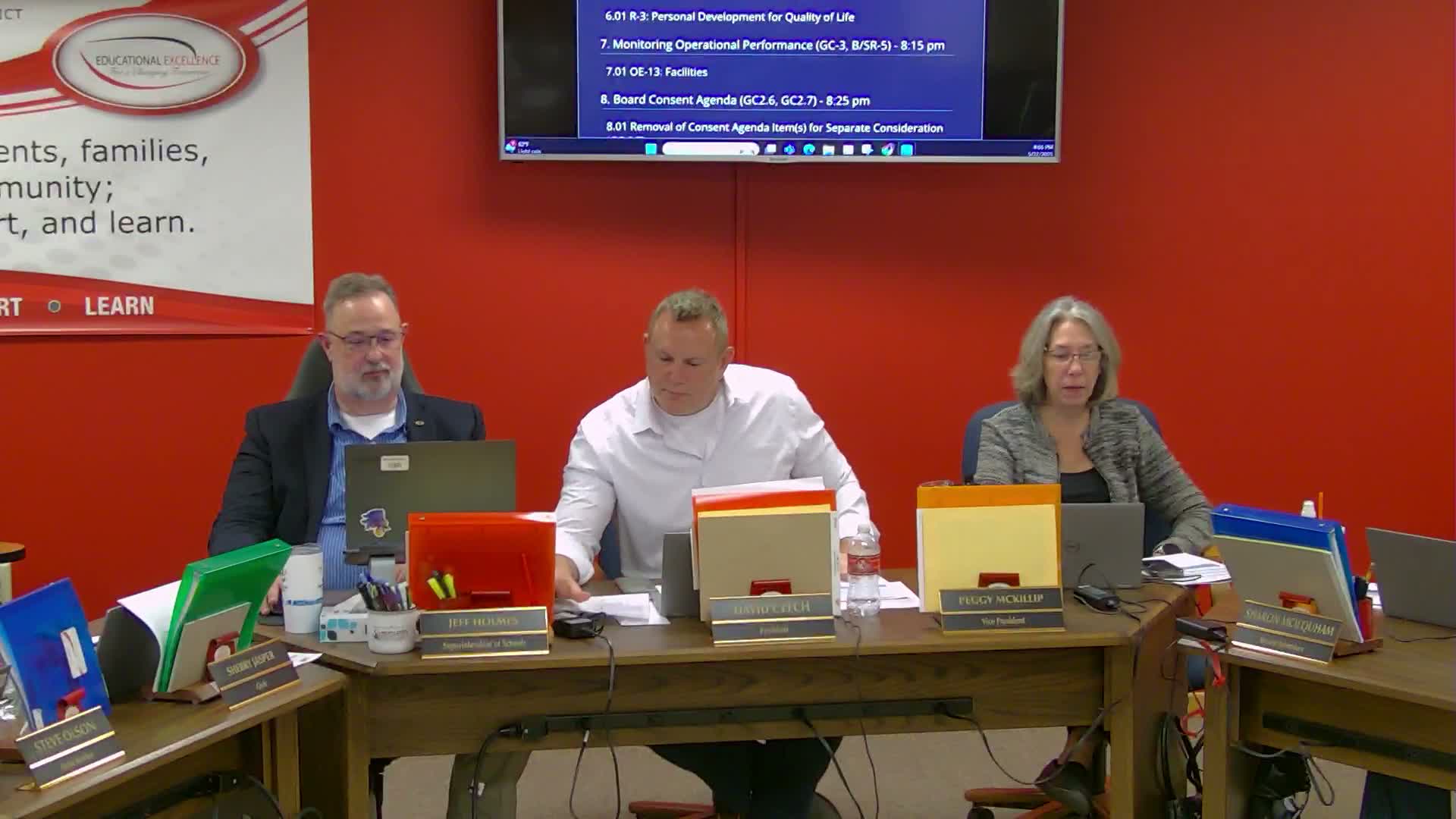
Board accepts R‑3 monitoring report, finds district made 'reasonable progress' on student personal development
Summary
The Chippewa Falls Area Unified School District board accepted the CEO monitoring report R‑3 on personal development and voted that the district has made reasonable progress, despite noted exceptions; motions passed by voice votes.
The Chippewa Falls Area Unified School District Board of Education on Tuesday accepted the CEO monitoring report R‑3, which covers personal development and student quality-of-life indicators, and later voted that the district has "made reasonable progress" on that report.
Christine McMasters, who developed the monitoring report, told trustees the district has reduced disciplinary incidents related to vaping and substance use (office discipline referrals decreased from 50 in the 2021–22 period to 29 in 2023–24 for grades 9–12), increased extracurricular participation and maintained strong adult-support metrics. She noted mixed results on screen time and academic-integrity referrals and said the district is introducing new baselines for some measures after switching student surveys.
Board member (transcript ID 12) moved to accept the monitoring report as the board's own; the motion was seconded (transcript ID 11) and carried on a voice vote. Later, Trustee Steve Olson moved that the district "has made reasonable progress with noted exceptions" on R‑3; the motion was seconded by Dave Martineau and carried on a voice vote.
Superintendent Holmes and McMasters said the report will inform ongoing work in social-emotional learning, co‑curricular engagement and student-support strategies. McMasters recommended continued tracking of emotional-regulation measures and exploration of a possible link between increased AI use and academic-integrity referrals.