Get Full Government Meeting Transcripts, Videos, & Alerts Forever!
Get email alerts on the Employee Handbook topic
No spam. Unsubscribe anytime.
Coweta County staff outlines employee handbook updates including tuition aid and sick‑leave buyback
Summary
County staff presented piecemeal amendments to the 2018 employee handbook that would add a tuition‑assistance program (up to $2,000/year, preapproved, budget‑dependent), change front‑loaded annual leave accruals, and offer a funded sick‑leave buyback option with eligibility limits; board directed further review with the leave committee.
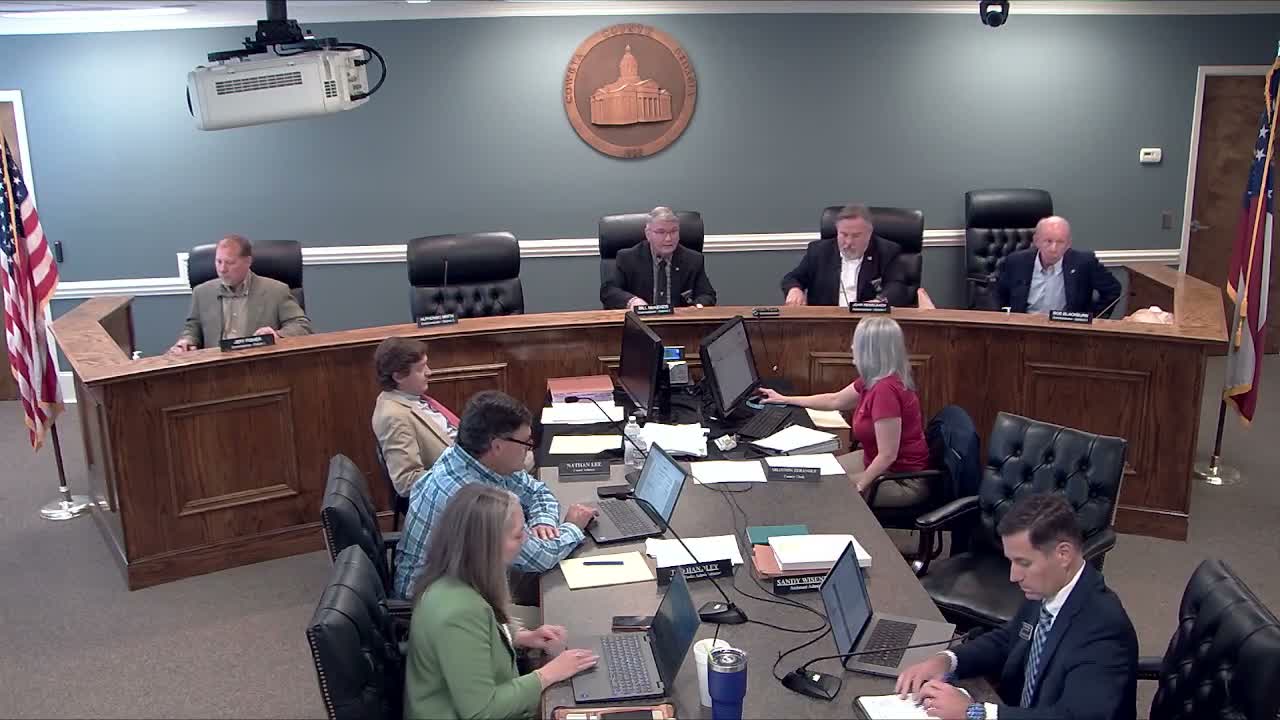
Coweta County officials presented proposed changes to the county’s 2018 employee handbook during a Nov. work session, outlining new programs and clarifications that officials said aim to improve recruitment, retention and administrative consistency.
Miss Weisenbaker, who led the presentation, said staff is reviewing chapters 100–1200 in segments rather than reworking the entire roughly 150–200 page document at once. “We’re basically going back through and doing some general cleanup,” she said, and noted the update incorporates a recently developed statement of mission and values.
Among the substantive proposals, staff recommended adding a tuition‑assistance program that would reimburse eligible employees “for tuition and fees up to $2,000 per fiscal year,” subject to preapproval and the availability of budgeted funds. Miss Weisenbaker said applicants would have to be full‑time and actively employed when a course begins and would submit official final grades as part of the reimbursement process.
On annual leave, staff proposed front‑loading accruals to increase leave for newer hires. For 8‑hour shift employees, the 0–5 year accrual band would change from roughly six days in year one to about 12 days across the first five years (roughly 3.7 hours per pay period), with the goal of improving retention. However, the amendment would also change payout rules: employees who separate with less than five years of service would not be paid out for that accrued annual leave under the proposed language.
Staff also proposed a sick‑leave buyback, conditioned on budget funding. Under the plan explained to the board, employees with a minimum 240‑hour sick balance who used no more than 24 sick hours during the fiscal year could elect to sell back 24 hours; employees at a 400‑hour minimum could sell back 48 hours. Miss Weisenbaker said buyback payments would be made at the employee’s salary in effect at the end of the prior fiscal year and that the election would occur during open enrollment. Staff provided counts of potentially eligible employees — about 50 at the 240‑hour threshold and about 69 at the 400‑hour threshold — and emphasized that the program would only be implemented if funded in the budget.
Commissioners raised several procedural and policy questions. They asked whether tuition funds would be placed in a separate HR line item and whether staff would pilot the program with a modest initial allocation; staff said they would start small (for example, a $10,000 allocation) and return unspent funds to the general fund. Commissioners also asked for additional clarity on evaluation scoring matrices, advance approval of leave (directors may advance up to 40 hours), and how carryover and payout rules interact with retirement plan enrollment.
Miss Palmer and other staff said they would review the proposed language with the leave committee and department directors and return a final amendment for board consideration. The board did not take a vote; members asked staff to refine the language and confirm budget implications before formal action.
The board’s next step is staff review with the leave committee and a subsequent agenda item to present a final draft for action.