Get Full Government Meeting Transcripts, Videos, & Alerts Forever!
Get email alerts on the Performance Funding topic
No spam. Unsubscribe anytime.
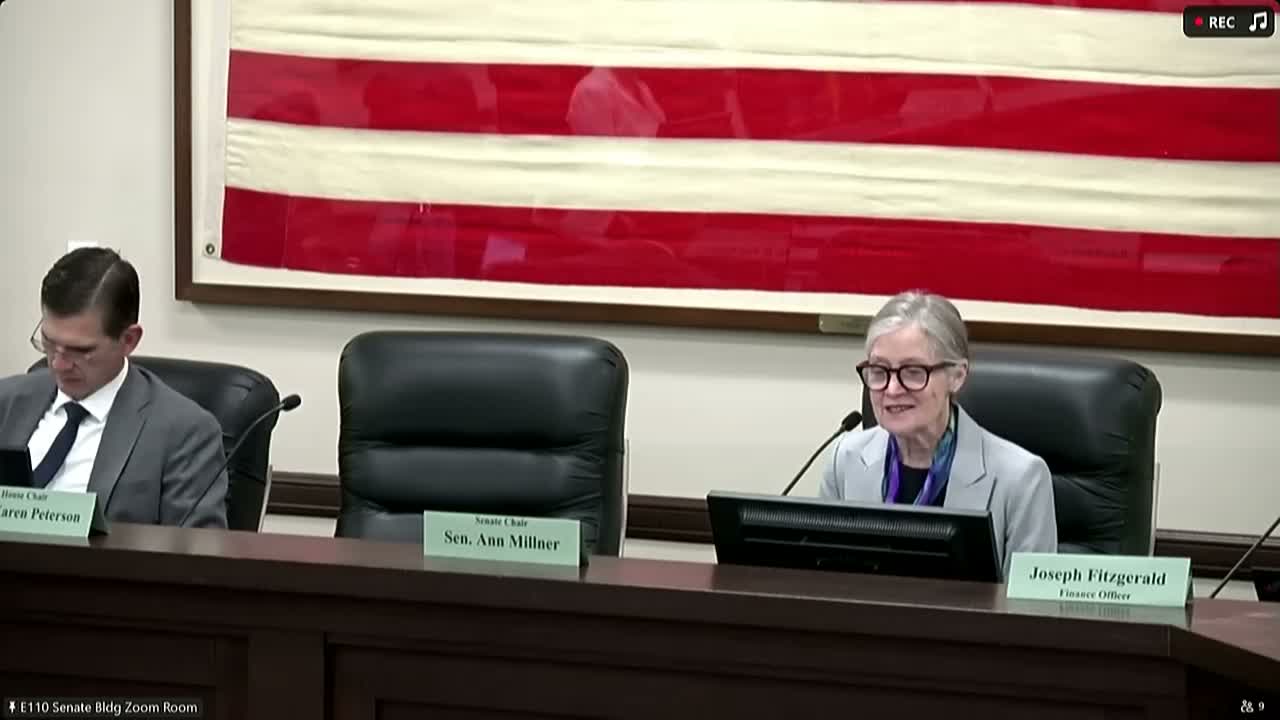
Utah subcommittee backs direction of revised higher‑education performance metrics
Summary
The Higher Education Appropriations Subcommittee signaled support for a proposed overhaul of Utah’s performance‑funding model that would prioritize completion, broaden ‘high‑demand’ awards and add an institutional‑efficiency metric; members voted to advance the concept to bill form.
The Utah Higher Education Appropriations Subcommittee on Tuesday endorsed the general direction of proposed revisions to the state’s performance‑funding model, saying the changes better reflect institutional missions and workforce needs.
Joseph, a legislative fiscal analyst presenting the proposal, told the committee the revised framework would keep a completion focus while restructuring other measures around ‘‘time to completion, high‑demand awards, and institutional efficiency.’’ He said each type of institution would also have a tailored metric (research dollars for research universities, a 30‑credit milestone for community/regional colleges, and job placement for technical colleges).
Commissioner Jeff Lambert said the emphasis on completion is appropriate and welcomed de‑emphasizing growth for growth’s sake. ‘‘Every student that enters our system leaves with a credential,’’ Lambert said, framing completion as the system’s primary objective. System staff said officials deliberately broadened the high‑demand category to include lower‑wage occupations that are nevertheless critical to the state, such as education and behavioral‑health roles.
Some committee members cautioned that any metric creates incentives to game the system and urged safeguards. One member warned that ‘‘whatever we measure…we also create an incentive to figure out how to game the system,’’ and members asked that the board of higher education be given discretion to finalize counting rules and baselines to reduce unintended consequences.
Senator Johnson moved that the subcommittee support the current direction of revisions and request an eventual bill to adopt finalized performance metrics; members voiced their support and the motion passed. Chair Peters said the statutory language would set high‑level categories while leaving the detailed measurement mechanics to the board so institutions would have time to adapt.
Next steps include board‑level work to define measurement specifics, baseline year setting, and draft legislation during the 2026 session to codify the categories and process.