Get Full Government Meeting Transcripts, Videos, & Alerts Forever!
Get email alerts on the Ambulance Assessment topic
No spam. Unsubscribe anytime.
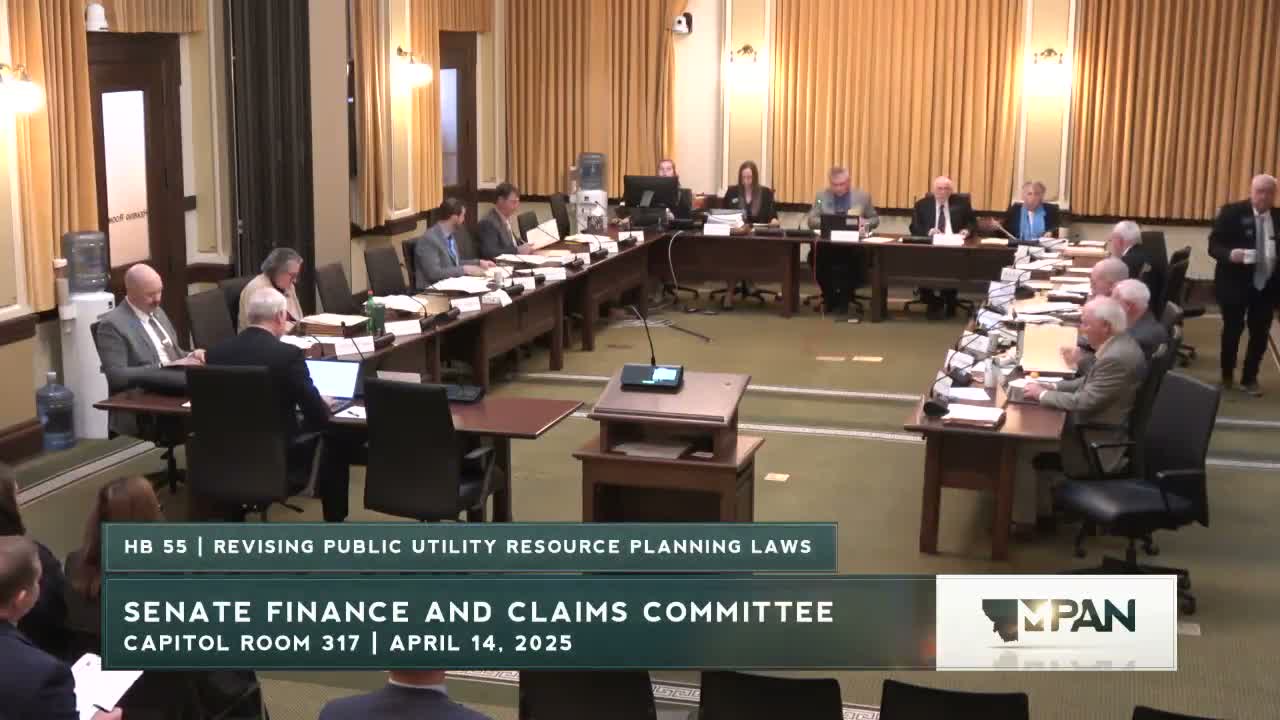
Senate committee concurs with ambulance provider assessment to fund Medicaid supplemental payments
Summary
The Senate Finance and Claims Committee concurred with House Bill 56, which imposes a 5.75% provider assessment on for‑profit ambulance operators to generate funds for federal Medicaid supplemental match and boost ambulance reimbursements; the committee recorded a roll‑call concurrence (14 yes, 8 no).
The Senate Finance and Claims Committee on a roll‑call vote concurred with House Bill 56, a measure to establish a 5.75% assessment on net operating revenue from for‑profit ambulance providers to fund a Medicaid supplemental payment program meant to increase reimbursements for Medicaid transports.
Representative Butchery, sponsor of the bill, told the committee the assessment is intended as “a lifeline for our ambulance providers,” explaining the assessment revenue would be used to draw down federal Medicaid match and provide supplemental payments to ambulance services that lose money on Medicaid transports. He said the bill was refined during the House process to remove public providers from the assessment and to address entities that were mistakenly listed as ambulance providers.
Jean Hermanson, Medicaid chief financial manager at the Department of Public Health and Human Services, said the department supports HB 56 and described the program mechanics: the state would collect assessment revenue, use it to obtain a federal match under a CMS authorization, and then distribute supplemental payments to ambulance providers based on Medicaid billing volume. Hermanson noted implementation costs for state agencies (including an estimated Department of Revenue contractor cost of $475,000) and explained the fiscal note shows a year‑one general‑fund impact that becomes neutral over a three‑year window when federal matches and fee collections are considered.
Emergency responders and operators backed the bill at the hearing. Don Whelan, manager of Missoula Emergency Services and president of the Montana Ambulance Association, said providers need help with equipment and employee pay and urged support. Tim Brester, a paramedic and ambulance operator, said low Medicaid/Medicare reimbursement forces staffing and equipment shortfalls in rural areas. Rachel Durham, director of operations for Eureka Ambulance Service, supported the bill but warned that some small volunteer providers could be negatively affected if they are assessed yet do not enroll as Medicaid transporters.
Committee members pressed for technical details about CMS approval and how supplemental payments would be calculated. Hermanson and the sponsor said the program relies on federal approval (a waiver or CMS process) and that supplemental payments to individual providers would be based on their Medicaid billing; they acknowledged some providers may pay the assessment but receive little or no supplemental payment, though the sponsor said amendments and targeting reduced that number to a small handful.
A motion to concur with House Bill 56 carried on a roll call with a final tally reported as 14 yes, 8 no. The committee action sends the bill back to the Senate floor for further consideration.
Outcome: Concurred in Senate Finance and Claims (roll‑call reported 14 yes, 8 no).