Get Full Government Meeting Transcripts, Videos, & Alerts Forever!
Get email alerts on the Insurance Property Insurance topic
No spam. Unsubscribe anytime.
Senate committee orders interim study on homeowners insurance amid rising premiums and wildfire risk
Summary
Lawmakers voted to concur on HJ 61, directing an interim study into rising homeowners and property insurance costs in Montana after industry and consumer witnesses described tighter reinsurance markets, wildfire exposure and limited state‑level data.
Representative Josh Seckinger opened House Joint Resolution 61, saying Montana homeowners have seen premiums rise sharply and that insurers are reducing coverage in high wildfire‑risk zones. "Over the last five years, homeowners in our state have seen their premiums jump over 44%," Seckinger said, and he described the measure as a bipartisan interim study supported by the insurance commissioner's office.
Industry witnesses described systemic drivers. Bruce Spencer of the National Association of Mutual Insurance Carriers said reinsurance markets have tightened following catastrophic losses elsewhere and that reinsurance cost increases push primary insurers to raise premiums or limit where they will write coverage. Frank Cote, representing the state insurance commissioner, urged developing legislative expertise during the interim and cautioned against hasty fixes that could worsen market outcomes.
Consumer and advocacy voices urged data collection. Michael DeLong of the Consumer Federation of America said Montana lacks detailed, up‑to‑date, state‑specific data and that an independent study could fill critical gaps; Laura Collins of the Montana Environmental Information Center urged digging into the full set of contributing factors (weather extremes, development in high‑risk areas, market dynamics) to identify effective policy responses. Patrick Kawaki representing tribal communities highlighted that tribal nations often reside in forested, high‑wildfire‑risk areas and face particular access and affordability challenges.
Committee members asked detailed questions about rate filings, loss data and underwriting decisions. The insurance commissioner's office said it reviews rate increases for adequacy, excessiveness and unfair discrimination and that much data is reported at the state level, with limited regional breakdowns from large multistate carriers. Witnesses suggested the study could help quantify how many households lack coverage, identify regional gaps and consider mitigation incentives and information practices such as wildfire risk scores.
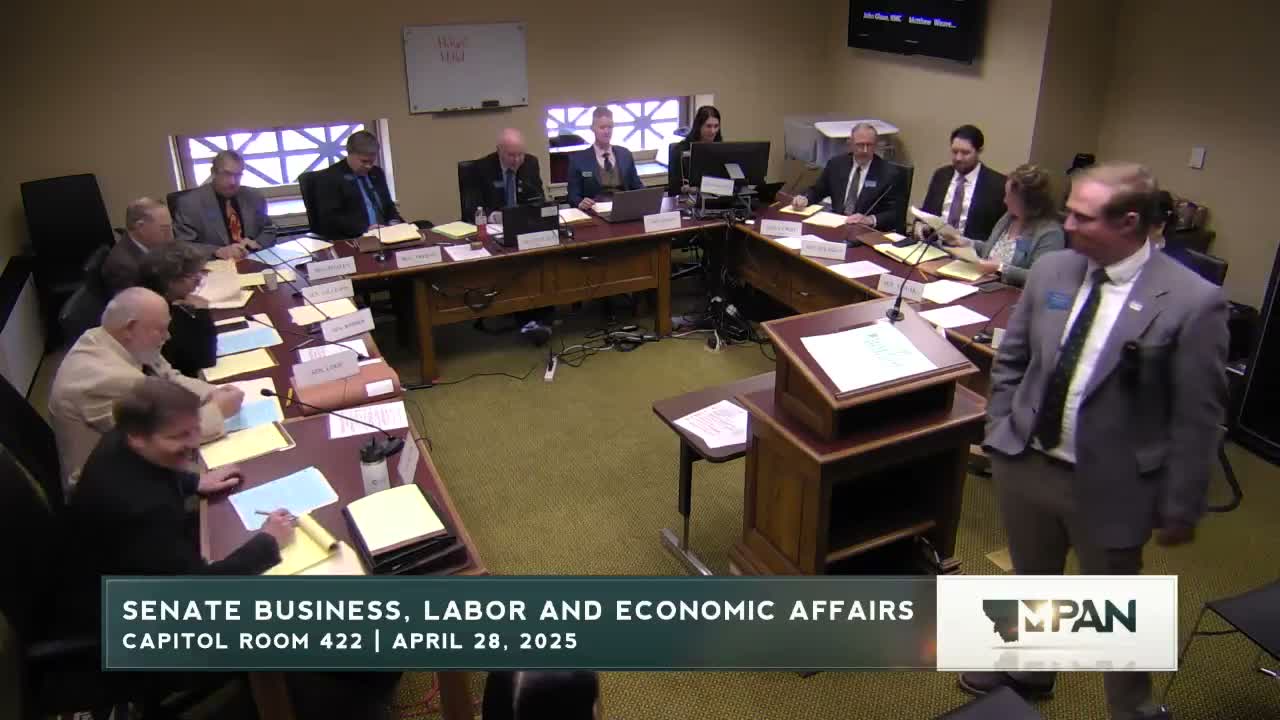
In executive action the committee moved to concur on HJ 61; the chair announced the resolution passed with one recorded nay and Senator Logie agreed to carry the measure to the floor. The interim study, if implemented, is intended to gather expertise and data to inform legislative options rather than to enact immediate regulatory change.