Get Full Government Meeting Transcripts, Videos, & Alerts Forever!
Get email alerts on the Education Workforce topic
No spam. Unsubscribe anytime.
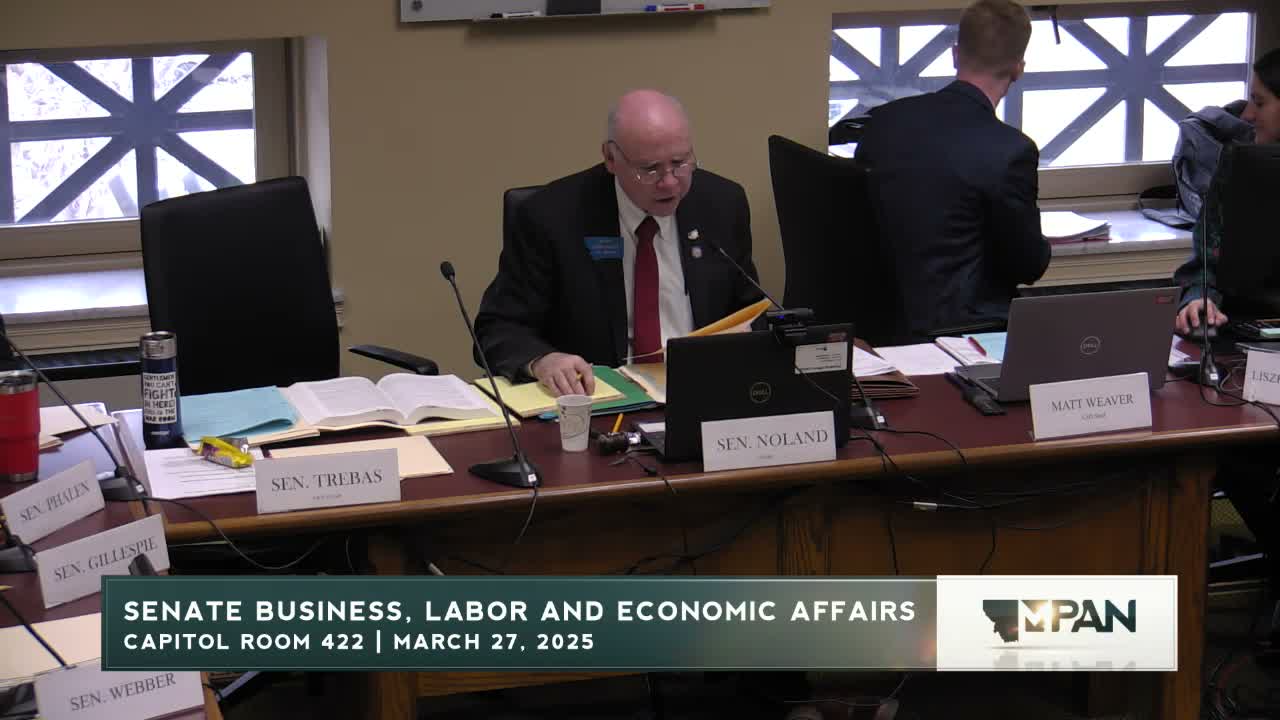
Debate intensifies over reinstating school 'speech aids' as pathway to expand services
Summary
HB 744 would allow speech aids in public schools to provide supervised, limited services while permanent assistant licensure and rulemaking proceed. Supporters argue it eases severe shortages in rural districts; state speech‑language professionals cautioned it risks lowering standards and urged OPI‑led training pathways instead.
Representative Melissa Nikolakakos presented HB 744 to allow speech aids to work under licensed speech‑language pathologists in public schools for limited, supervised duties. "House bill 744 will allow for speech aids who work 20% of their time under the licensed speech pathologist while learning the proper way to administer repetitive speech drills," she said, adding the measure is temporary until the Speech Pathologist Board and DLI adopt permanent rules.
Local school representatives and rural SLPs testified in support, saying the shortage of licensed practitioners makes it difficult to provide routine, repetitive practice that helps many students progress. Amy Raines, a practicing Montana school SLP, described relying on two full‑time aids to serve a large rural territory and urged passage so services can continue.
Opponents—a coalition of Montana speech‑language pathologists and professional associations—argued the proposal would reintroduce an obsolete "aid" category removed in 2021 and urged building robust assistant (SLPA) pipelines instead. Jennifer Hensley, representing the Montana Speech Language Hearing Association, said the association had mixed internal views but ultimately opposed the bill because it "takes us back to pre‑'21" practices and places training burdens on SLPs. Kathleen Cohn, a longtime SLP and past association president, warned HB 744 "would reinstate the outdated and problematic category of speech aid" and could risk quality, Medicaid billing integrity and patient safety.
Committee discussion focused on whether the temporary school‑only authorization strikes the right balance, how many licensed SLPA assistants now exist, whether OPI apprenticeship or para‑pathways could be used, and the administrative burden of supervising less‑trained personnel. Sponsor and proponents emphasized the bill's termination language: the temporary provision would expire once permanent rules or assistant licensure are in place. The hearing concluded with the committee asking DLI for background materials and historical rules that governed earlier aid tiers.