Get Full Government Meeting Transcripts, Videos, & Alerts Forever!
Get email alerts on the Administrative Rulemaking topic
No spam. Unsubscribe anytime.
Legislators consider bill to tighten legislative oversight of state rulemaking
Summary
House Bill 5-92 would expand sponsor involvement, require small-business impact analyses on every administrative rule, and create clearer legislative review pathways; the Department of Labor and several agency directors supported the measure while members asked about costs and a possible financial threshold.
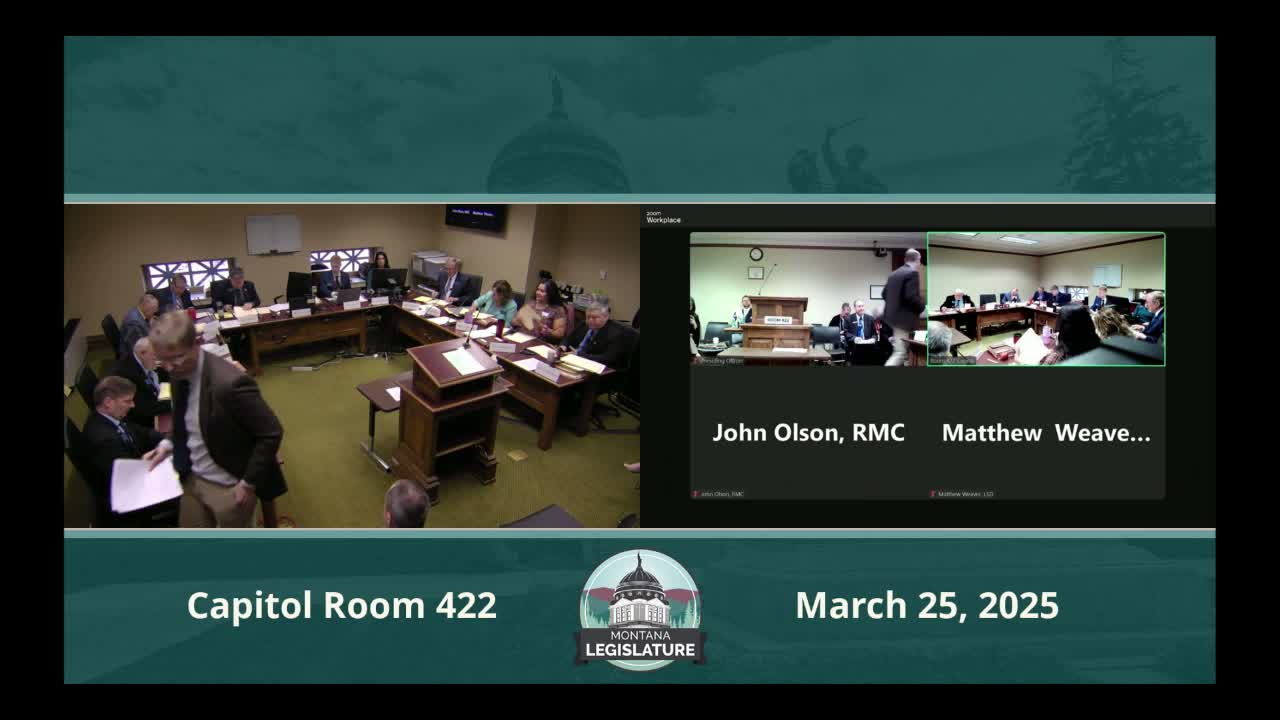
Representative Courtney Springer told the Senate Business, Labor and Economic Affairs Committee HB 5-92 is a restructuring of Montana’s administrative rulemaking process that strengthens legislative review and public participation. ‘‘This bill clarifies and enhances collaboration between the agency and bill sponsor during rule making,’’ Springer said.
Sarah Swanson, commissioner of the Department of Labor and Industry, described the bill as a reorganization that makes MAPA (Montana Administrative Procedures Act) easier to use and strengthens sponsor contact at the front and back of rulemaking. ‘‘A small business impact analysis is required on every administrative rule in Montana,’’ Swanson testified, and sponsors or interim committees would be able to request fuller economic impact studies when warranted.
Agency directors including Chris Dorrington (MDT) and Kerry Hegreberg (Chamber of Commerce) said the changes provide clearer roles and more predictable processes for public involvement. Supporters framed the measure as consistent with national REINS Act trends while saying it stops short of requiring automatic legislative votes on rules. Opponents were not prominent at the hearing; committee members raised practical questions about agency staff capacity, templates to reduce duplicated work, and whether legislators should add a dollar threshold to limit bureaucracy. Springer said the bill has been negotiated over months and recommended caution about inserting a specific financial trigger in this package.
Committee members requested additional materials on expected agency costs and processes; agencies said they would use templates and existing economists to absorb analysis work. The hearing closed with the sponsor asking for a do‑pass recommendation.