Get Full Government Meeting Transcripts, Videos, & Alerts Forever!
Get email alerts on the Workers Compensation topic
No spam. Unsubscribe anytime.
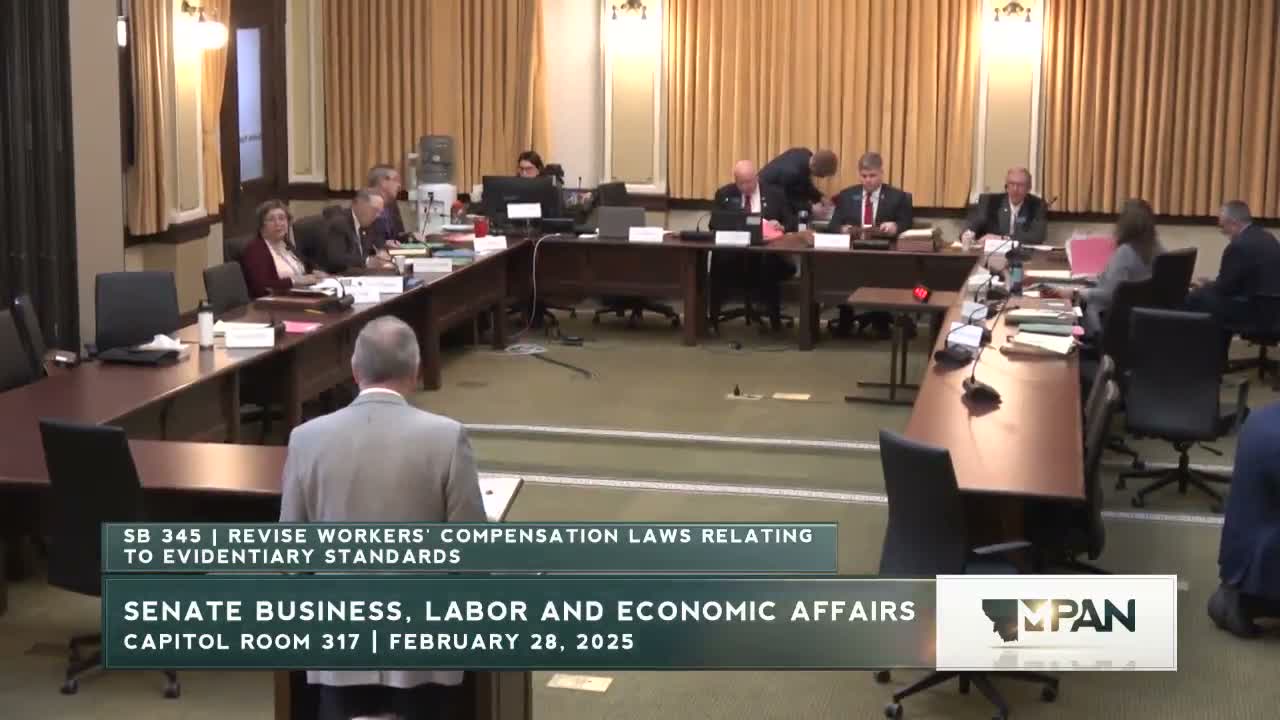
Committee hears workers' compensation changes to IME process in SB 345
Summary
Supporters said SB 345 would improve access to specialists and remove automatic deference to treating providers; insurers and worker-advocates highlighted the balance between faster access to IMEs and preserving appropriate medical credibility rules.
Senate Bill 345, sponsored by Senator Greg Hertz, would revise evidentiary standards in workers' compensation cases and expand access to independent medical examinations (IMEs). Supporters told the Business, Labor and Economic Affairs Committee the measure is intended to ensure decisions weigh provider expertise and to reduce geographic barriers to specialist review in Montana.
Proponents including Peter Strauss (Montana Self Insurers Association) and representatives from the Montana State Fund and APCIA said the bill clarifies how courts should weigh multiple medical opinions rather than granting automatic deference to treating physicians. Peter Strauss explained proponents want courts to consider a provider's training, specialization and experience when determining credibility and contested medical issues.
The bill also seeks to simplify the IME process and reimburse injured workers for IME-related expenses beyond travel and lodging, including childcare and pet care, to remove barriers when Montana claimants must see out-of-area specialists. Nick Mazanek (Montana State Fund) told the committee these changes would improve access to evaluations that can be crucial for diagnosing complex injuries.
Supporters argued that objective IME input can help courts and claim managers make more accurate compensability and treatment decisions in a rural state where specialist care often requires long travel. Opposing or skeptical witnesses did not present extensive testimony in this hearing; instead the session included clarifying amendments to ensure treating-provider interactions remain a relevant factor in credibility assessments.
Senator Hertz said he would support a technical amendment to make the bill more precise about how treating-provider time with a patient should factor into credibility. The committee closed the hearing and passed the bill record for later executive action.