Get Full Government Meeting Transcripts, Videos, & Alerts Forever!
Get email alerts on the Healthcare Licensure topic
No spam. Unsubscribe anytime.
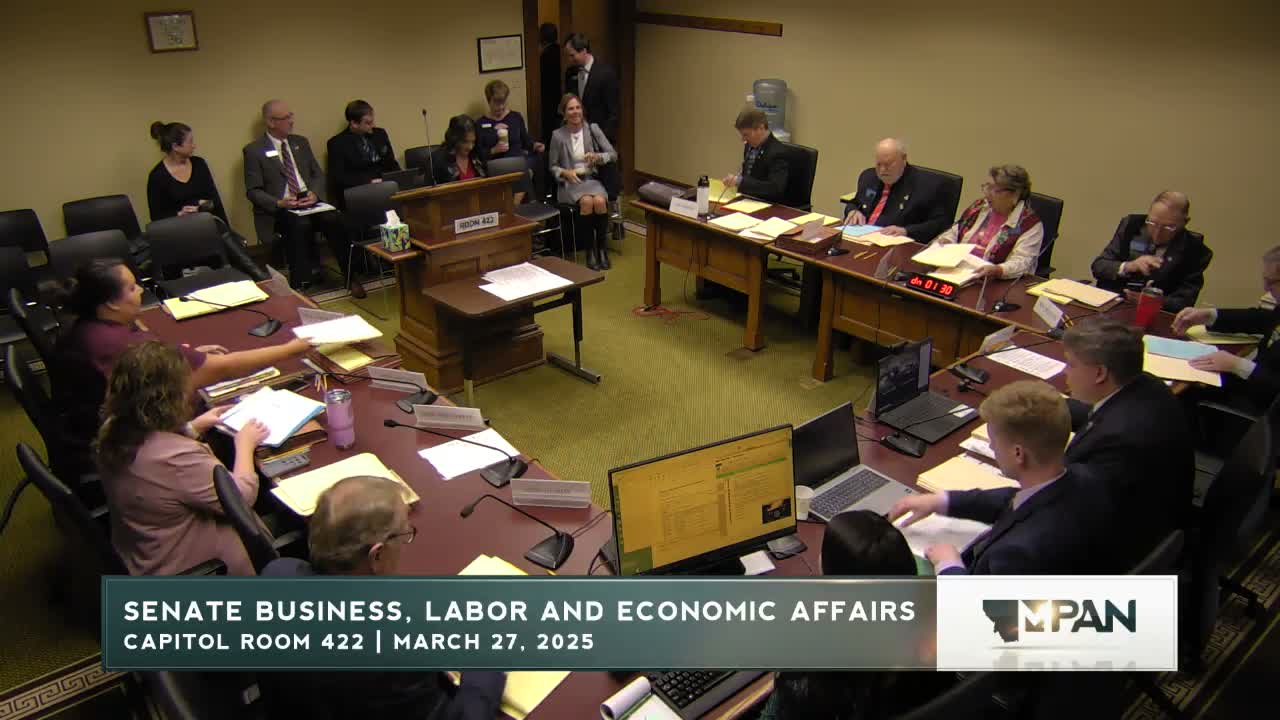
Committee hears bill to create dual licensure for dietitians and nutritionists
Summary
Supporters told the Senate Business and Labor Committee HB 806 would modernize Montana licensure by creating a dual pathway so registered dietitians and certified nutrition specialists can be licensed under titles that match national credentials; proponents said it protects public safety and expands access in rural areas.
Representative Courtney Sprunger introduced HB 806 as a licensure modernization measure that "creates a dual licensure system, allowing RDs to be licensed as licensed dietitians and CNS professionals to be licensed as licensed nutritionists." Sprunger said the change is intended to protect public safety while expanding access to medical nutrition therapy, particularly in underserved parts of the state.
Proponents from hospitals and professional associations urged a favorable recommendation. Aiden Myhre of Billings Clinic told the committee nutritionists and registered dietitians "are an absolutely critical part of our workforce at the hospital," citing care for chemotherapy and diabetes patients. Paige Sadowski, public policy chair for the Montana Academy of Nutrition and Dietetics, stressed the bill clarifies which activities require licensure and creates a pathway for certified nutrition specialists. "HB 806 embodies the primary goal of licensure, protecting the public," Sadowski said.
Supporters described the bill’s core features: a statutory definition of "medical nutrition therapy" as the practice level requiring licensure; transition language so currently licensed dietitians align under a licensed dietitian title; and a separate pathway recognizing Certified Nutrition Specialists who meet national education, supervised‑practice and exam requirements. Sadowski noted there are "fewer than 25 individuals who currently qualify for the CNS pathway," while saying the profession is growing and more candidates are in training.
Quinlan O'Connor, chief legal counsel for the Department of Labor and Industry, answered committee questions about implementation and said DLI had coordinated a technical amendment. Committee members asked about overlap between the professions and the bill's effect on scopes of practice; O'Connor and proponents said the legislation links dietetics practice definitions to peer‑reviewed scopes and limits medical nutrition therapy to licensed professionals.
No opponents registered at the hearing. The sponsor closed noting the bill resulted from stakeholder collaboration and asked the committee for a favorable recommendation. The hearing was closed without a vote; the committee will consider next procedural steps in its internal process.