Get Full Government Meeting Transcripts, Videos, & Alerts Forever!
Get email alerts on the Licensure Compact Dietitians topic
No spam. Unsubscribe anytime.
Committee hears dietitian licensure compact; proponents cite workforce, military spouse mobility and patient access
Summary
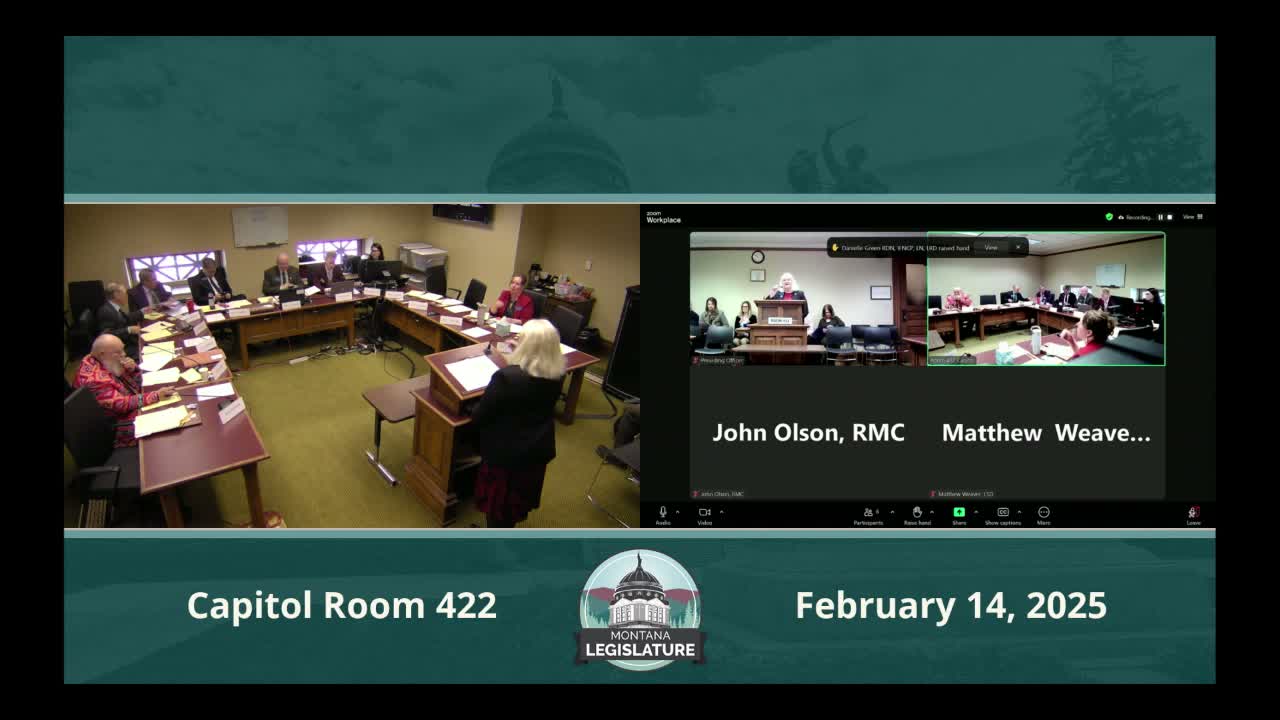
Senate Bill 279 would join Montana to an interstate dietitian licensure compact supporters say will ease licensing across state lines, help military spouses and expand access to nutrition care; sponsors and medical providers urged the committee to advance the bill and informational witnesses explained compact mechanics.
Senator Wendy McCamey opened testimony in favor of Senate Bill 279, the dietitian licensure compact, describing it as a measure that would increase license mobility for registered dietitians, support military spouses and reduce bureaucratic delays in bringing clinicians into practice. "This is a boost," McCamey said, adding that seven states are required to form a governing compact commission.
Proponents included representatives of the Montana Academy of Nutrition and Dietetics and multiple practicing registered dietitians who said Montana faces shortages and licensing delays that limit patient access and telehealth services. "A dietitian licensure compact would help to streamline the process of bringing in qualified registered dietitians to practice in Montana," Paige Sadowski told the committee. Witnesses cited Montana's roughly 774 licensed registered dietitians and said compact membership would align Montana with other states already adopting similar compacts.
Katherine Scruggs, a military spouse and clinical nutrition manager, described personal and workforce impacts, saying frequent military relocations force repeated licensure steps that cost time and money. Hospitals and health systems also testified they support the compact as a way to recruit and deploy dietitians more quickly to underserved communities.
Kevin Bragg of the Montana Department of Labor and Industry and Kaitlyn Bison with the Council of State Governments appeared as informational witnesses to explain administrative requirements and the compact process. Committee members asked about how compacts interact with existing state registration requirements and whether the compact preserves state oversight; the Department confirmed licensees must still meet state standards and national registration requirements where applicable.
No opponents appeared at the hearing. Senator McCamey closed by asking the committee to give the bill a do‑pass recommendation; the hearing concluded without recorded opposition on the public record.