Get Full Government Meeting Transcripts, Videos, & Alerts Forever!
Get email alerts on the Medical Malpractice Caps topic
No spam. Unsubscribe anytime.
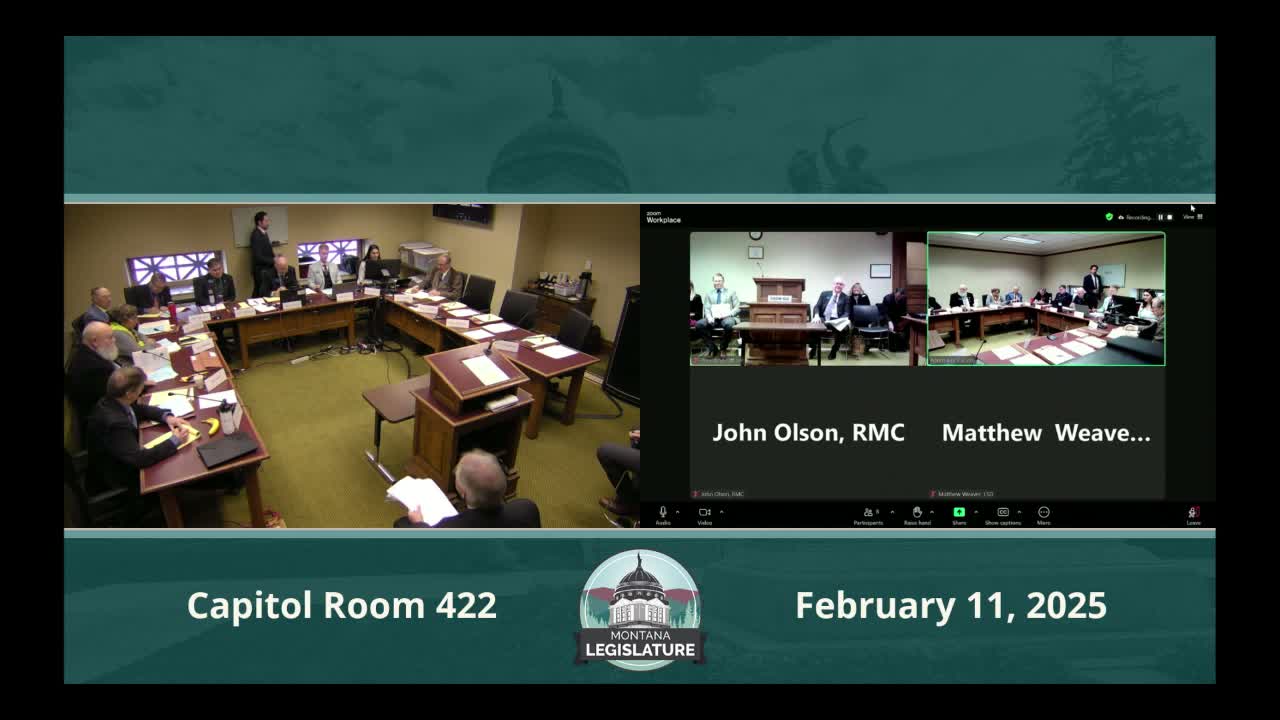
Montana hearing on HB195 pits providers's concerns about access against trial lawyers's objections to damage caps
Summary
The Senate Business, Labor, and Economic Affairs Committee heard competing testimony on House Bill 195, which would raise Montana's non-economic-damages cap from $250,000 to $300,000 then to $500,000 by 2029 and index it by 2% annually; proponents said the change would protect rural access to care, opponents said caps undermine victims' rights and may be arbitrary or unconstitutional.
Representative Bill Mercer, sponsor of House Bill 195, told the Senate Business, Labor, and Economic Affairs Committee the bill would modernize Montana's 1995 cap on non-economic damages in medical malpractice cases and reduce the statute's exposure to constitutional challenge. "The 1995 cap ... has remained at $250,000 for this entire period of time," Mercer said, arguing that phased increases and a 2% indexing rule would be "a prudent change."
Proponents at the hearing—doctors, hospital executives and business groups—urged the committee to pass the bill to preserve access to care in rural communities and to stabilize malpractice insurance markets. "I've handled over a 150 cases before the Montana medical legal panel," attorney Sean Goichiea said, describing plaintiff demands and asserting that large non-economic awards can threaten providers and local hospitals. Jean Branscum, chief executive officer of the Montana Medical Association, said materials distributed to the committee show the bill raises the cap to $300,000 immediately and then by $50,000 annually until it reaches $500,000, after which a 2% adjuster applies. Branscum cited a survey included with testimony and said 61% of physicians reported they would leave Montana or change how they practice if malpractice premiums rose dramatically.
Hospital and rural-health witnesses described local consequences they attributed to high malpractice exposure. William Patton, a hospital chief executive who has led several rural hospitals, recounted a New Mexico case with an $18 million verdict and a later punitive award that required bonds and pushed the hospital's finances to the brink. Cody Langbehan, CEO of Central Montana Medical Center in Lewistown, said his facility pays more than $500,000 annually for malpractice premiums and that stable rates are critical to keeping obstetric services and other care in small communities.
Opponents, including trial attorneys and patient advocates, urged the committee to reject raising the cap or to remove it entirely. "We don't think there should be a cap at all," Alice Smith told members, pointing to a recent district-court opinion in Great Falls that found the cap unconstitutional under provisions of Montana's Constitution relating to remedies and jury trial rights. Smith questioned the empirical link proponents drew between caps and physician retention and cited examples of states without caps that do not always show worse provider outcomes.
Testimony and committee discussion focused on three main disputes: whether caps materially affect physician supply in rural counties, whether raising or indexing the cap will avoid judicial invalidation, and whether caps are an equitable response for injured plaintiffs. Proponents referenced national and state studies (including an American Medical Association report and data from Texas after tort reforms) to support the claim that caps correlate with higher in-state physician counts and less out-migration. Opponents countered with studies and state comparisons suggesting premiums and workforce distribution are driven by many factors besides tort limits and warned that limiting non-economic awards can disproportionately affect retirees, stay-at-home parents and people with limited earning capacity.
Committee members pressed witnesses for specifics: how premiums are calculated, how judgments are structured and collected, and how litigation costs and contingency fees affect plaintiffs and defendants. Counsel for provider supporters estimated typical malpractice policies at $1 million per occurrence and $3 million aggregate and said defense costs can approach a half-million dollars and cases may take two to six years. Opponents noted contingency fees ranging from roughly 25% to 40% and argued that the cap sometimes causes settlements that keep cases from reaching appellate review.
Representative Mercer closed by urging the committee to consider the legislative constitutional analysis in the packet and to weigh the practical concerns of Montana providers who testified that recruitment and retention are threatened by the existing statutory cap. The hearing ended without a recorded committee vote; proponents had asked for a "due pass" recommendation to move the bill forward.