Get Full Government Meeting Transcripts, Videos, & Alerts Forever!
Get email alerts on the Behavioral Health Insurance topic
No spam. Unsubscribe anytime.
Montana committee hears bipartisan support and insurer concerns for mandate to cover behavioral health screenings
Summary
Sen. Mike Yakawich’s SB244 would require insurers to cover behavioral-health screening assessments; health providers and advocates urged passage citing suicide-prevention benefits, while insurers proposed technical amendments to limit costs and preserve HSA eligibility.
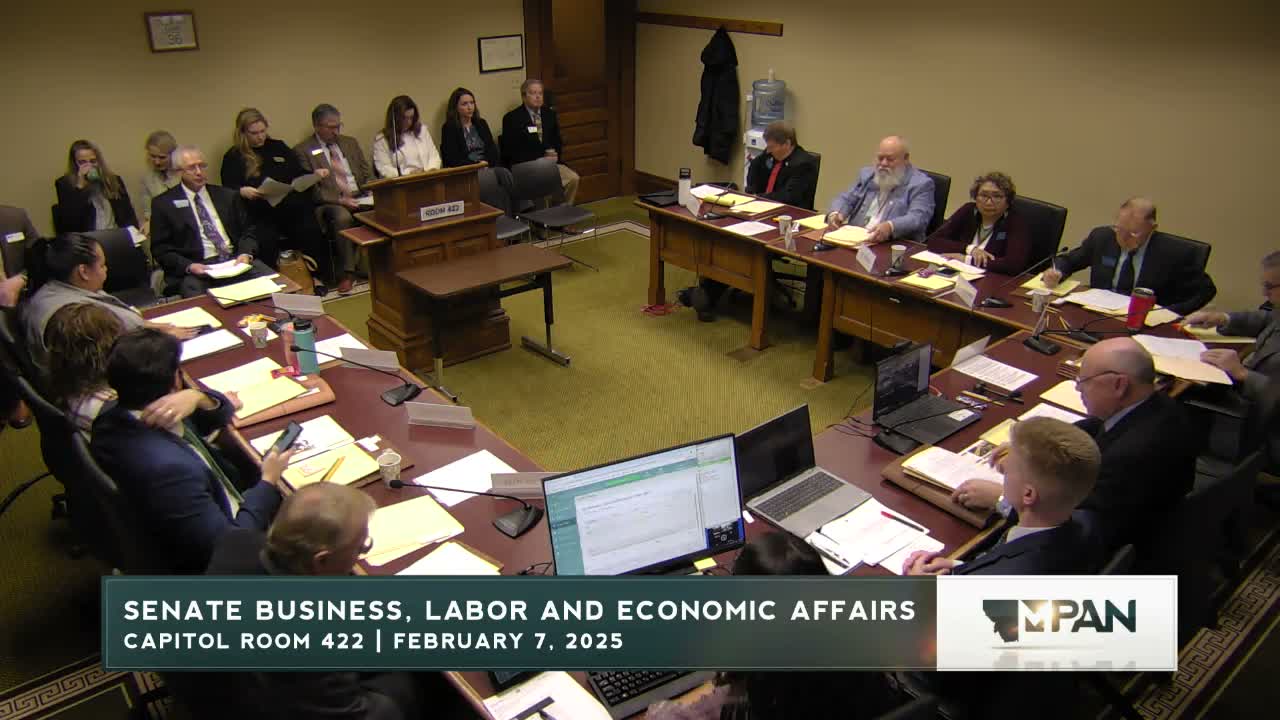
Senator Mike Yakawich introduced Senate Bill 244 on behalf of a proposal he called the “Goodwill Behavioral Insurance Bill,” saying it would require health insurers to pay for behavioral-health screening assessments, including state employee group benefits. “It’s an act requiring health insurance to provide coverage for behavioral health screening assessments,” Yakawich said as he opened the hearing.
Supporters — hospitals, clinics and advocacy groups — told the Senate Business, Labor and Economic Affairs Committee that routine screening helps identify people at risk and that out-of-pocket charges deter follow-up care. JJ Carmody of Billings Clinic and Logan Health said Montana has "ranked in the top 5 for suicide rates in the nation for the past 30 years" and described screening patterns showing many patients see a provider soon before a suicide, arguing coverage would reduce barriers to detection.
Advocates described practical examples. Dr. Lynn Dykstra, a pediatrician with Logan Health, said a 14-year-old patient whose mother declined screening because of cost later texted 988 and required emergency intervention; Dykstra said a free screening at the wellness visit might have averted the crisis.
Insurers did not oppose the bill’s public-health goals but sought technical fixes. Drew Czciok, government-relations director for Blue Cross Blue Shield of Montana, said many of the screenings the bill targets are already covered on many plans and that his company had negotiated technical amendments with the sponsor. Czciok described proposed language to limit zero cost sharing to in-network providers and to preserve members’ eligibility for health savings accounts by cross-referencing applicable IRS rules.
Deputy Insurance Commissioner Frank Cote advised the committee on regulatory limits and rate-setting: insurers review their claims experience and set rates accordingly, and while the state reviews proposed rates it does not generally have the statutory authority to disapprove exchange-plan rates in advance. He said mandates can change claims patterns, which may affect future premiums, but regulators typically respond after reviewing filed rates.
Opponents and cautionary witnesses urged care with universal mandates. Steven Pierce, director of the Citizens Commission on Human Rights, argued that blanket screening can produce false positives and overidentification and said "universal screening... has not affected suicide rates" in some other states. Supporters countered that screening increases access and reduces stigma and urged that technical amendments be used to refine the bill without undercutting coverage.
The committee closed the hearing after questions about drafting details (for example, whether the text should read “screening and/or assessment”) and requests for demographic breakdowns of suicide statistics. Yakawich said he welcomed friendly amendments and pledged to work with insurers and providers on clarifications. The transcript does not record a committee vote on SB244 during this session; the measure was heard and left for further action.