Get Full Government Meeting Transcripts, Videos, & Alerts Forever!
Get email alerts on the Zoning Enforcement Appeal topic
No spam. Unsubscribe anytime.
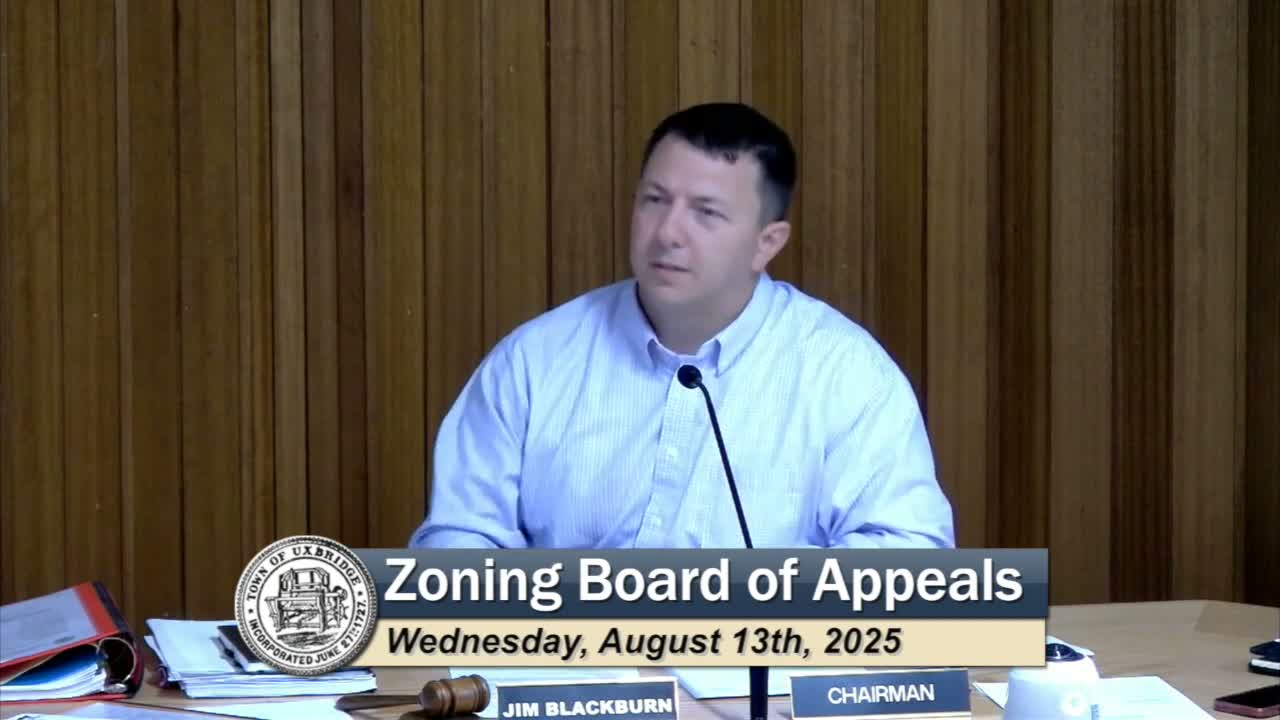
Uxbridge ZBA overturns cease-and-desist for tool-sales operation at 191 Sutton Street
Summary
The Uxbridge Zoning Board of Appeals voted 4-1 on Aug. 13 to overturn a building inspector's cease-and-desist letter that said a warehouse/distribution business was operating at 191 Sutton Street, finding the activity more closely matches a home occupation when most inventory is kept on vehicles, not in the garage.
The Uxbridge Zoning Board of Appeals on Aug. 13 overturned a building inspector's cease-and-desist determination that tools were being warehoused at 191 Sutton Street, concluding that the owner's vehicle-based sales fit the town's home-occupation standard.
Attorney Ben Dowling, representing Philip and Lisa Heffern, told the board that "95% of the inventory are on the trucks" and that only about "5%" of inventory is stored in a residential garage. Dowling said the trucks make deliveries to automotive repair shops and that the Hefferns had registered the business with the town when it began. He asked the ZBA to reverse the enforcement action and warned that upholding it could create a precedent that would affect other sole operators who stage vehicles and receive deliveries at home.
The board's discussion centered on whether the activity met the bylaw definition of a prohibited "warehouse and distribution" use or the permitted "home occupation" category. Members weighed multiple factors: whether customers visit the property, whether employees are present, the amount of inventory stored on-site versus on vehicles, and the frequency and size of deliveries. Neighborhood testimony conflicted: one resident provided photos and described frequent large deliveries and semis, saying "they're blocking the road," while others said large deliveries are rare and that the operation is not disruptive.
Several members said the evidence favored a home-occupation finding. A majority of the board pointed to the lack of signage, absence of on-site sales to the public, the owner's residence on the property and the limited indoor storage as reasons to overturn the inspector's ruling. Rob moved to overturn the building inspector's determination and Richard seconded; the motion carried 4-1. The board instructed staff to draft a written decision, to be filed within 14 days; the chair noted an appeals period and said further judicial review would go to Superior Court.
The board's decision does not erase the building inspector's report; it is an appellate finding that the ZBA believes the use, as presented at the hearing, fits within a home-occupation framework. The board also signaled that if the scale of the activity increases to the point where the commercial use becomes primary rather than accessory to the residence, the home-occupation determination would no longer apply.
Staff requested that neighbors and the applicant provide photographic or delivery evidence to the zoning enforcement officer and to the board's administrator so records are complete if the matter returns to the board or court.