Get Full Government Meeting Transcripts, Videos, & Alerts Forever!
Get email alerts on the Vehicle Titles topic
No spam. Unsubscribe anytime.
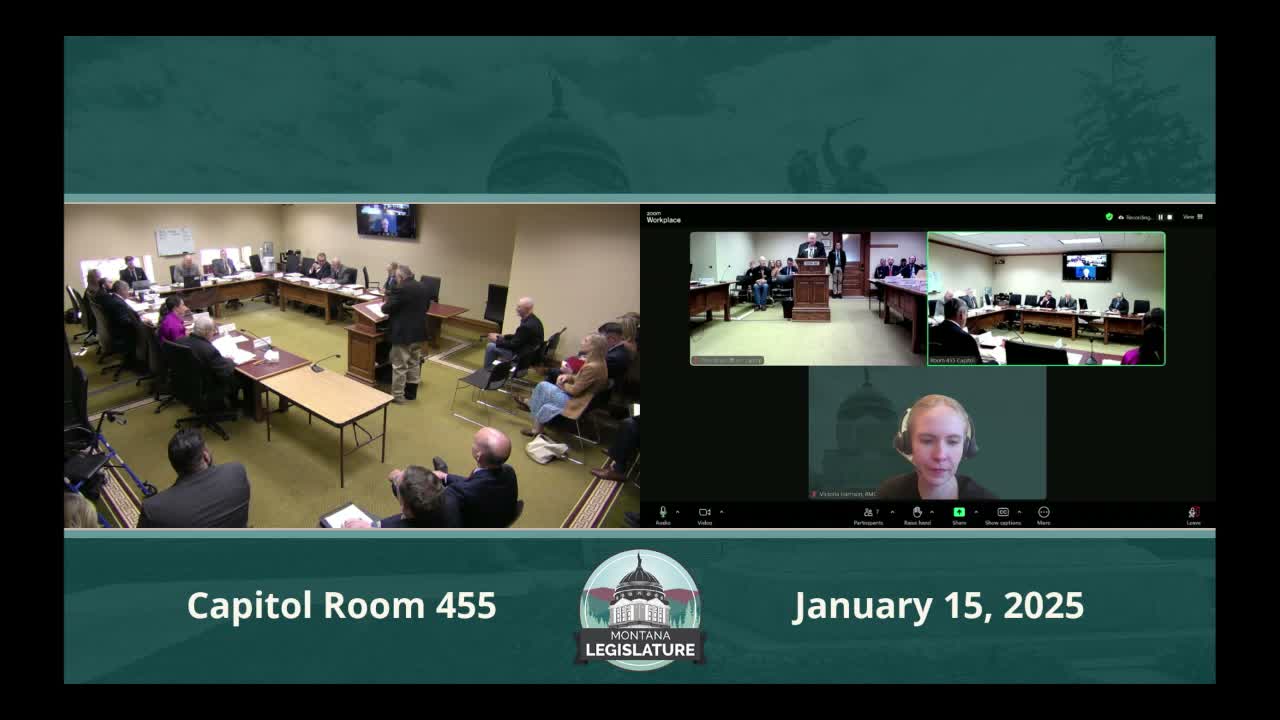
Committee hears bill to allow vehicle title transfers with affidavit, remove notary requirement
Summary
The House Transportation Committee heard testimony on HB165, which would permit transfers of vehicle titles using an affidavit under the state's unsworn declarations law and prohibit the Motor Vehicle Division from requiring notarization. Supporters said the change reduces rural barriers and smooths the move to electronic titling; DOT staff described verification tools and low rates of title fraud.
Representative Ken Walsh, sponsor of House Bill 165, told the House Transportation Committee the bill would allow transfers of ownership for titled vehicles — including cars, trailers and boats — using an affidavit under the state's unsworn declarations statute rather than requiring notarization. Walsh said the measure is a "red tape reduction bill" to help rural residents and to facilitate electronic titling.
Supporters included Bruce Knudsen, executive vice president of the Montana Auto Dealers Association, who said he surveyed peers in other states and found no practical problems with affidavit-based transfers. Local bankers and lenders, including Todd Devlin (Prairie County commissioner) and Craig Lowe (Bank of the Rockies), testified the notary requirement is burdensome for after-hours and rural transactions. Sam Sill of the Montana Bankers Association and Shane Scanlon of the Montana Independent Bankers also urged passage to streamline operations and speed the move to electronic titling.
Michael Walker, bureau chief at the Motor Vehicle Division, spoke for MVD in support and described the department’s fraud-detection systems. Walker said the state uses the American Association of Motor Vehicle Administrators’ databases and the National Motor Vehicle Title Information System to flag problems and that the division expects to launch a new electronic-titling system with real‑time data exchange. "Electronic titling is going to be the future," Walker said, arguing the new system will improve verification through a "verified session" and verification codes.
An online proponent, Jordan Blair, a community banker and state notary, told the committee that remote access to notaries is limited in some rural towns (he cited a single notary listed in one small town) and said he did not believe the notary requirement prevented theft or fraud. Julie Lake of the Secretary of State’s office appeared as an informational witness and told members that remote online notarization began in October 2019 and that the office does not track totals of notarial acts.
Committee members pressed staff on implementation details: how affidavit forms would be provided to the public, how identity would be verified in on‑line verified sessions, and how often fraudulent title transfers occur. Walker estimated the Motor Vehicle Division’s compliance unit investigates roughly two suspicious title transactions per month statewide — primarily involving out‑of‑state titles — and said those cases are usually resolved with electronic and paper trail records. Walsh reminded members that unsworn falsification on state forms carries criminal penalties under existing statute.
No opponent testimony was recorded at the hearing and the chair closed the HB165 record after the sponsor’s closing remarks. The committee did not take a final vote on HB165 during the session recorded in the transcript.