Get Full Government Meeting Transcripts, Videos, & Alerts Forever!
Get email alerts on the Film Tax Credit topic
No spam. Unsubscribe anytime.
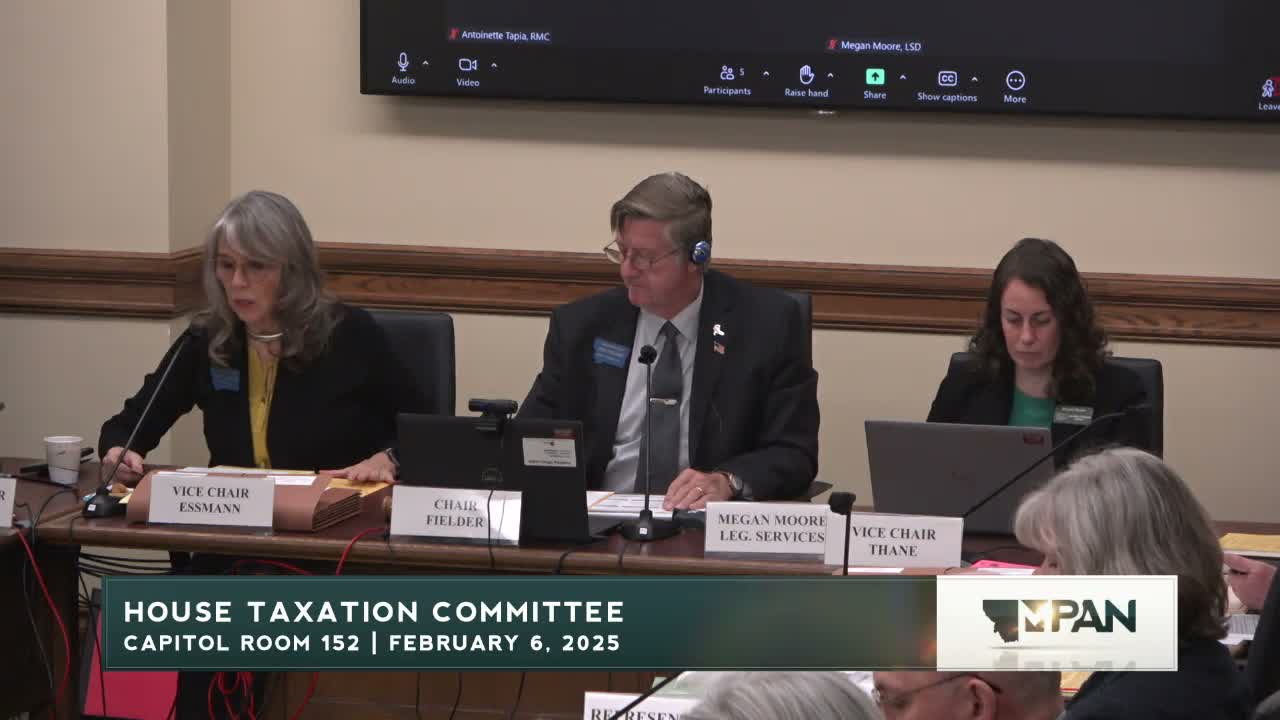
Montana lawmakers hear wide-ranging support and opposition for expanding film tax credit
Summary
At a House Taxation Committee hearing, proponents urged that House Bill 200 — with an amendment lowering a proposed cap to $250 million and widening eligibility — would create jobs and infrastructure; opponents warned of housing impacts and large fiscal costs. Committee closed the hearing and scheduled executive action later.
Representative Keri Seekins Crow, sponsor of House Bill 200, told the House Taxation Committee the bill would expand Montana’s film tax credit to help create jobs, attract production infrastructure and keep creative workers in-state. With the sponsor’s proposed amendment, the bill would lower an initially proposed cap from $350 million to $250 million, lower the qualifying production budget threshold from $350,000 to $50,000, add documentary and reality television to eligible production types, and extend the statute’s sunset (the sponsor stated a date garbled in the transcript; the intent reported in testimony was to extend the sunset beyond 2029, to 2035).
The bill drew lengthy proponent testimony from business and industry groups and individual producers. Charles Robison of the Montana Chamber of Commerce described a television season that spent over $72 million in Montana and employed 116 local workers, and Dan Brooks of the Billings Chamber cited a 2022 interim report tracking dozens of productions and millions in direct and induced spending in Yellowstone County. Producer Timothy Lofing and consultant Matt Pitzer summarized ESI and University of Montana findings they distributed to members and said the film industry generated hundreds of millions in direct spending and produced about 1,300 full‑time‑equivalent jobs over recent years in Montana, arguing that raising the cap would clear a $79 million backlog and allow sustained investment in sound stages and related infrastructure.
Industry representative Steve Grover told the committee the 2019 tax‑credit program initially adopted a $10 million cap and that the small cap discouraged long‑term private investment in studios. Grover and other proponents said larger, predictable caps (they cited studies that looked at $50 million to $100 million levels) are needed to persuade outside investors to finance multi‑million‑dollar production facilities that produce property‑tax revenue and local jobs over time.
Opponents described different concerns. Dan Norris, a Montana resident, called the proposal a large giveaway that would worsen housing affordability and funnel taxpayer dollars to out‑of‑state productions and consultants. Heather O’Loughlin of the Montana Budget and Policy Center urged a do‑not‑pass vote, citing the fiscal note she presented and reading an estimate that the proposal could cost roughly $290 million over four fiscal years. O’Loughlin said many local jobs tied to production are episodic and cautioned lawmakers to weigh competing uses of general‑fund dollars for housing, childcare and behavioral health.
Committee members asked detailed technical questions. Witnesses and department staff explained credit mechanics: productions submit a $500 application, spend the qualified budget inside Montana, and the Department of Revenue certifies the qualified spend; the statute includes sideboards such as a 35% ceiling on credits and qualifiers that encourage the use of Montana crew and studios. Witnesses described how awarded tax credits are sold to Montana individuals or businesses (sales happen in the marketplace, typically facilitated through CPAs), but testimony included differing recollections on the statutory or customary discount rate (witnesses alternatively cited minimums of 50¢ on the dollar, or recollections of sales at 80–95¢ on the dollar). Committee members also pressed proponents on how much of the reported jobs and wages were Montana residents and the local fiscal impacts such as property taxes and impact fees.
The hearing closed with the sponsor urging support and asking members to consider the pending amendment; the committee recessed and scheduled executive action later in the sitting. No committee vote on HB200 occurred during the hearing.
What happens next: House Taxation closed the HB200 hearing and returned to take executive action on several other bills; the sponsor’s amendment and the technical questions raised about fiscal impacts and credit‑sale mechanics are likely to shape follow‑up review. The committee record includes the distributed ESI and University of Montana reports referenced by proponents.