Get Full Government Meeting Transcripts, Videos, & Alerts Forever!
Get email alerts on the Wildlife Management topic
No spam. Unsubscribe anytime.
Glacier County briefed on HB 648 rules for bear relocations, Pike Creek singled out as county release site
Summary
Montana Fish, Wildlife & Parks told Glacier County commissioners that House Bill 648 (effective Oct. 1) requires FWP to notify county sheriffs and commissioners within 24 hours when black or grizzly bears are relocated into a county from another county. The presentation covered notification methods, coordination with the Blackfeet tribe and U.S. Fish and Wildlife Service, tracking limits of collars and ear tags, and a county carcass-removal program to reduce attractants.
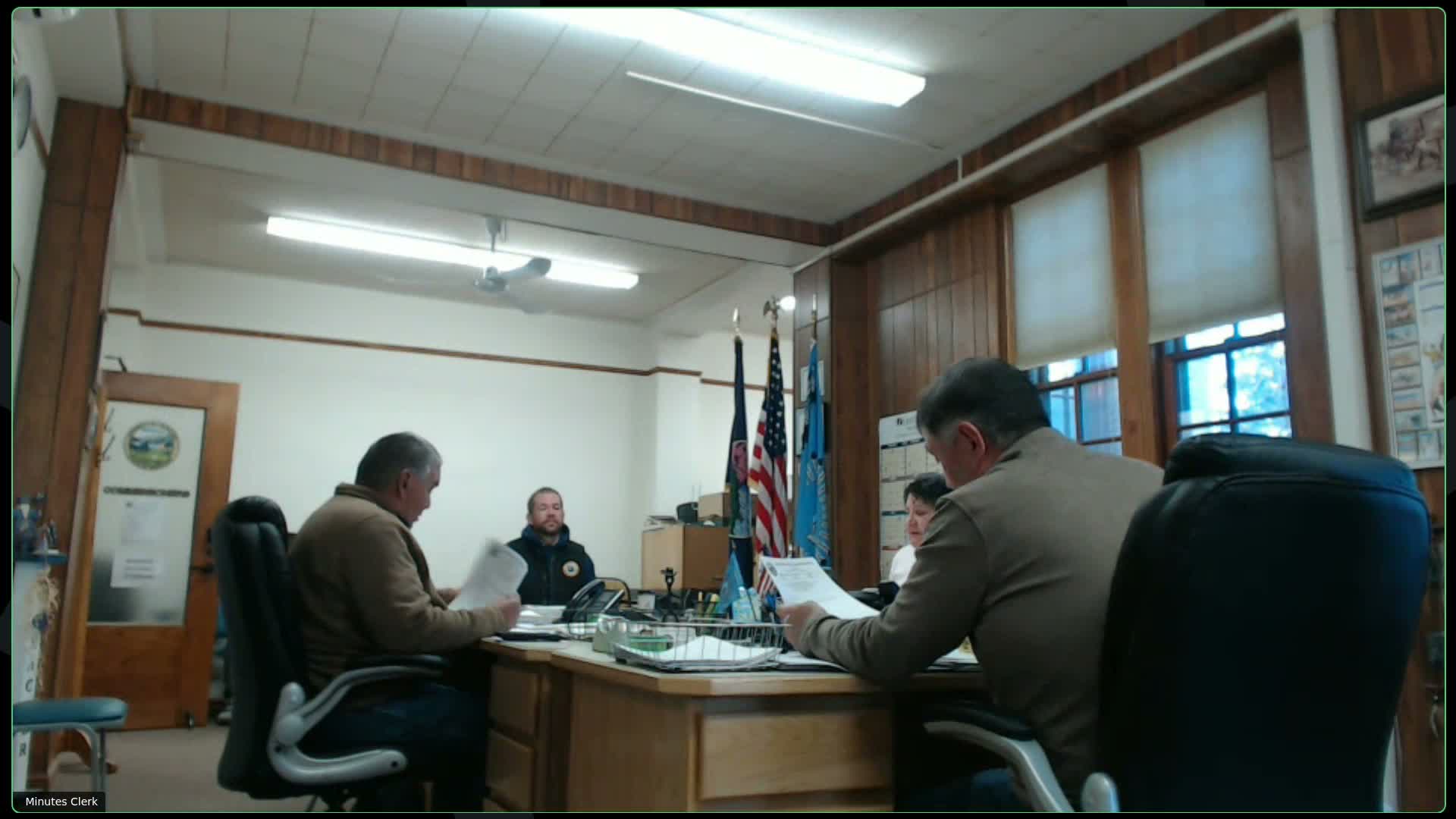
Dave Kemp, a grizzly bear management specialist with Montana Fish, Wildlife & Parks, told Glacier County commissioners on Oct. 23 that House Bill 648 — passed in the last legislative session and effective Oct. 1 — imposes a new notification duty on FWP when black or grizzly bears are relocated into a county.
"The bill...requires FWP to provide written and verbal communication and notice to county commissioners and county sheriffs in counties where...bears are relocated," Kemp said, adding that his office will have 24 hours to send both verbal and written notice to local officials when relocations cross county lines. He stressed the bill does not require notification when a bear is captured and released within the same county.
Why it matters: commissioners said they want clear, reliable notice. Kemp described a common practice used elsewhere — a verbal notice to 911 dispatch (so dispatch records it and forwards to the sheriff) followed by an email to the sheriff and commission chair. He offered to send one written notice or email all three commissioners depending on the county’s preference.
Release sites and federal coordination: Kemp said FWP’s Region 4 uses one Fish and Wildlife Commission–approved release site in the Glacier County area: Pike Creek Road off Highway 2 near the Region 1/Region 4 boundary. He said helicopter releases exist but are costly and used rarely.
Kemp also emphasized coordination with tribal and federal authorities. "If the federal government's doing it, the U.S. Fish and Wildlife Service still has the final say," he said, but FWP plans to annotate the state dashboard for relocations and notify counties even when the federal government moves an animal.
Tracking and expectations: commissioners pressed Kemp on how long collars and tags last and whether relocated bears return. Kemp said collars and tags are imperfect: radio collars can stay on from days to years depending on the animal, and collars must include sacrificial spacers to accommodate seasonal growth; cell-based ear tags are less precise than satellite collars. He cautioned that relocation reduces — but does not eliminate — the chance a bear will return, and outcomes depend on the animal’s age, sex and the distance moved.
Conflict reduction and carcass removal: Kemp said FWP runs a carcass-removal program on the East Front that hauls an estimated 400–500 carcasses per year to a landfill to reduce bear attractants; he told commissioners that, anecdotally, complaints and conflicts have declined where carcasses are removed. He named the local landfill that accepts carcasses in the presentation.
Public concerns and local anecdotes: multiple commissioners and residents offered stories of bears in campgrounds, tipped trash containers and livestock depredations. Kemp said responses vary by circumstance — from hazing and collaring to, in some cases, lethal removal — and urged setting realistic expectations with producers.
Next steps: Kemp asked commissioners for their preferred notification procedure; he said he will use dispatch plus email as requested and leave his contact information with county staff. Commissioners did not take formal action on policy changes during the meeting.
Sources: Presentation and Q&A with Dave Kemp, grizzly bear management specialist, Montana Fish, Wildlife & Parks. The HB 648 implementation discussion began with the county’s new-business item on Oct. 23.