Get Full Government Meeting Transcripts, Videos, & Alerts Forever!
Get email alerts on the Tribal Consultation topic
No spam. Unsubscribe anytime.
Bill to define tribal consultation draws split testimony over costs and implementation
Summary
Senate Bill 379 would define state tribal consultation and require agencies to adopt consultation policies and liaisons; proponents argued it clarifies government-to-government practice while forestry and timber industry groups warned the measure is vague, duplicative and could delay projects.
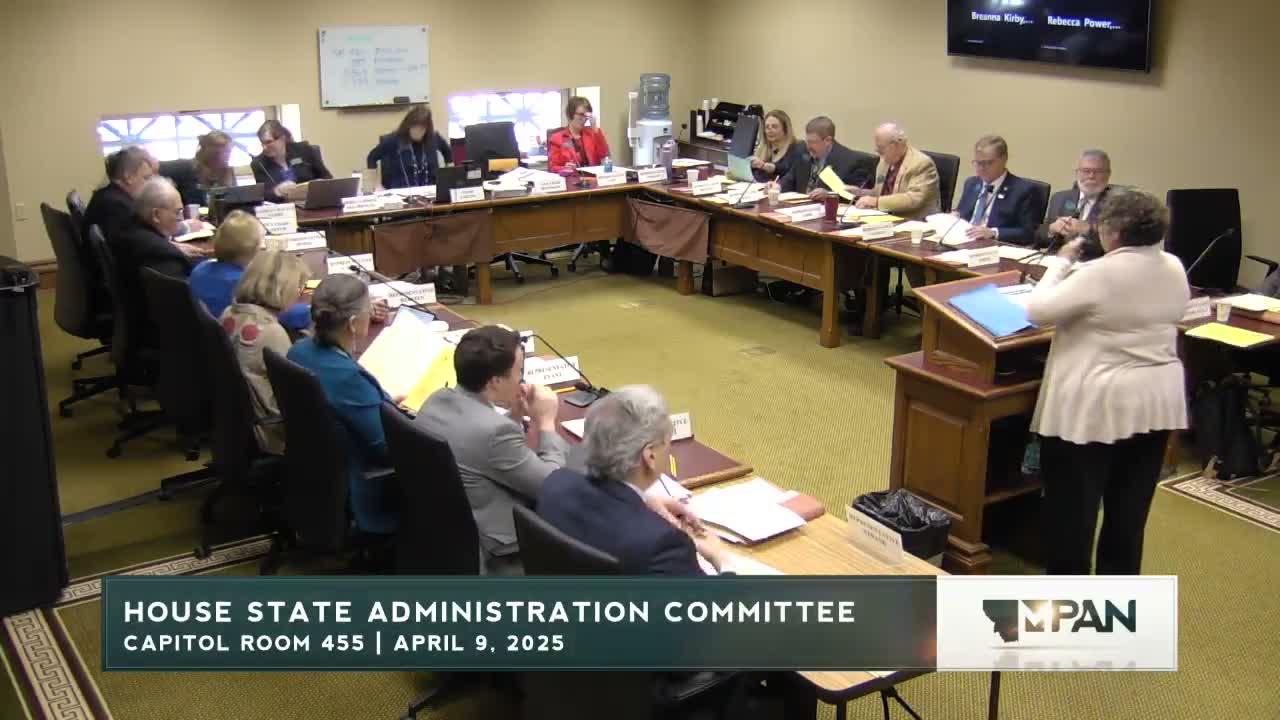
Senate Bill 379, introduced by Sen. Susan Weber, would create a statutory definition of tribal consultation and direct state agencies to adopt concise written consultation policies, designate tribal liaisons, and provide training. The House State Administration Committee heard testimony from tribal representatives, agency officials and industry groups before closing the hearing without a formal committee vote.
Sen. Weber, sponsor, said the bill is modeled on federal definitions and statutes in Washington and Minnesota and is intended to standardize uneven consultation practices across agencies. "This bill defines what tribal consultation is," Weber said, adding that many agencies currently lack a written policy and that uniform guidance will reduce conflicts and save money over time.
Proponents included Patch Kiewake and Kimani Kindness Coleman (Montana Budget and Policy Center and member of the Crow Tribe), who argued the measure provides needed clarity across programs that affect tribal citizens (education, Medicaid, ICWA, voting, redistricting) and does not itself request new FTEs.
Opponents from the forest products industry—including Sean Steinbach of Sun Mountain Lumber and Julia Altemus of the Montana Wood Products Association—warned the bill would impose broad new requirements on 15 agencies, cited a fiscal estimate of about $1.2 million, and said the statute’s vague trigger language could delay timber sales, restoration and fuels‑reduction projects by creating legal uncertainty over what counts as a "state proposed action."
Informational witnesses included Lieutenant Governor Kristen Juras and agency officials who described current practices and the governor’s Office of Indian Affairs. Sarah Swanson, commissioner of the Department of Labor and Industry, described DLI’s investment in tribal liaisons and said DLI currently spends roughly $177,000 per year on two tribal‑liaison FTEs plus nearly $50,000 for travel to support consultations.
Committee members asked detailed questions about which agencies would need to create written policies, the accuracy of the fiscal note, and whether the legislature itself should be included; sponsor Weber said the bill is targeted at agencies and that the Montana American Indian caucus remains a separate avenue for legislative engagement.
No formal action was taken in committee at the close of the hearing; Sen. Weber asked for a due pass and the hearing was closed.