Get Full Government Meeting Transcripts, Videos, & Alerts Forever!
Get email alerts on the Product Liability topic
No spam. Unsubscribe anytime.
Committee tables bill that would let victims recover 'economic' harms from defective digital products
Summary
Senate Bill 292, which would add "economic" harms to Montana's product liability law to allow recovery for losses caused by defective digital or financial products, drew lengthy testimony and was tabled by the Senate Judiciary Committee for further work (5–3). Supporters offered examples; business groups warned of sweeping legal change.
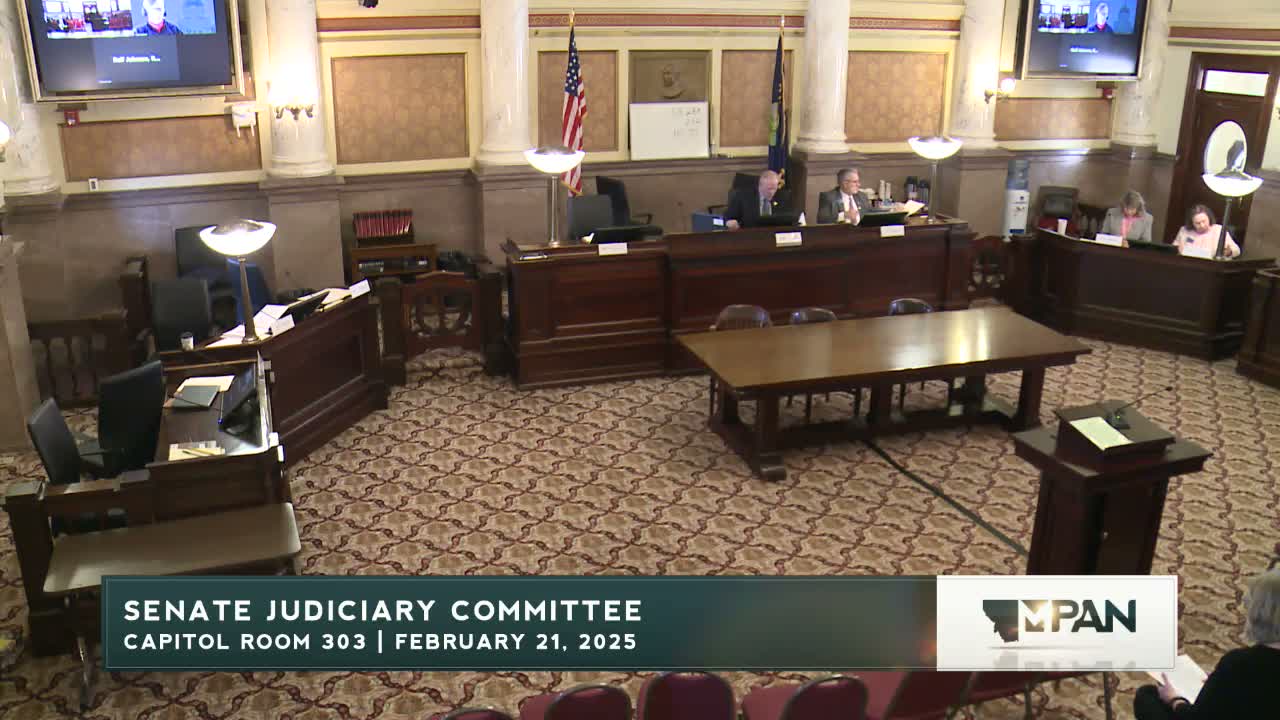
Senate Bill 292, sponsored by Sen. Andrea Olson, was heard at length in the Senate Judiciary Committee before members voted to table the measure for further consideration.
Olson described the bill as a narrow change: inserting the word "economic" into several provisions of Montana's product liability code to allow recovery for financial losses caused by defective digital products such as tax software, payroll programs or security systems. "This is a bill that's intended to bring our code into the 21st century and to address the economic harm caused by digital products that we buy," Olson said.
Attorney John Morrison, a Helena practitioner and former state auditor, told the committee product liability historically covered tangible harms (for example, a chainsaw that injures a person) but has not kept pace with modern software and algorithmic products that can produce purely economic losses. Morrison and other proponents offered concrete hypotheticals—mispriced exchange‑traded funds and valuation algorithms used by insurers—that they said fall outside current remedies.
Supporters included Al Smith of the Montana Trailers Association, who cited the state constitution's guarantee of a remedy for injury, and argued that extending product liability to certain economic losses would both compensate victims and incentivize better products. Several proponents handed out examples and factual briefs.
Opponents, led by Charles Robison of the Montana Chamber of Commerce, said the bill's language would amount to a substantial rewrite of long‑standing products liability law and could sweep in services and software better addressed elsewhere. "Products liability law is not written to address software defects," Robison said, urging more deliberative study rather than changing a comprehensive statute by inserting two words.
Committee members pressed both sides with detailed hypotheticals about point‑of‑sale outages, payroll‑processing errors, software updates and the scope of existing consumer‑protection or implied‑warranty remedies. Proponents said other remedies can be limited and that product‑liability law fills gaps where a product itself—rather than user error—causes economic losses; opponents urged the committee to weigh statutory overlap and unintended consequences.
After extensive questioning, the committee moved to executive action and tabled SB 292 on a roll‑call vote (5 yes, 3 no). Committee members said they generally liked the bill's intent but wanted time to tighten language and review materials before deciding whether to bring it back off the table.