Get Full Government Meeting Transcripts, Videos, & Alerts Forever!
Get email alerts on the Court Structure topic
No spam. Unsubscribe anytime.
Montana bill to create government claims court draws sharp debate over cost and constitutionality
Summary
Sponsor Sen. Tom McGill Ray urged creation of a three‑judge Montana Government Claims Court to speed constitutional and administrative appeals; supporters called it a needed specialty venue while opponents warned of high costs, constitutional questions and an absent or limited fiscal note.
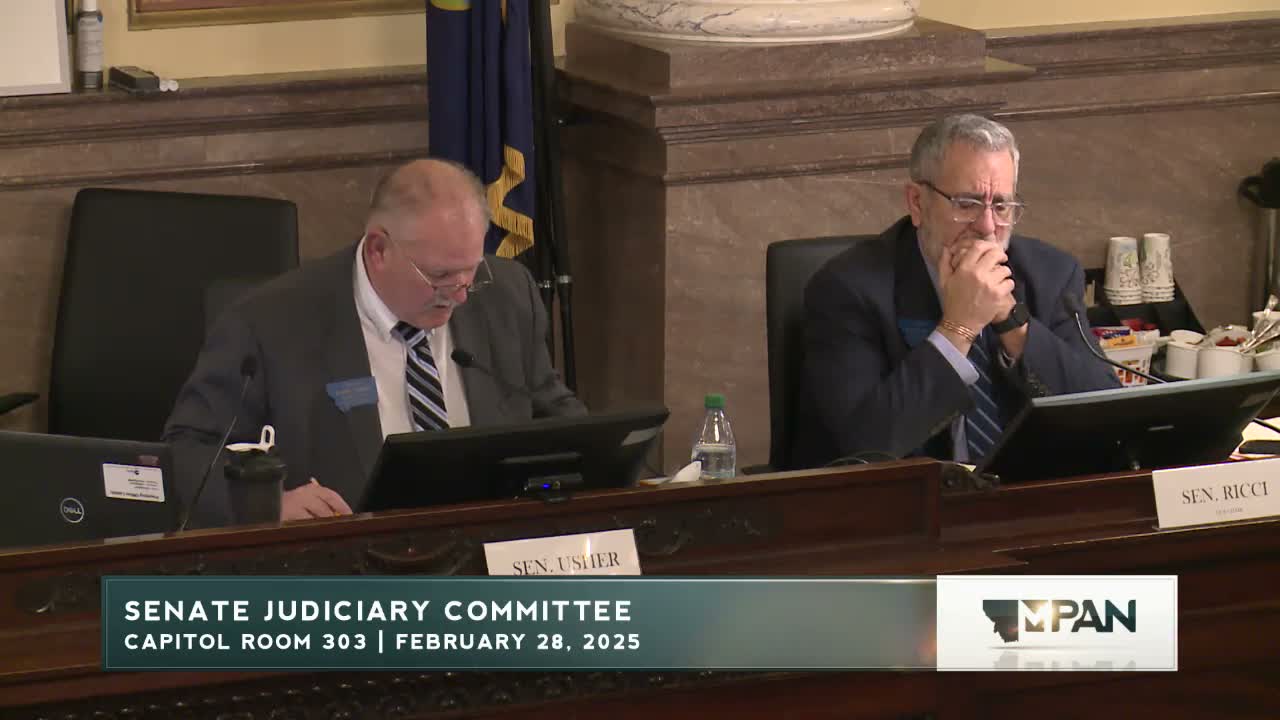
Senator Tom McGill Ray introduced Senate Bill 385 on behalf of Senate District 26, saying the measure would create a three‑judge Montana Government Claims Court with concurrent jurisdiction over challenges to state actions, administrative appeals and asbestos claims. "Our district courts are overwhelmed," McGill Ray told the Senate Judiciary Committee, urging a specialized tribunal to handle complex civil work and free district judges to focus on criminal, family and dependency cases.
Proponents said the court would cut delays for constitutionality and administrative matters and concentrate expertise in one forum. Derek Oestricher, chief legal counsel for the Montana Family Foundation, said the bill "provides a necessary solution by creating a government claims court" and urged the committee for a "due pass." David Noble, a private attorney appearing online, told members that constitutional trials can require multi‑week trials and extensive orders, and a specialized court would help streamline that work.
Opponents raised multiple objections. Anne Sherwood of Friends of the Third Branch said the committee had not been presented with data quantifying how many cases would be diverted from district courts, and she urged a "do not pass" until the fiscal impact and need are clearer. "I haven't heard any numbers about how many cases this is going to divert," Sherwood told senators. Trial lawyers and public‑interest groups argued the proposal risks creating an appointed judiciary that reduces voter accountability and duplicates existing structures such as the asbestos claims process.
Several participants noted the lack, at the time of some testimony, of a complete fiscal note. Opponents pointed to a previously withdrawn chancery court proposal that carried a large price tag and questioned whether the state should instead add more district judges. Judge Amy Eddy, who supervises Montana's asbestos docket, cautioned the committee that mandatory removal and certain venue provisions in the bill could create docket management problems in counties with limited courtroom capacity.
Committee members pressed for details on projected caseload and cost. Sponsor McGill Ray said a fiscal note had been prepared and argued the bill rests on constitutional authority (Article VII) to create other courts; he said judicial appointment, panel appeals and the Montana Supreme Court appellate path were provided in the draft. After the hearing, the committee later advanced the bill out of committee as amended.