Get Full Government Meeting Transcripts, Videos, & Alerts Forever!
Get email alerts on the Officer Evidence Return topic
No spam. Unsubscribe anytime.
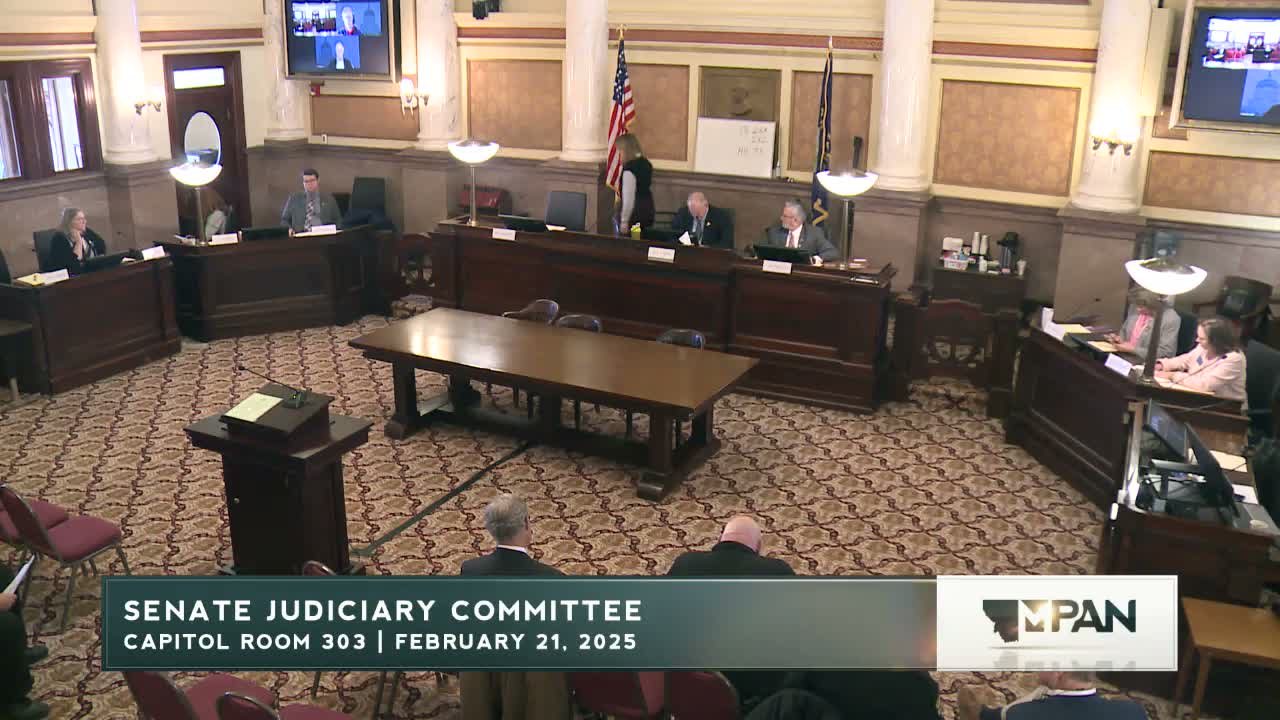
Senate Judiciary advances bill to speed return of officers' firearms after investigations
Summary
The Senate Judiciary Committee advanced Senate Bill 288, which would require quicker return of law‑enforcement firearms once investigations conclude; supporters said long delays force small agencies to buy costly replacements, while law‑enforcement investigators cautioned returns hinge on investigation completion.
The Senate Judiciary Committee on the morning of the hearing advanced Senate Bill 288, a measure sponsored by Sen. Dan Loege that would create a clearer process for returning firearms seized from officers after investigations.
Loege, the bill's sponsor, told the committee the measure is aimed at helping small counties and agencies that may lack budgets to replace weapons officers commonly purchase themselves. "What this bill does is try to speed up the process of getting our weapons back once the investigation is done," he said.
Proponents described months‑ or years‑long waits for weapons and accessories to be released. Dan Smith, executive director of the Montana Police Protective Association, said many agencies cannot afford high‑quality duty weapons and allow officers to carry personally owned firearms. "We spend thousands of dollars on those weapons ... and when we need that piece of equipment, we need it to function right," Smith said, urging support to avoid weapons "languishing" in evidence rooms.
Gordon Hendrick, a former mayor, and law‑enforcement officials recounted examples in which rifles and other gear were unavailable for years after officer‑involved shootings. Under Sheriff Cashman described one case where officers were left short‑staffed while replacements were purchased; Cascade County Sheriff Jesse Slaughter added that optics and lights can raise the value of an item to roughly $1,500 and that multiple seizures can create a heavy budgetary burden for small departments.
Lee Johnson, administrator of the Division of Criminal Investigation, testified as an informational witness and described two common paths for officer‑involved shooting investigations: coroner's inquest for fatal incidents and criminal investigations when subjects survive. Johnson said coroner's inquests "go a little bit faster" but criminal prosecutions can keep evidence longer, and that prosecutors sometimes request extended holds for evidence. He said DCI's practice is to return weapons "on coroner's inquest to the original agency as soon as we can."
During questioning, committee members raised whether the bill would change existing prosecutorial or coroner discretion. Johnson said the proposal would give a clearer legal directive and remove a gray area that can lead to extended holds on property. Senators also asked whether a short statutory return period (discussed during the hearing) is realistic; Johnson replied it is "realistic as long as we have a determination that the investigation is complete," but noted lab backlogs and scheduling of coroners can delay returns.
The committee later acted in executive session and approved a do‑pass recommendation on SB 288 by voice vote; Senator Newman was recorded voting yes by proxy. Next steps were left to the Senate calendar.
The bill, as discussed, focuses on officers' firearms and related duty equipment and does not amend rules for other categories of evidence. The sponsor asked the committee not to adopt a circulated amendment that he said could confuse the bill's law‑enforcement focus. The committee closed the public hearing on SB 288 and moved the measure forward.