Get Full Government Meeting Transcripts, Videos, & Alerts Forever!
Get email alerts on the Public Access Block Management topic
No spam. Unsubscribe anytime.
Bill to ease access to landlocked public lands draws support and caution over overlap with PAULA
Summary
HB 763 would let Fish, Wildlife and Parks streamline block‑management access agreements and raise a per‑landowner cap to $25,000 for access‑only deals; proponents said it reduces red tape and opens public lands, while opponents warned it duplicates and conflicts with the existing PAULA program and urged amendments.
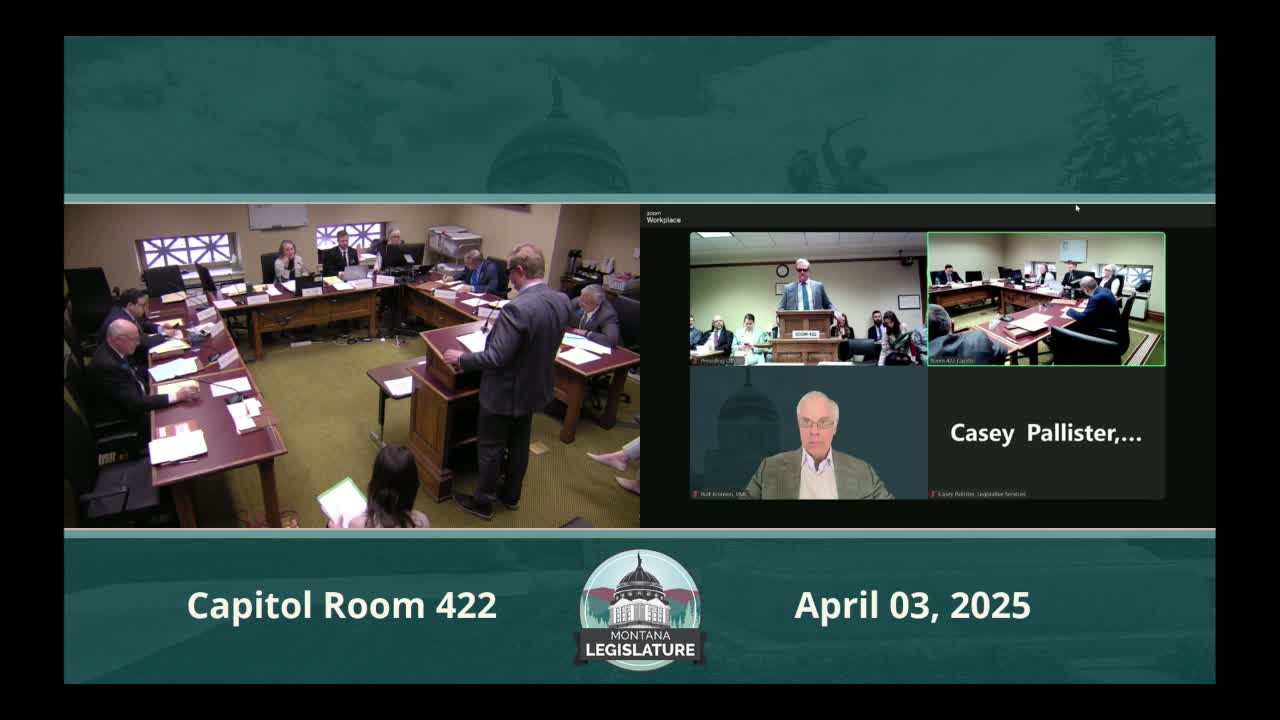
Representative Josh Seckinger told the Senate Fish and Game Committee that House Bill 763 is a targeted change to Montana's block management program intended to reduce administrative burdens on landowners, increase public access to landlocked state lands and provide voluntary, access‑only agreements. "Montana's public lands are among our greatest treasures," Seckinger said, and the bill aims to open certain inaccessible state lands via negotiated agreements that would not require landowners to allow hunting on their property but would allow passage to adjacent public lands.
Seckinger said roughly 3,000,000 acres of public land are inaccessible and described HB 763 as a Montana solution to the problem. The bill would allow Fish, Wildlife and Parks (FWP) to streamline agreements and set a higher maximum payment for these access‑only block agreements (the sponsor and witnesses described a $25,000 per‑landowner cap in the bill).
Proponents included the Montana chapter of Backcountry Hunters and Anglers, the Montana Wildlife Federation, the Rocky Mountain Elk Foundation and Theodore Roosevelt Conservation Partnership. Supporters said the change would simplify paperwork, reduce burdens on both the department and landowners, and compensate landowners fairly for providing a passage to large tracts of public land.
Opponents raised procedural and programmatic objections. Ed Beall, former chair of the Private Lands Public Wildlife Council, argued the bill duplicates the Public Access Landowner Agreement (PAULA) program (created in 2019) and could confuse landowners because PAULA already addresses corridors for inaccessible public lands, has its own payment rules and is reaching capacity. Beall testified that PAULA currently accesses about 500,000 acres and that block management and PAULA use different payment structures. Carly Johnson of the Montana Farm Bureau also said the original draft risked allowing adjacent landowners to provide access without protecting the leaseholder; she described negotiated amendments that would require notifying current leaseholders and including leaseholder objections when the commission reviews agreements.
FWP informational witnesses and the agency CFO answered questions about funding and mechanics. Lena Havron said block management is paid from a state special revenue fund that receives a portion of license revenue while PAULA payments are made from the general license account. FWP staff described how payments are negotiated on the ground: block management reimbursements are often tied to hunter‑days (with a per‑hunter rate the department cited around $17 per hunter‑day) while PAULA uses criteria such as access level and demand and sets a $15,000 cap on agreements. Committee members asked whether the bill would displace PAULA; sponsor and FWP said the programs serve different niches — PAULA provides year‑round access while the bill's changes are intended for seasonal, access‑only corridor agreements — but opponents warned of overlap and predicted a cleanup bill might be required.
Representative Seckinger closed by saying HB 763 is another tool to increase options for accessing public land and urged the committee to concur. The hearing record shows broad stakeholder engagement but also substantive concerns from Farm Bureau and PLPW representatives; the committee did not take executive action during this session.